

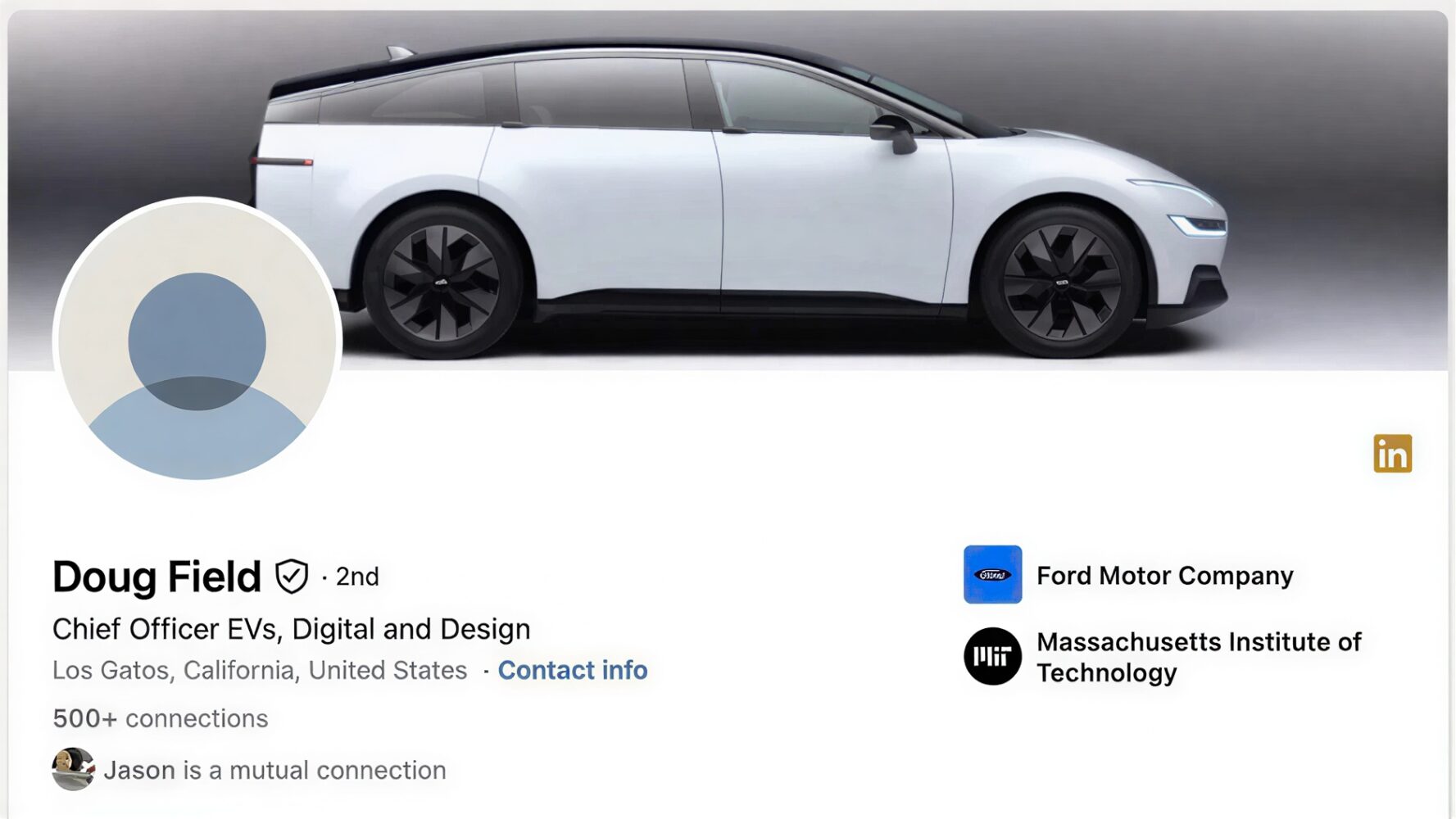
Hunting for clues about Ford’s EV strategy? The biggest one has been staring at us from a LinkedIn banner for months. Doug Field, Ford’s now-retired electric vehicle boss, quietly displayed a sleek, aerodynamic SUV prototype as his profile background nearly a year ago. Ford has now confirmed this image shows their canceled three-row electric SUV—a moonshot project that promised to redefine family hauling with “bullet train” efficiency before getting axed in August 2024.
The prototype reveals Ford’s ambitious vision: a seven-passenger vehicle designed to slice through air resistance rather than compensate with massive batteries. Its rounded front end, sloping roofline, and flush door handles scream efficiency obsession. Even the wheels were optimized for aerodynamics over style.
The Moonshot That Almost Was
Ford’s prototype targeted 350-mile range through design innovation, not just bigger batteries.
According to Ford’s description at the 2024 Aspen Ideas Festival, this SUV would have delivered “seven-passenger comfort that feels like your own personal bullet train—a longer, sleeker, and whisper-quiet vehicle designed from the inside-out.” The specifications were genuinely impressive:
- 350+ miles of electric range through aerodynamic efficiency
- Extended-range version reaching 550 miles
- High-rate charging adding 100 miles in six minutes
- Whisper-quiet operation optimized for highway cruising
Yet Ford canceled the project amid broader EV program cuts, shifting focus toward hybrids for three-row SUVs and more affordable electric options. The decision reflects industry-wide recognition that ambitious engineering showcases don’t always translate to market success.
From Moonshot to Reality Check
The prototype’s death reveals Ford’s new strategy prioritizing affordability over aerodynamic perfection.
The cancellation wasn’t just about one vehicle—it signals Ford’s recognition that families want practical EVs, not engineering showcases. Instead of chasing 550-mile range, Ford is developing a $30,000 electric pickup launching around 2027, built on a platform that will spawn multiple affordable models. This pivot aligns with broader industry trends as automakers face economic pressures and shifting consumer priorities.
The “bullet train” SUV now serves as a research vehicle, its aerodynamic lessons informing Ford’s next-generation EVs. Sometimes the most important prototypes are the ones that teach you what not to build—at least not yet. For Ford’s EV future, efficiency innovation will matter, but affordability comes first.