

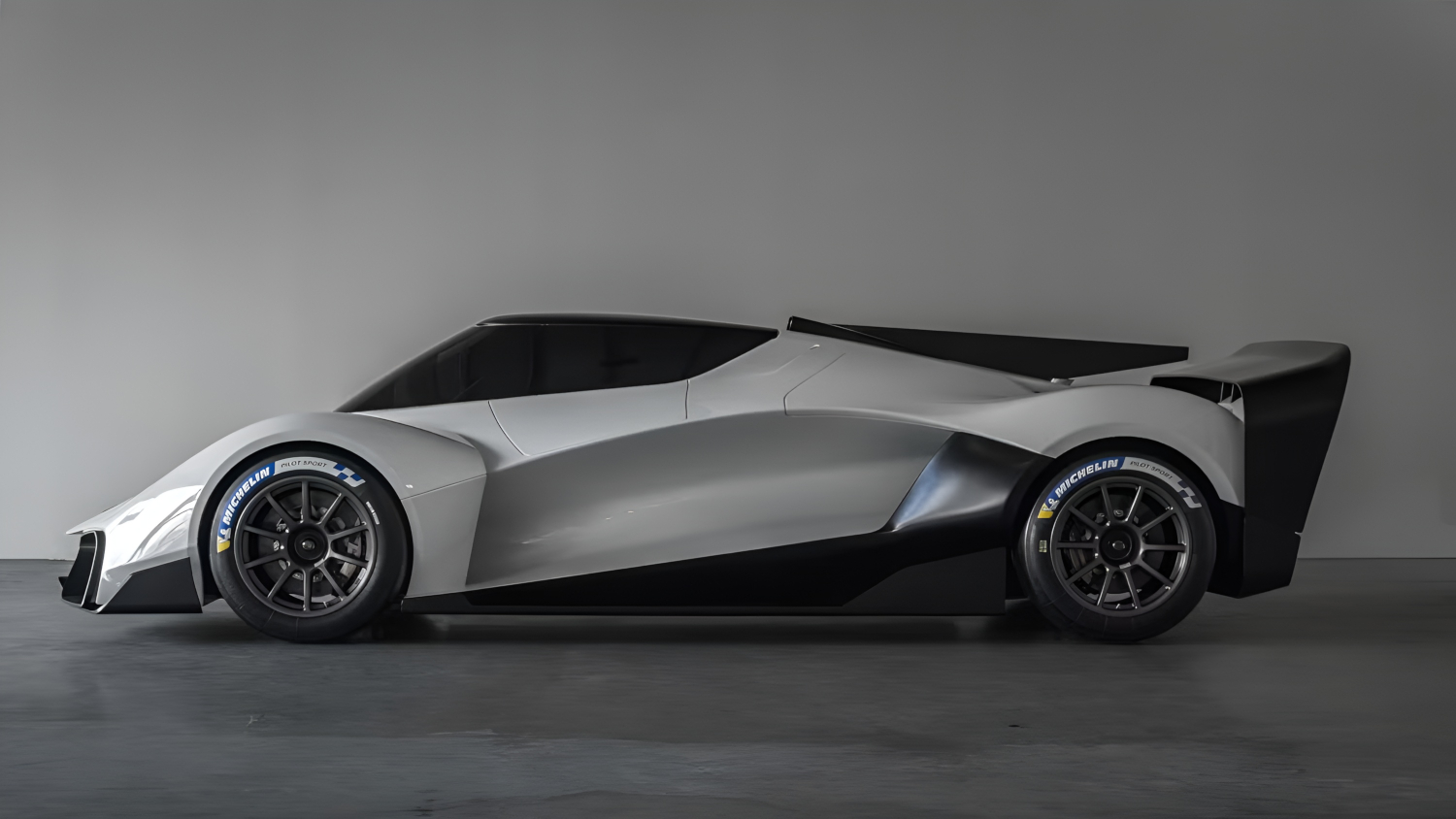
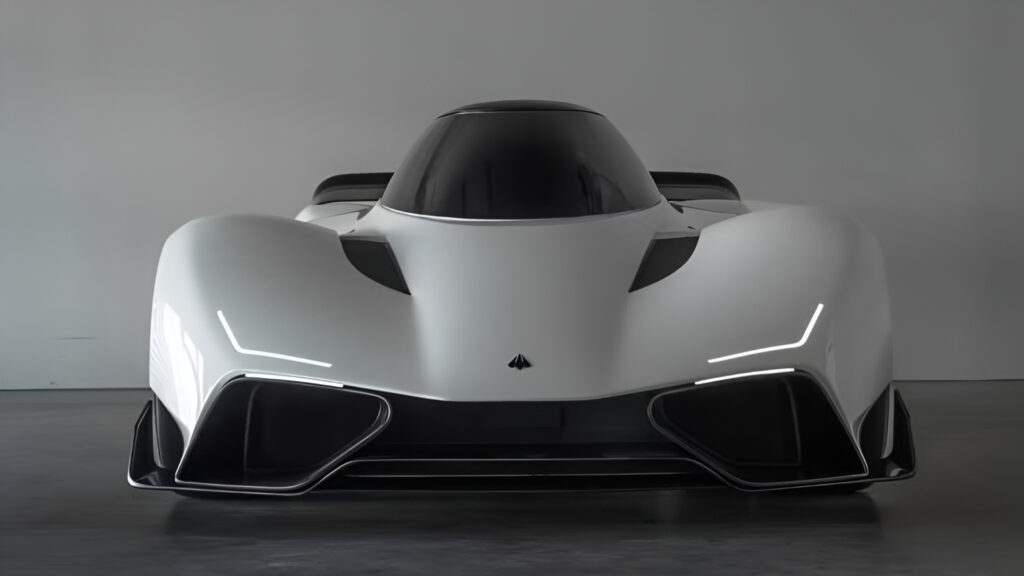
Dutch startup Sanrivatti — founded by Santiago Sánchez Rivero — has built a track-only, single-seat prototype around what it calls the “Apex Position.” Head forward, upper body angled toward the front of the car, legs extending rearward to reach the pedals. Think fighter pilot crossed with MotoGP racer, contained inside a carbon-fiber shell. In a segment increasingly consumed by spec wars, Sanrivatti is betting that the experience of occupying the exotic cars is the product itself.
There’s a steering wheel. There are foot pedals. Leaning does not directly steer the car — this isn’t a motorcycle. But the body moves with the car the way a rider’s does, reportedly shifting weight into corners as the car rotates. According to Sanrivatti and secondary reporting, familiar driving habits won’t transfer cleanly to this layout. Driver training isn’t an afterthought here — Motor1 reports a dedicated program, while Hagerty notes planned exclusive circuit experiences built into the ownership concept.
Announced Targets (Not Confirmed Production Specs)
Every figure below is a development goal; none has been independently validated on a finished customer car.
- Powertrain: 5.5-liter naturally aspirated Judd V-10, targeting approximately 800 hp
- Transmission: Announced configuration is a Hewland six-speed sequential gearbox, rear-wheel drive
- Weight: Approximately 1,100 kg — a reported target dry weight, not a confirmed production curb weight
- Top speed: 200+ mph target, as yet undemonstrated
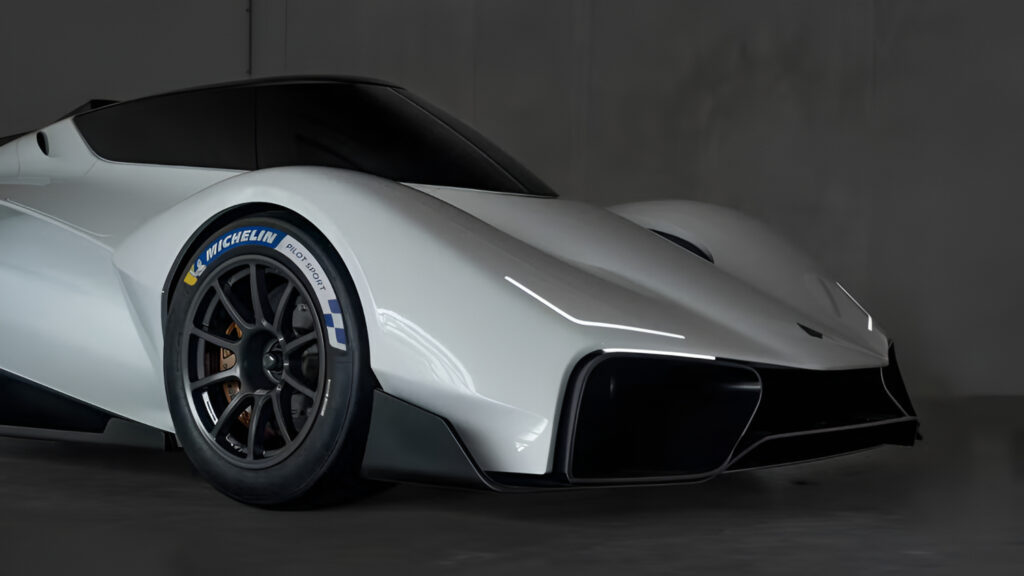
- Reported hardware: AP Racing brakes, forged-magnesium Braid wheels, Michelin racing tires — components reported for the prototype or planned car, subject to change before customer delivery
What Still Needs Proving
The harder engineering questions — crash safety, restraint systems, and production readiness — remain genuinely open.
The design looks like something NASA misplaced: a wraparound canopy, large side air channels, and carbon-fiber bodywork proportioned entirely around that forward pilot position. According to Sanrivatti’s own published figures, the layout delivers a 28-degree vertical field of view — compared with 15.5 degrees for a benchmark hypercar — though that comparison is a company-reported figure, not an independently measured result.
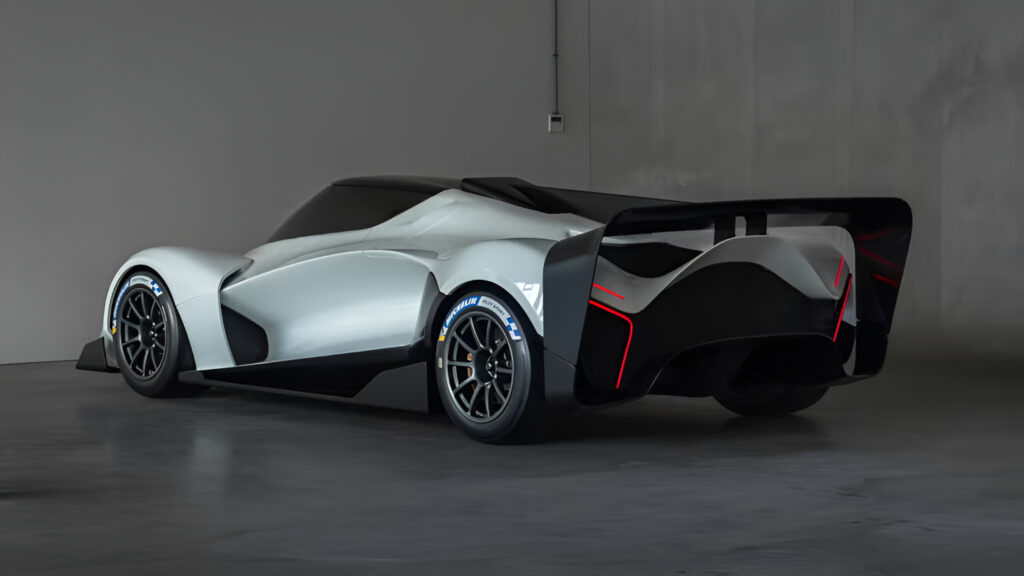
Here’s the honest tension: a head-forward occupant in a crash presents a fundamentally different engineering challenge. Sanrivatti is reportedly developing specialized body-support and control technologies to secure the pilot while allowing movement with the car. Their effectiveness cannot be assessed until a completed, tested vehicle exists. As for timing, Sanrivatti says the first customer car is planned for 2030, though delivery remains subject to development and validation.
The Apex Position is either a legitimate rethink of human-machine connection or an elaborate concept that never finds its track. Either way, it’s more interesting than another twin-turbo V-8 stuffed into a carbon tub — and that alone makes it worth watching.