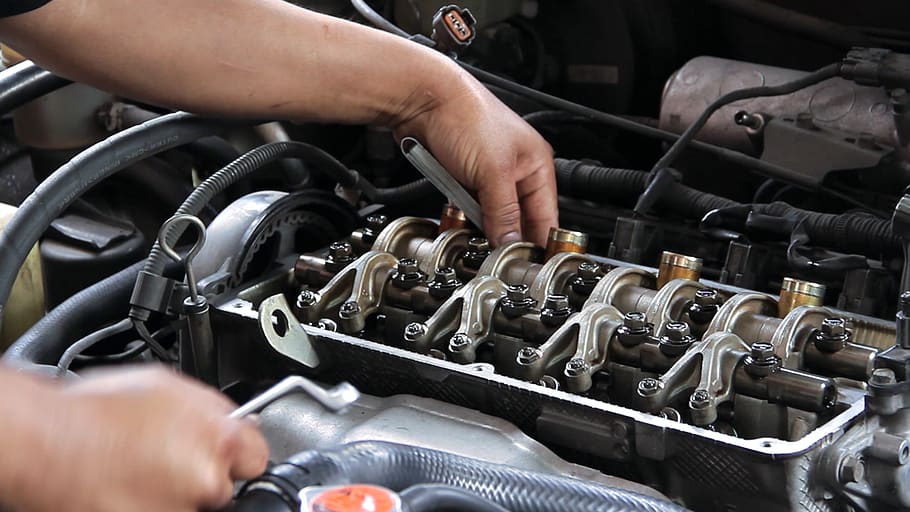



Truck engine longevity is not accidental. The engines on this list share specific engineering characteristics — cast-iron blocks, conservative tuning, simple valvetrain designs, mechanical injection systems, timing chains instead of belts — that produce documented mileage figures most modern engines will never approach. We referenced RealTruck, HotCars, and Pickup Truck Talk to compile these twelve engines, each of which has demonstrated decades of reliability through hard use and, in several cases, minimal maintenance that would destroy anything with more complexity built in.
12. Toyota Tundra (4.7L 2UZ-FE V8 & 5.7L 3UR-FE V8) (Exterior)

Toyota Tundras built around these V8s carry balanced proportions and clean lines that hold up physically — body panels fit together with the precision that keeps these trucks looking solid after a decade of hard use rather than developing the gaps and surface irregularities that accumulate on lesser vehicles. The exterior avoids the excessive bulk that has defined full-size American trucks in recent years, which also means there is less bodywork to damage and repair over the course of a long working life.
Toyota Tundra (4.7L 2UZ-FE V8 & 5.7L 3UR-FE V8) (Interior)

Seats provide genuine support without the heavy bolstering that wears out quickly in working trucks. Switchgear operates with tactile precision that touch-sensitive controls cannot replicate in gloves or dirty-handed use. Both V8s feature overbuilt internals and conservative tuning — the 4.7L’s cast-iron block providing exceptional thermal stability — that routinely produces 300,000+ mile longevity with standard maintenance intervals. For buyers who want to extend that service life further, these innovative inventions for pickup trucks add capability without compromising reliability.
11. Chevrolet C/K Series (5.7L 350 Small Block V8) (Exterior)

The C/K Series exterior is squared off and honest — no fake vents, no non-functional chrome, no design elements that serve anything other than the truck’s working purpose. The practical bumpers protect the vehicle rather than crumpling on contact. This styling has aged better than most vehicles of the same era precisely because it never tried to be fashionable in the first place.
Chevrolet C/K Series (5.7L 350 Small Block V8) (Interior)

The bench seat delivers genuine comfort on long drives, and the dashboard layout puts every critical control where a driver’s hands naturally fall. Nothing in the cabin requires explanation or a manual to operate. The 350 Small Block’s four-bolt mains and hydraulic roller camshaft are what make it probably the most rebuilt engine in America — it routinely runs past 300,000 miles between overhauls, and its parts availability means that rebuilding one is a straightforward proposition rather than an engineering challenge. The small-block V8’s history covers the full arc of this engine’s contribution to automotive engineering.
10. Dodge D-Series (225 Slant-6) (Exterior)

The Dodge D-Series housing the Slant-6 — known as the “Leaning Tower of Power” — uses clean, purposeful lines with an understated grille and straightforward body design that prioritizes function over visual statement. The proportions are right without the bloated bulk that characterizes modern trucks. These were built during an era when manufacturers designed trucks to work rather than to serve as suburban status symbols that never carry a load.
Dodge D-Series (225 Slant-6) (Interior)

The bench seat, sparse dashboard, and essential gauges constitute the entire interior specification — nothing that requires maintenance or fails over time from complexity. The Slant-6’s unique 30-degree tilt improves oil return and cooling, allowing these engines to cruise past 200,000 miles on original components with minimal complaint. For context on how reliability principles have evolved in modern truck engineering, these groundbreaking truck technologies show where the industry is heading.
9. Nissan Frontier & Xterra (4.0L VQ40DE V6) (Exterior)

The Frontier and Xterra pair their reliable 4.0L V6 with muscular fenders and straightforward proportions that communicate capability without overstatement. The exterior avoids both the excessive mass of full-size trucks and the styling compromises of car-based crossovers — it lands in the specific zone where purposeful design produces genuine ruggedness rather than the appearance of it.
Nissan Frontier & Xterra (4.0L VQ40DE V6) (Interior)

Controls follow logical arrangements without the confusing layouts that accumulate when designers prioritize novelty over usability. The VQ40DE’s aluminum head and iron block combination delivers consistent performance across a 250,000+ mile lifespan. Regular oil changes and timing chain maintenance are essentially the complete maintenance requirement for these engines to run through decades of hard use — a simplicity that translates directly into lower long-term ownership costs.
8. Toyota Pickup (22R/22RE 2.4L Inline-4) (Exterior)

Toyota Pickups with the 22R/22RE wear boxy, utilitarian design with zero pretension — clean lines, practical proportions, and body panels that resist rust in environments that would dissolve lesser vehicles. The high ground clearance and basic silhouette make no attempt to impress anyone, which is precisely the quality that keeps these trucks relevant and collectible decades after production ended.
Toyota Pickup (22R/22RE 2.4L Inline-4) (Interior)

Sparse controls click with satisfying precision, seats provide basic support without complicated adjustments, and the simple gauge cluster tells drivers what they need to know without additional information architecture. Manual window cranks continue operating long after power windows in more expensive trucks have failed. The 22R’s SOHC design with cast-iron block regularly delivers 350,000+ miles with minimal intervention — the mechanical simplicity is the longevity mechanism, not a limitation.
7. Ford F-Series (300 4.9L Inline-6) (Exterior)
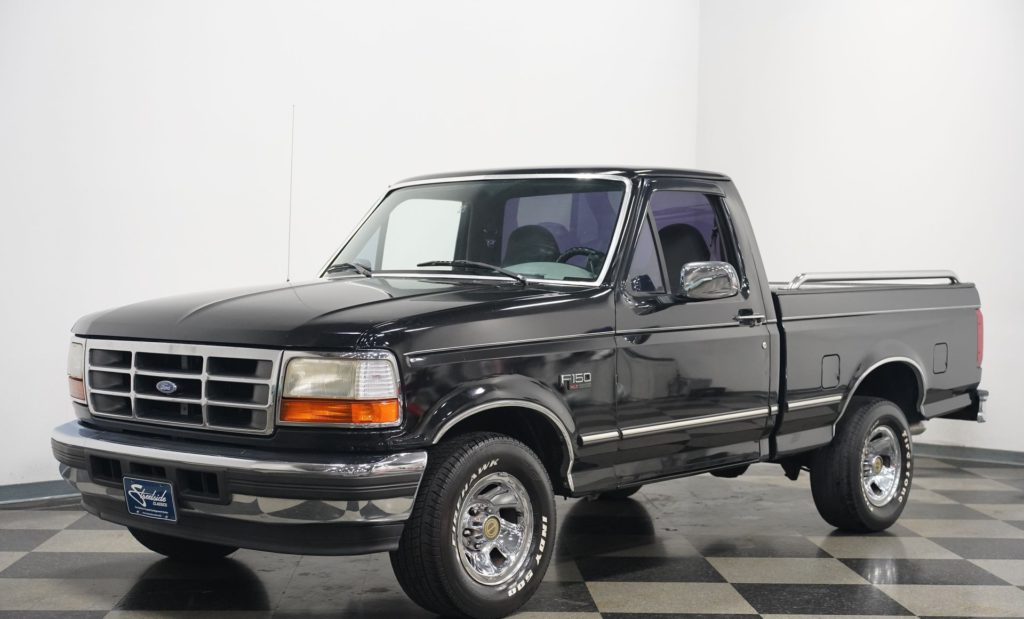
F-Series trucks with the 4.9L Inline-6 are boxy, functional, and uninterested in making aesthetic arguments. Simple body lines and practical features prioritize durability over style — the opposite of the design direction the full-size truck segment has taken since. These trucks project working-class credibility through their engineering rather than their appearance, and that credibility has held up across decades of service in conditions that style-forward designs could not survive.
Ford F-Series (300 4.9L Inline-6) (Interior)

Durable vinyl and cloth seats resist staining from hard use. The dashboard uses actual buttons operable with gloves on — a functional requirement for a working truck that touchscreen-centric modern designs cannot meet. The 300 straight-six consistently delivers 300,000+ mile lifespans with basic maintenance, a record built on the same design philosophy as the cab: nothing that does not need to be there, and everything that does built to last.
6. Mitsubishi L200 (Exterior)

The Mitsubishi L200 balances work-ready capability with global styling sensibilities — proportions that avoid the excessive bulk of American full-size trucks while maintaining the stance and presence that communicates genuine capability. The body lines combine visual interest with durability considerations. The L200 has been proven in markets where truck reliability is not a preference but an operational requirement, which explains the engineering philosophy underneath.
Mitsubishi L200 (Interior)

The control layout prioritizes functionality without unnecessary complexity, and seating provides the support required for extended driving rather than the visual impact that sells trucks in showrooms. Post-2016 L200 diesels use a maintenance-free timing chain and durable cast-iron block that routinely deliver 300,000+ miles. These are engines designed for regions where downtime means business failure — which produces a reliability standard that most markets never actually demand but genuinely benefit from.
5. Dodge Ram (5.9L 12-Valve Cummins Diesel) (Exterior)

The Dodge Ram housing the 5.9L Cummins diesel makes no apologies for its aggressive stance. The bold grille and muscular fenders communicate the truck’s heavy-duty purpose honestly, and the body panels handle the physical abuse of working conditions without showing every impact. These trucks display their working-class credentials rather than concealing them behind styling trends — which is the correct approach for a vehicle whose primary customer needs it to pull weight for years.
Dodge Ram (5.9L 12-Valve Cummins Diesel) (Interior)

Seats deliver adequate support for long hauls and the layout puts access to controls ahead of visual presentation. The 12-valve Cummins’s mechanical injection system — no electronics, no solenoids, no software — and bombproof internals routinely push these engines past 500,000 miles. That figure is not an outlier; it is a documented outcome of the mechanical injection system’s simplicity and the engine’s conservative design margins. The 12-valve Cummins is the specific reason this generation of Ram trucks commands prices that defy normal depreciation curves.
4. Chevrolet Silverado 1500 (5.3L Vortec V8) (Exterior)

Silverados equipped with the 5.3L Vortec balance American truck presence with clean body lines that avoid unnecessary flourishes. The front end carries Chevy truck DNA without the oversized grille treatments that characterize more recent generations. The exterior communicates capability without the design escalation that has made modern full-size trucks increasingly difficult to park and increasingly expensive to repair after minor contact.
Chevrolet Silverado 1500 (5.3L Vortec V8) (Interior)

Controls follow sensible patterns that require no learning curve, and seats balance support with comfort for highway miles. The cast-iron block and simple pushrod valvetrain routinely exceed 250,000 miles with basic maintenance — the 5.3L is the balanced option on this list, offering the power and efficiency combination that makes it the most practical choice for buyers who actually use their trucks as trucks rather than as commuter vehicles that occasionally carry something.
3. Jeep Cherokee XJ (4.0L AMC Inline-6) (Exterior)

The Cherokee XJ’s squared-off design maximizes interior space while keeping exterior dimensions manageable — a specific engineering priority that produced a genuinely useful vehicle rather than a large one. The flat body panels are not merely a style choice: they are easier to repair when trail damage occurs, which is a practical consideration for a vehicle intended for off-road use rather than just off-road appearance. In a segment now dominated by rounded crossovers, the XJ’s honest design stands apart.
Jeep Cherokee XJ (4.0L AMC Inline-6) (Interior)

The upright seating position provides excellent visibility, and the simple control layout allows adjustment without removing attention from the trail. The cabin delivers surprising space efficiency without excessive exterior dimensions — a point that modern manufacturers have largely abandoned in the SUV segment. The 4.0L’s straight-six design with robust construction routinely delivers 300,000+ miles, making it the most reliable engine in Jeep’s production history and the primary reason XJ prices have increased rather than depreciated in recent years.
2. Toyota Tacoma (4.0L 1GR-FE V6) (Exterior)

The Tacoma with the 4.0L 1GR-FE V6 balances rugged capability with proportions that remain manageable in real-world use — neither the excessive mass of full-size trucks nor the compromised styling of car-based crossovers. Purposeful details create a truck that projects capability without overstating it, which is the specific balance that has made the Tacoma the best-selling midsize truck in America for most of the past two decades.
Toyota Tacoma (4.0L 1GR-FE V6) (Interior)

Controls follow intuitive patterns and the cabin dimensions provide sufficient space without the unnecessary bulk that makes modern trucks difficult to park in actual urban environments. The 1GR-FE’s aluminum head, forged steel crank, and open-deck iron block reliably handle high mileage — 400,000-mile examples exist in documented fleet service. The timing chain design eliminates belt replacement expenses entirely, which contributes directly to the Tacoma’s reputation for trouble-free operation at mileage figures most competing trucks will never approach.
1. Ford Super Duty (7.3L Power Stroke Diesel) (Exterior)

Super Duty trucks with the 7.3L Power Stroke carry heavy-duty credentials that the exterior communicates without exaggeration — the imposing front end and substantial proportions house components built for sustained serious work. Practical tie-down access and durable trim that survives years of work site contact are the exterior details that matter on a truck used as one. These vehicles project authority through mass and function rather than styling choices, which is a distinction the 7.3L Power Stroke’s reputation fully supports.
Ford Super Duty (7.3L Power Stroke Diesel) (Interior)

The seating position provides excellent visibility, controls are sized and positioned for operation with work gloves, and durable materials throughout the cabin absorb years of abuse without degrading. The 7.3L Power Stroke’s forged steel crankshaft and deep-skirt block design routinely deliver 500,000+ miles of reliable service — the specific engineering reason why clean examples still command premium prices more than two decades after production ended in 2003. A truck that stops being made and appreciates in value is the clearest possible argument that the engine inside it is genuinely irreplaceable.