

Between 1950 and 1959, automotive designers hurled sheet metal at the future, treating engineering like a backstage pass to tomorrow’s fever dreams. While today’s roads parade refined efficiency and safety-tested sameness, the mid-century delivered no-holds-barred experiments—machines that looked less like family transport and more like props from a sci-fi double feature. These eight bizarre vehicles prove innovation doesn’t arrive politely; it crashes the party wearing jet-age jewelry and two-stroke ambition, reminding anyone behind the wheel that driving was once pure, unfiltered imagination.
1. Chevrolet Biscayne XP-37
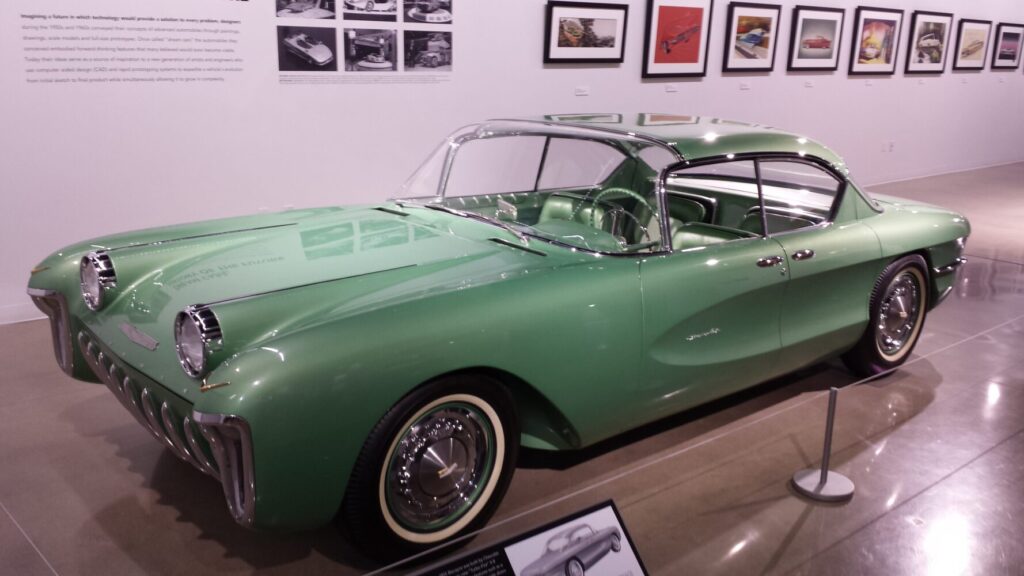
A Motorama dream that answered every question production engineers never asked.
The 1955 Chevrolet Biscayne XP-37 operated outside conventional manufacturing logic, built purely for GM’s Motorama show as a rolling crystal ball. Designed by Chuck Jordan, this concept featured the dramatic “Stratospheric” wraparound windshield sweeping over the driver’s head into the roof—pillarless hardtop construction with rear-hinged suicide doors that created unparalleled openness. Swiveling front seats eased entry; electrical systems stayed largely decorative. On a 115-inch wheelbase sat Chevrolet’s new 265 cubic-inch “Turbo-Fire” V8 rated around 215 hp, yet none of that mattered for public roads.
The Biscayne’s radical transparency clashed with inevitable safety regulations and structural demands. Parallel parking this thing on a busy street meant every pedestrian got a full show of your three-point turn—no hiding behind tinted glass or B-pillars. Its styling cues—especially round taillights and rear-end forms—influenced later GM models including 1958 Chevrolet full-size cars and the 1961 Corvette. Not all groundbreaking ideas get green-lit for production; some get explored, then quietly parked, like an old film reel of a future that simply had to wait.
2. Goggomobil Dart
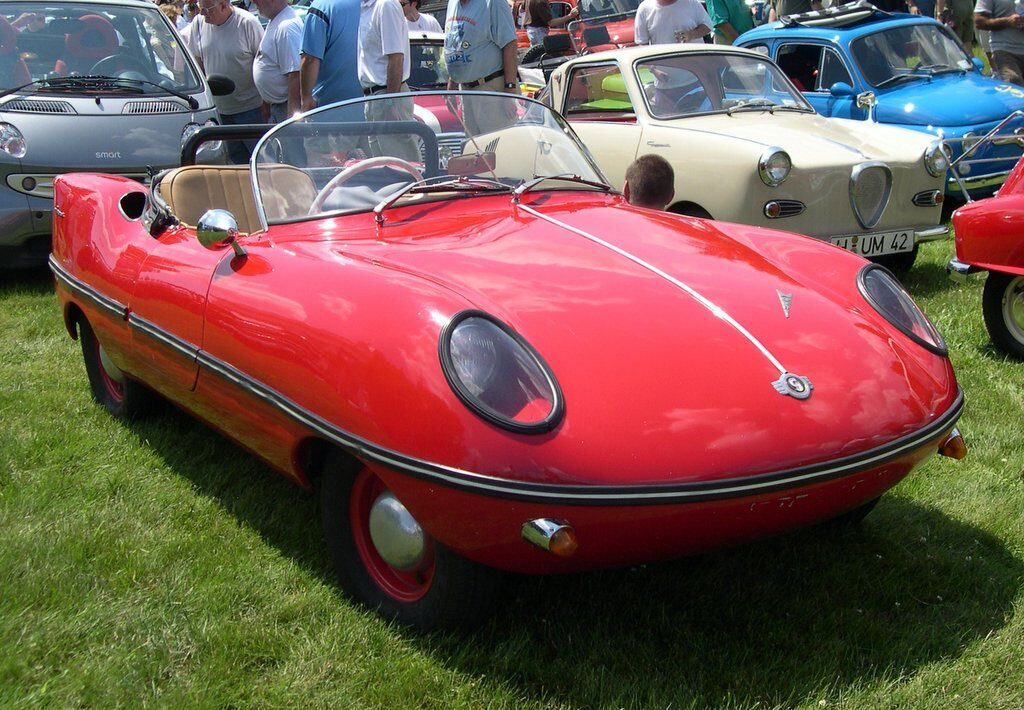
Bringing featherweight fury to every corner, one two-stroke backfire at a time.
Australian-built Goggomobil Darts ignored conventional horsepower wars by stripping sports-car essentials down to their molecular level—like a chef perfecting a single, potent ingredient. Bill Buckle’s 1959 design mounted a lightweight fiberglass, doorless body on a shortened Goggomobil chassis, achieving a curb weight around 345 kg (760 pounds). Power came from rear-mounted, air-cooled Glas two-stroke, two-cylinder engines: either 293 cc delivering roughly 15 hp or 392 cc pushing 18.5 hp through a four-speed manual. Top speed hovered near 60–70 mph depending on engine size; 0–50 mph arrived in about 27 seconds.
Compact dimensions—roughly 1,800 mm wheelbase, 3,050–3,500 mm length, ~1,370 mm width—made conventional sports cars look bloated. This machine operated more like a high-strung kart, connecting drivers directly to tarmac without filter. Production totaled about 697 units; fewer than 100 survive today, now collectible within microcar circles. The Dart forces a reckoning: how much sports car does anyone truly need when every mundane errand feels like a covert rally stage?
3. Subaru 360
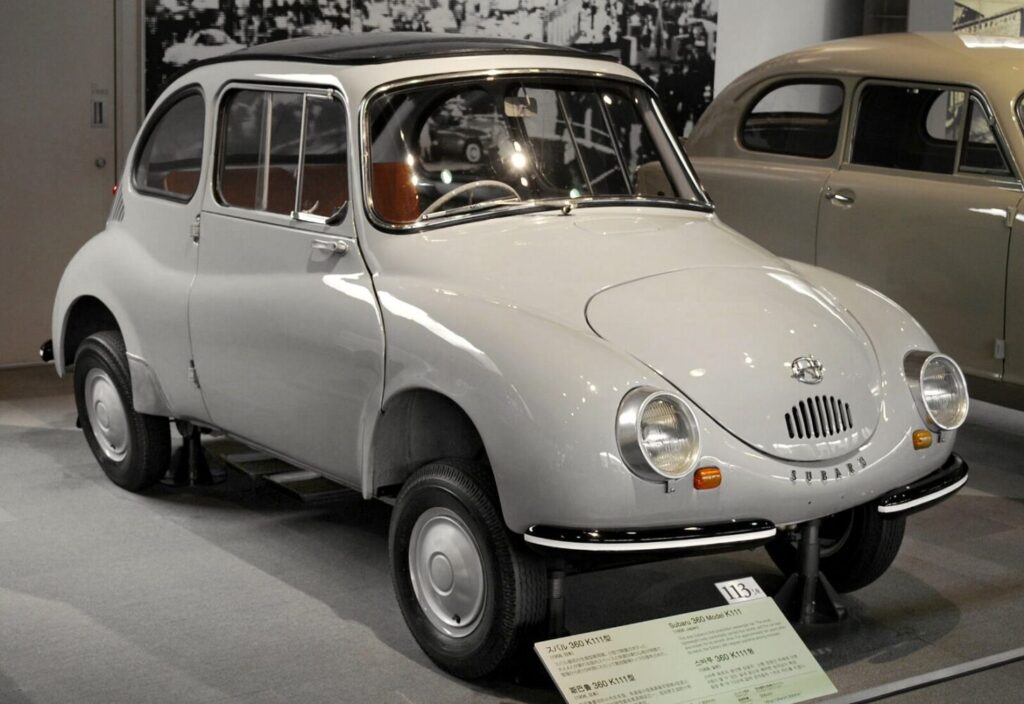
Japan’s Ladybug arrived like minimalist bento at America’s Thanksgiving feast.
The Subaru 360 hit Japanese streets in 1958 as the company’s first mass-produced vehicle, designed to meet kei-car regulations emphasizing compact size and low displacement. Measuring just 2.99 meters long and 1.3 meters wide, it used a rear-mounted 356 cc two-stroke, two-cylinder engine initially producing 16–25 hp. Curb weight around 385–400 kg allowed a top speed near 60 mph, perfect for Japan’s narrow urban streets during post-war economic recovery. The rounded, bubble-like body earned it the nickname “Ladybug” and symbolized affordable car ownership for a generation.
Then it crossed the Pacific. When exported to the United States in the late 1960s, the 360’s inherent limitations became glaring against larger, heavier domestic vehicles. Consumer Reports famously labeled it “the most dangerous car in America” due to poor crash protection and limited performance relative to American expectations. Anyone who’s tried parallel parking a Suburban in a bike lane understands fitting the wrong tool to the job; the 360 was a compact hero in one context, a liability in another. Monocoque construction with thin steel and minimal trim kept fuel economy stellar but safety standards unconvinced.
4. Cadillac Cyclone
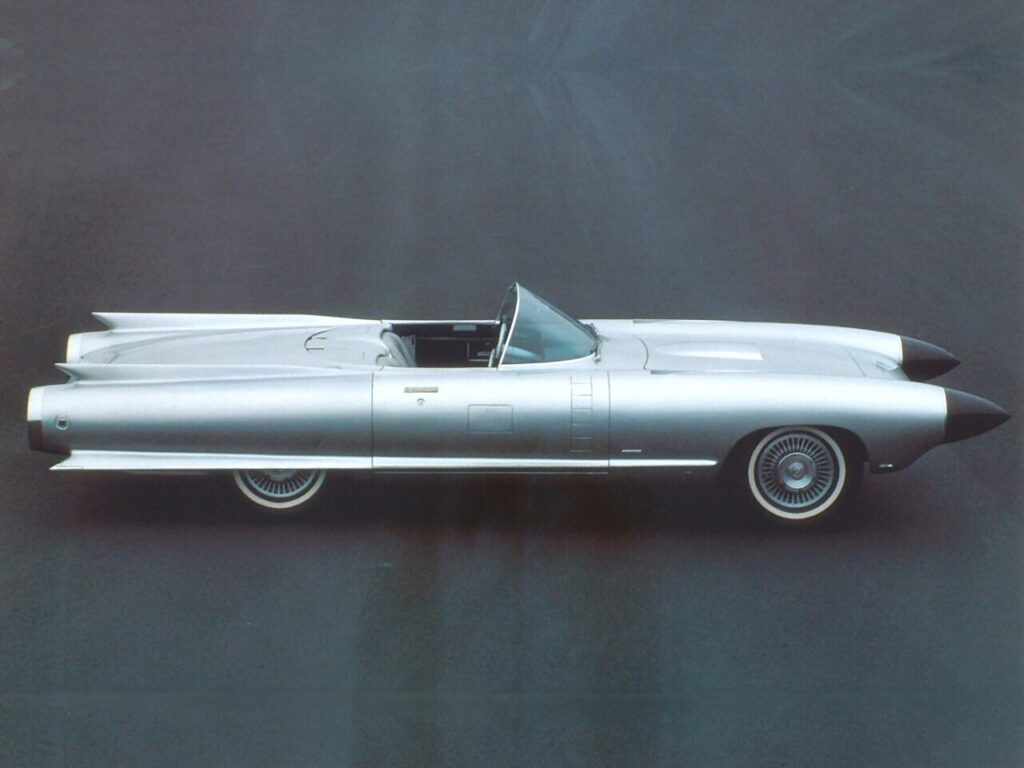
Collision avoidance arrived decades early, wrapped in twin nose cones and bubble-canopy optimism.
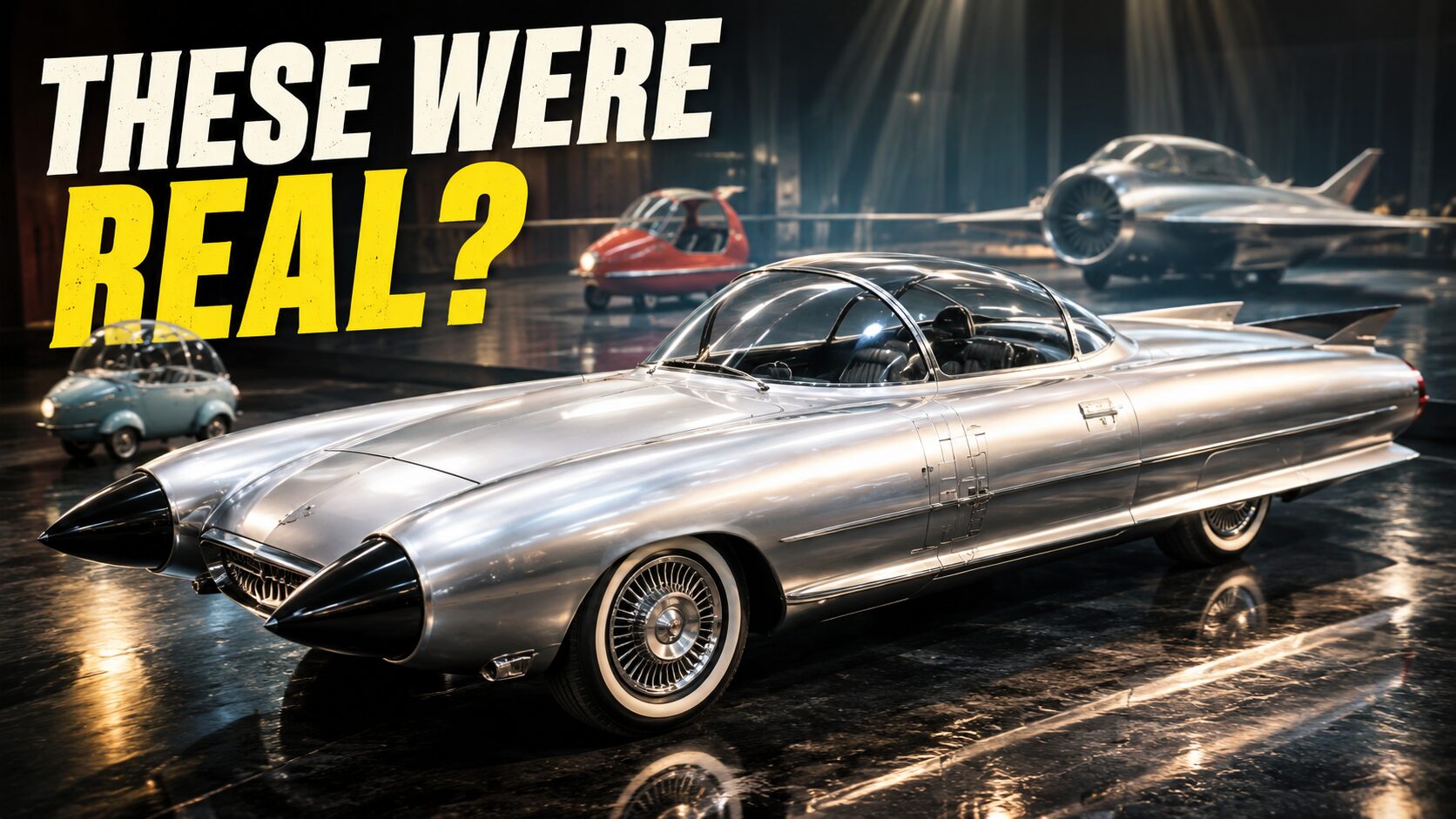
The 1959 Cadillac Cyclone imagined driving intelligence that leaped decades ahead, designed under GM styling chief Harley Earl as a futuristic showcase. Its experimental radar-based collision-warning sensors—housed in prominent twin nose cones at the front—detected obstacles and alerted drivers, anticipating modern adaptive cruise control and forward collision warning long before electronics caught up. The extremely low, pointed body featured short tail fins at the rear, reflecting rocket and aircraft influences rather than traditional Cadillac luxury cues.
A clear bubble canopy slid back electrically, designed to be air-conditioned and sealed against weather like a personal jet fighter’s cockpit. Powered by a Cadillac V8 on a shortened chassis, the Cyclone remained a styling and technology demonstrator rather than an engineered road vehicle. It proved that visionary concepts sometimes arrive far too soon, audacious moves like strapping future-gazing AI to a vehicle’s nose. This rolling laboratory simply had to wait for technology to validate its ambition—collision avoidance before most designers worried about collision survival.
5. Messerschmitt KR200

Aircraft heritage forced to adapt to tarmac, one 191 cc heartbeat at a time.
Built from 1955 to 1964 by German aircraft manufacturer Messerschmitt, the KR200 three-wheeled microcar feels less like an automobile and more like a fighter jet grounded by circumstance. Its clear bubble canopy hinges sideways, tandem seating places the driver in front and passenger behind, and construction echoes cockpit design throughout—not metaphorically, literally. This is what happens when aviation engineers pivot from warplanes to microcars, bringing design language straight across without translation.
A rear-mounted 191 cc single-cylinder two-stroke engine (Sachs) produces about 9.5 hp, driving the single rear wheel through a four-speed transmission that can run in reverse by reversing engine rotation. Top speed hits roughly 90 km/h (56 mph) with fuel consumption around 3–4 L/100 km, thanks to ~230 kg curb weight and narrow frontal area. The three-wheel layout (two front, one rear) delivers exceptional economy but demands careful driving to stay within stability limits. Its extreme minimalism and unusual driving position have made the KR200 an icon of the microcar era—a helmet on wheels that challenges every expectation of road travel without ever truly aiming to be a conventional car.
6. Citroën DS
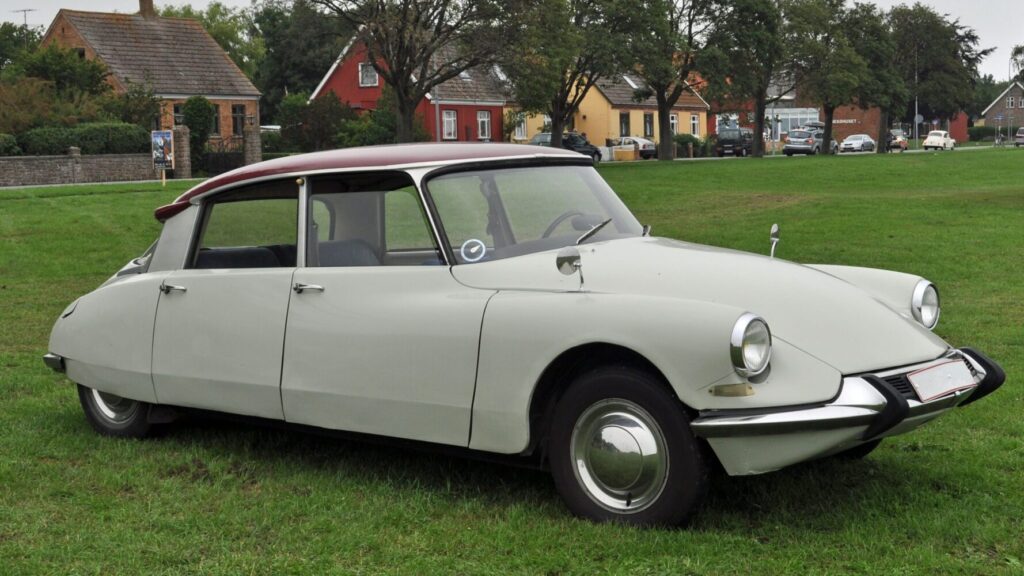
Hydropneumatic wizardry that made roads optional and redefined what suspension could accomplish.
The Citroën DS burst onto the 1955 Paris Motor Show like a sleek alien craft, generating thousands of orders on its first day and fundamentally challenging automotive design conventions. Styled by Flaminio Bertoni with input from André Lefèbvre, the DS introduced an aerodynamically smooth, flowing body with tapering rear and integrated fenders—breaking sharply from upright post-war designs. At its core sat the revolutionary hydropneumatic suspension using pressurized hydraulic fluid and nitrogen-filled spheres, delivering self-leveling ride height and an exceptionally smooth “floating” sensation that made road imperfections feel optional.
Beyond suspension, the central hydraulic system powered critical functions: steering, brakes, clutch on semi-automatic models, and later even headlight adjustment—creating a coordinated network rather than separate mechanical subsystems. Later DS models introduced swiveling headlamps that turned with the steering to improve night visibility, cutting through corners like a rally driver’s flashlight. Early inline-four engines around 1.9–2.0 L prioritized comfort and roadholding over raw performance. The DS transformed every journey into an effortless glide, widely regarded as one of the most influential and innovative cars of the 20th century for its combination of avant-garde design, integrated systems engineering, and radically different driving feel.
7. BMW Isetta
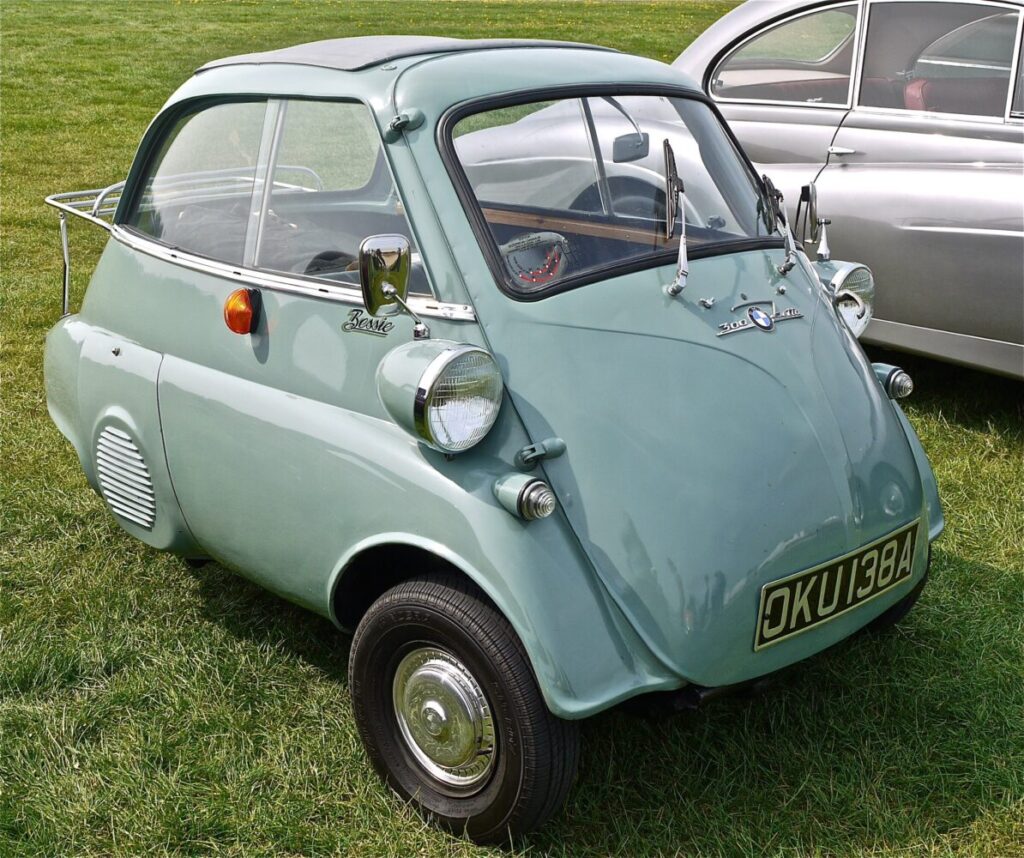
Opening the entire front panel forces a reckoning with what “car” actually means.
The BMW Isetta, produced from 1955 to 1962 under license from the original Italian Iso design, features a single large front-hinged door that swings out together with the steering column and instrument panel—allowing occupants to enter from the front rather than the side. Opening this machine feels less like accessing a vehicle and more like flipping up the visor on a helmet. BMW re-engineered around its own single-cylinder, four-stroke motorcycle engine (initially 247 cc, later 298 cc), mounted at the rear and driving the rear wheels through a four-speed gearbox. Top speed reaches near 85 km/h (53 mph).
Compact dimensions—approximately 2.28 m long and 1.38 m wide—plus bubble-like body made navigating tight European streets feel like threading a needle, yet provided eligibility for low-tax classes. Fuel consumption around 3–4 L/100 km made it exceptionally economical, playing a significant role in BMW’s financial recovery during the 1950s by providing high-volume sales. Interior layout seats two (plus a small child in some markets) within a compact cabin often likened to being inside a bubble due to curved glass and close body surfaces. The Isetta proved a car doesn’t need size to function, demonstrating how efficiency can replace presence—a micro-adventure that makes anyone reconsider fundamental definitions.
8. GM Firebird I
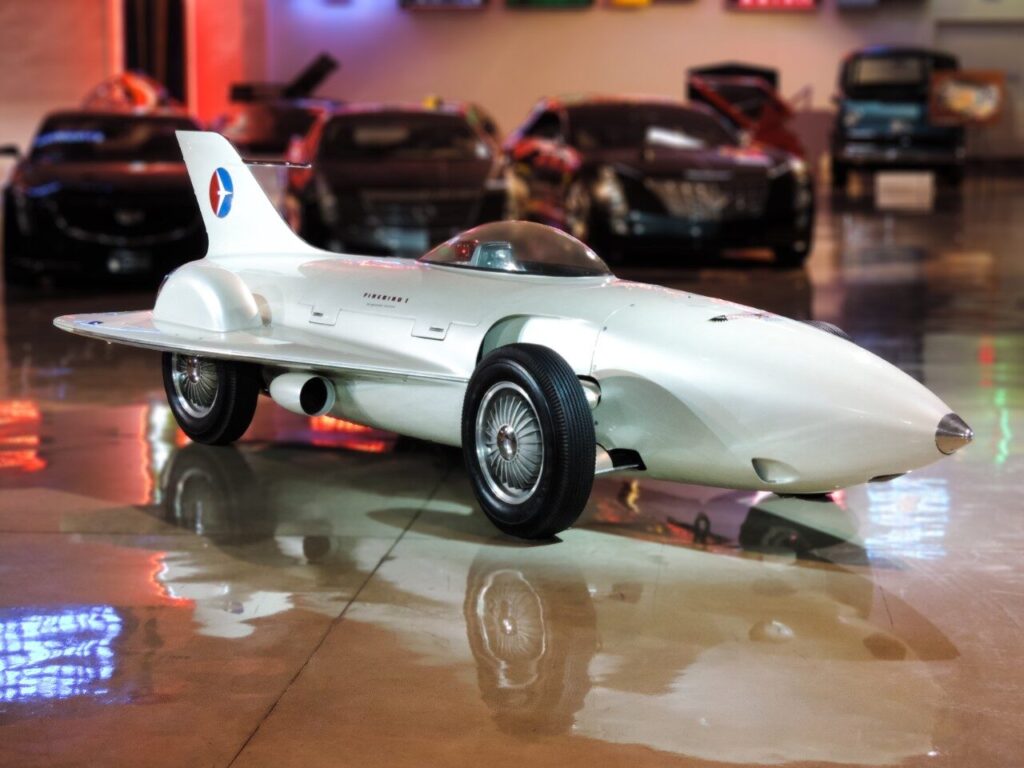
Pure aviation fantasy ditched automotive logic for turbine-powered land-speed ambition.
The 1953 GM Firebird I (XP-21) challenged every assumption about cars by exploring jet propulsion for road vehicles as an experimental gas-turbine concept. Styled under Harley Earl, Firebird I features a single-seat, fighter-jet-inspired body with delta wings, rear stabilizing fins, and a pointed nose—deliberately resembling a small aircraft more than conventional automobile. GM’s Whirlfire Turbo-Power gas turbine reportedly produces around 370 hp, driving rear wheels despite operating characteristics (high rpm, poor low-speed efficiency) that made normal road use impractical.
The driver sits centrally in a canopy-covered cockpit, emphasizing “pilot” role with instrumentation more akin to aviation than automotive practice. Firebird I was never intended for public roads; it operated purely as a technology and styling demonstrator to gauge reaction to turbine cars and jet-age aesthetics. Subsequent GM Firebird II and III concepts refined the idea with multi-passenger layouts. Together, the Firebird series represents the most extreme expression of 1950s American fascination with the jet age—less about driving, more about demonstrating raw, untamed possibility. Under Harley Earl’s direction, some ideas get explored not for production success but to fundamentally redefine category edges, like a chef throwing every spice in the cabinet just to see what happens.