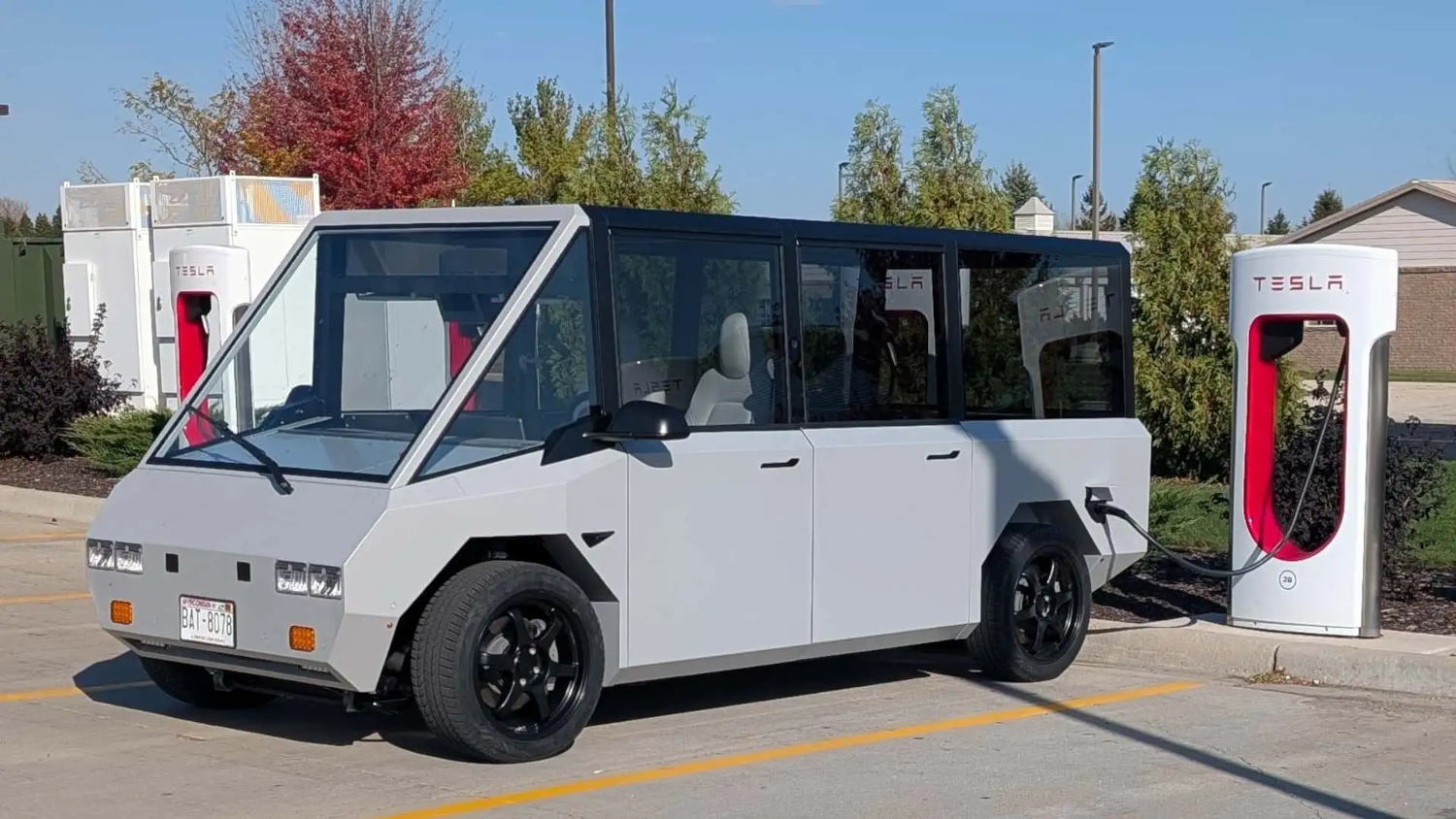
A Wisconsin startup drove a Tesla Model 3 from the Midwest to Las Vegas — then arrived at SEMA 2026 with something that looked nothing like a Model 3. The sedan body was gone. In its place stood a boxy utility vehicle with removable doors, an 11-seat minibus configuration, and the kind of ground clearance that makes the overlanding crowd lean in for a closer look. That vehicle is the Hoffman Badger, and the company behind it believes Tesla’s running gear is too good to stay confined to a four-door sedan body.
Tesla’s Guts, Someone Else’s Body
One proven EV platform underneath, with an expanding range of vehicle bodies on top.
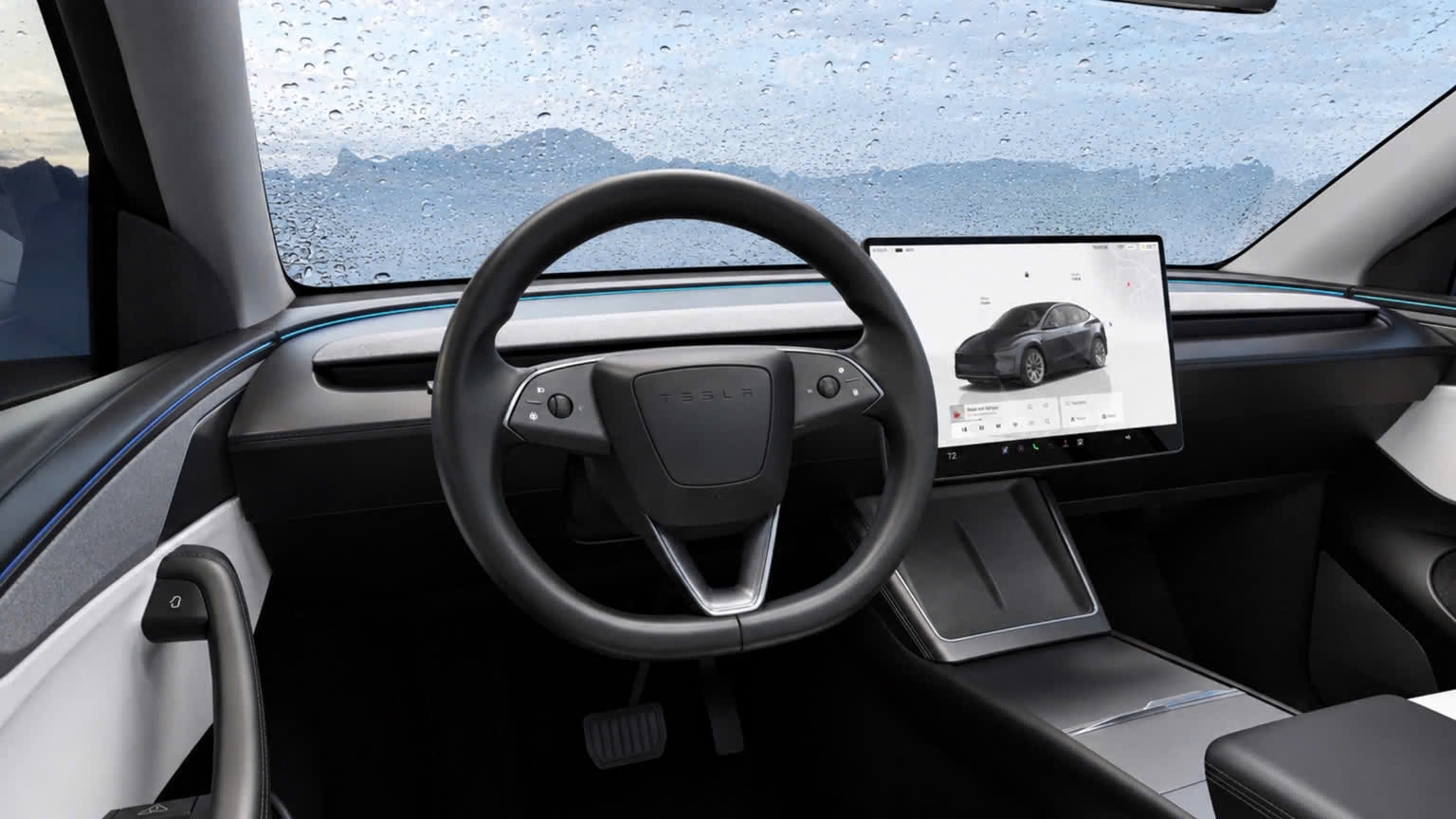
The Badger prototype used components from a 2020 Tesla Model 3 Long Range Dual Motor — including an approximately 74-kWh battery pack, as reported by Autoblog. Dual motors, suspension assemblies, dashboard, screens, steering wheel, seats, and door hardware all transfer into Hoffman’s newly fabricated chassis. The modular logic is straightforward: one established EV system supports multiple body styles without developing a new battery or motor architecture from scratch. According to Hoffman and media demonstrators, Supercharging and Tesla driver-assistance functions reportedly carried over on the prototype — though the practical and regulatory status of both should be independently confirmed before any reservation is placed.
Planned configurations and key specs from the SEMA prototype include:
- Body styles: pickup, camper, cargo van, off-road utility, safari shuttle, snowplow variant, and 11-seat minibus — a mix of demonstrated concepts and discussed possibilities, not all confirmed for production
- Off-road geometry: approximately eight inches of ground clearance, with the battery raised roughly 1.5 inches compared to the donor vehicle, and 37-degree approach and departure angles per Hoffman’s figures
- Range: Out of Spec Reviews estimated approximately 150 miles for the Badger — well below the donor Model 3’s EPA-rated range; Hoffman has not published an official figure
- Price: no final announcement made; Hoffman has positioned the vehicle above the Slate Truck and below the Cybertruck, with media-derived estimates ranging from roughly $25,000 to more than $80,000 depending on kit versus turnkey configuration
- Purchase format: completed turnkey vehicle or a kit-with-VIN, where buyers source their own donor Model 3 or Model Y
Promising Prototype, Unfinished Story
Range loss and unresolved charging questions are the honest trade-offs of building a tall, blunt body around sedan-derived hardware.
The prototype reportedly used Tesla Superchargers throughout its Wisconsin-to-Las Vegas drive. Future customer access, however, may depend on Tesla’s software, account eligibility, and network policies — that is not a detail to assume, and prospective buyers would be wise to seek written confirmation before committing. The range trade-off is equally concrete. A tall, blunt body generates considerably more aerodynamic drag than the streamlined donor sedan, and the approximately 150-mile estimate from Out of Spec Reviews reflects that reality for the demonstrated vehicle. Aerodynamic revisions and improvements are planned for early 2027, though no finalized range figure has been published. Crash testing was also incomplete at the time of the SEMA debut, reinforcing that the Badger should be understood as a development demonstrator rather than a production-ready vehicle.
If Hoffman reaches its 2027 production target of roughly 100 vehicles per year, the platform could carve out a useful niche — potentially extending the working life of salvaged Tesla components while offering electric utility vehicles in body styles the mainstream market has largely ignored. Whether certification, charging access, and affordable new car range improvements resolve in time will determine whether the Badger becomes a viable product or remains, for now, one of the more inventive trucks ever to roll across a SEMA show floor.