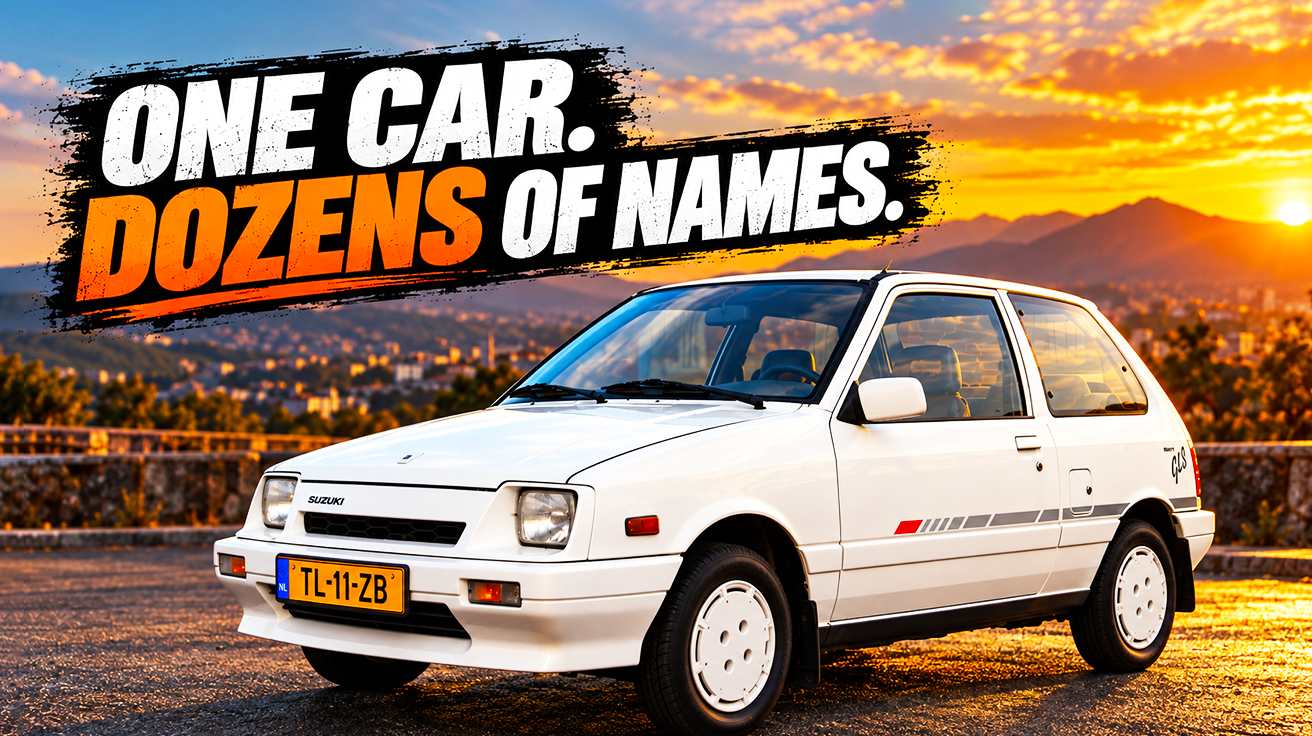
Platform sharing and badge engineering define modern automotive manufacturing. While over 85% of vehicles share core components beneath different badges, manufacturers rarely advertise this reality. Understanding these mechanical siblings reveals how corporate alliances dictate product lineups—and why buyers often pay different prices for nearly identical machines. The following vehicles demonstrate badge engineering at its most extensive, from compact crossovers wearing four different nameplates to commercial vans shared across five brands.
1. Stellantis Compact Vans (Citroën Berlingo, Peugeot Partner/Rifter, Opel/Vauxhall Combo, Toyota Proace City, Fiat Doblò III)
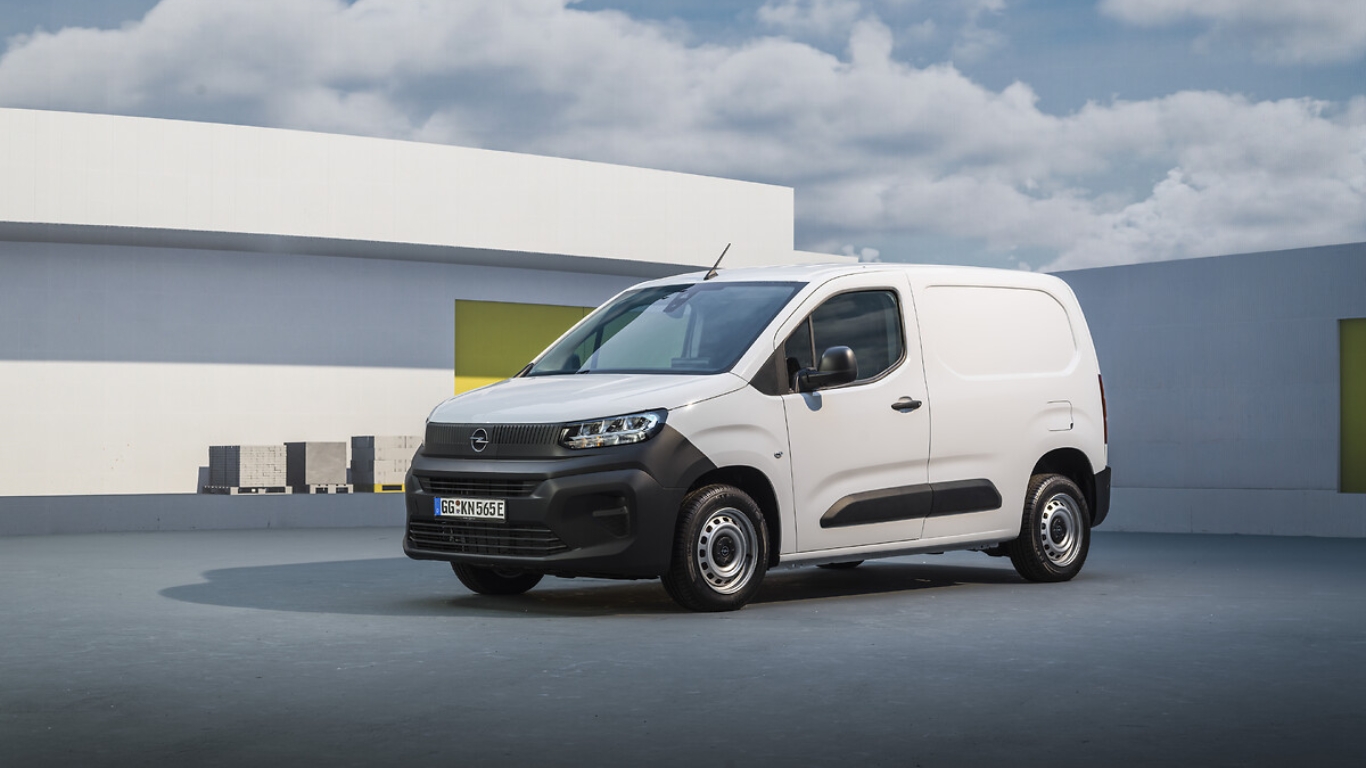
Five brands, one platform—the small-van formula perfected.
Light commercial vehicles pioneered platform sharing long before passenger cars embraced the strategy. Citroën introduced the Berlingo in 1996, creating the leisure activity vehicle segment for compact, high-roof MPVs. Today’s third generation (launched 2018) rides on PSA’s CMP/EMP2 architecture. Peugeot markets it as Partner or Rifter; Opel and Vauxhall call it Combo; Toyota badges it Proace City; Fiat sells it as Doblò III.
Mechanically, these vans are siblings separated only by grille design and trim badges. All offer 1.2-litre turbo petrol engines (110–130 hp) and 1.5-litre diesels (75–130 hp), plus an electric variant with 136 hp. Payloads reach approximately 1,000 kg depending on configuration.
Dimensions remain consistent:
- Standard bodies measure around 4,403 mm long
- Extended versions stretch to 4,753 mm
- Width hovers near 1,848 mm
- Height sits around 1,844–1,849 mm
A fleet manager choosing between these variants is selecting warranty terms and dealer networks, not unique engineering. Manufacturers cut development costs; buyers gain competitive pricing through shared R&D investments.
2. Ford-Volkswagen Commercial Vehicle Alliance
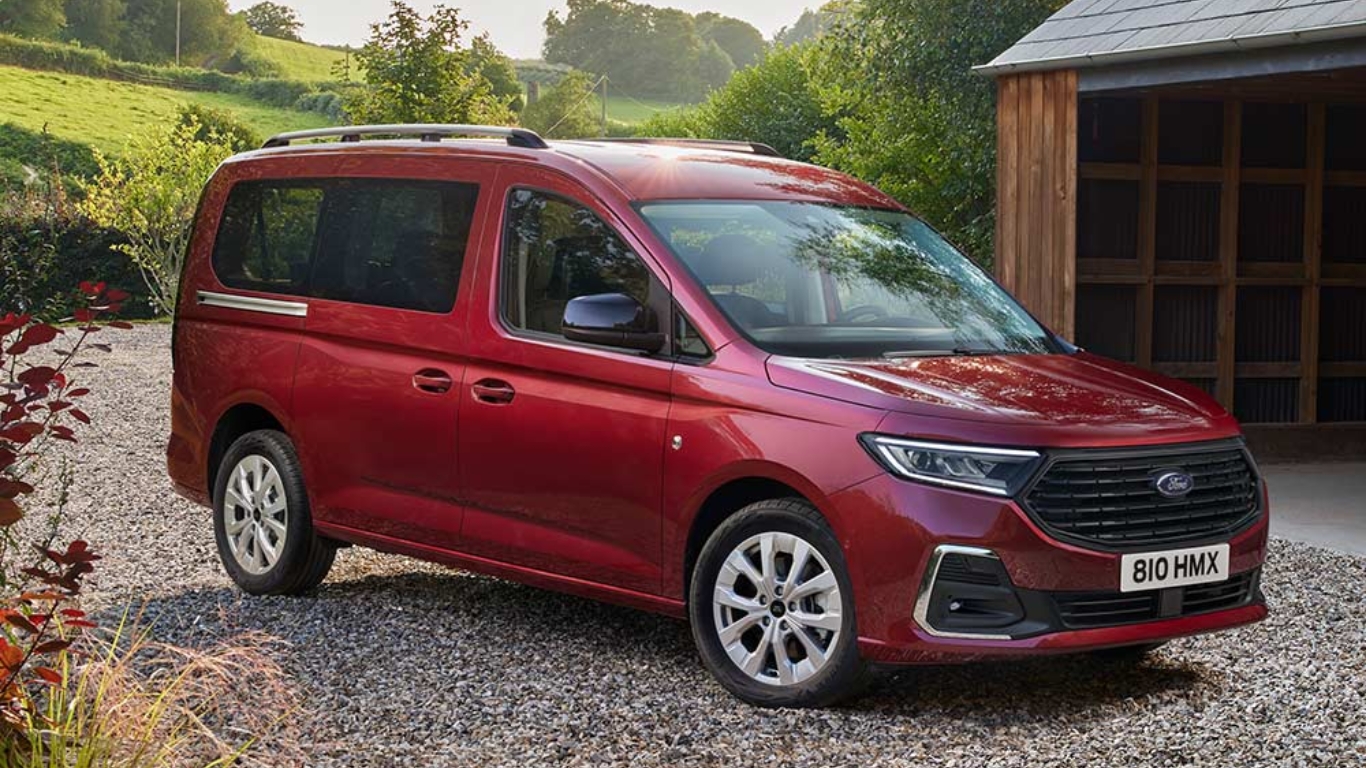
Two giants swap vans without swapping equity.
Ford and Volkswagen announced their global commercial vehicle alliance in January 2019, restructuring how both companies develop vans and pickups. The partnership involves no cross-ownership. Instead, each brand leads specific segments: Volkswagen supplies its Caddy platform (built on MQB Evo) for the current Ford Tourneo and Transit Connect. Ford provides Transit Custom architecture for the new Volkswagen Transporter T7.
The arrangement extends to pickups, where the latest VW Amarok uses Ford Ranger underpinnings. Production sharing reduces duplicated investment—VW builds the Caddy-based Ford in Poland; Ford assembles the Transit Custom-based VW in Turkey.
For commercial buyers, this alliance means proven platforms under different badges. The Ford Tourneo Connect gains VW’s modular transverse toolkit; the VW Transporter T7 benefits from Ford’s established medium-van mechanicals. Badge loyalty matters less than total cost of ownership when choosing between these corporate cousins.
3. Mercury (Ford’s Discontinued Brand)
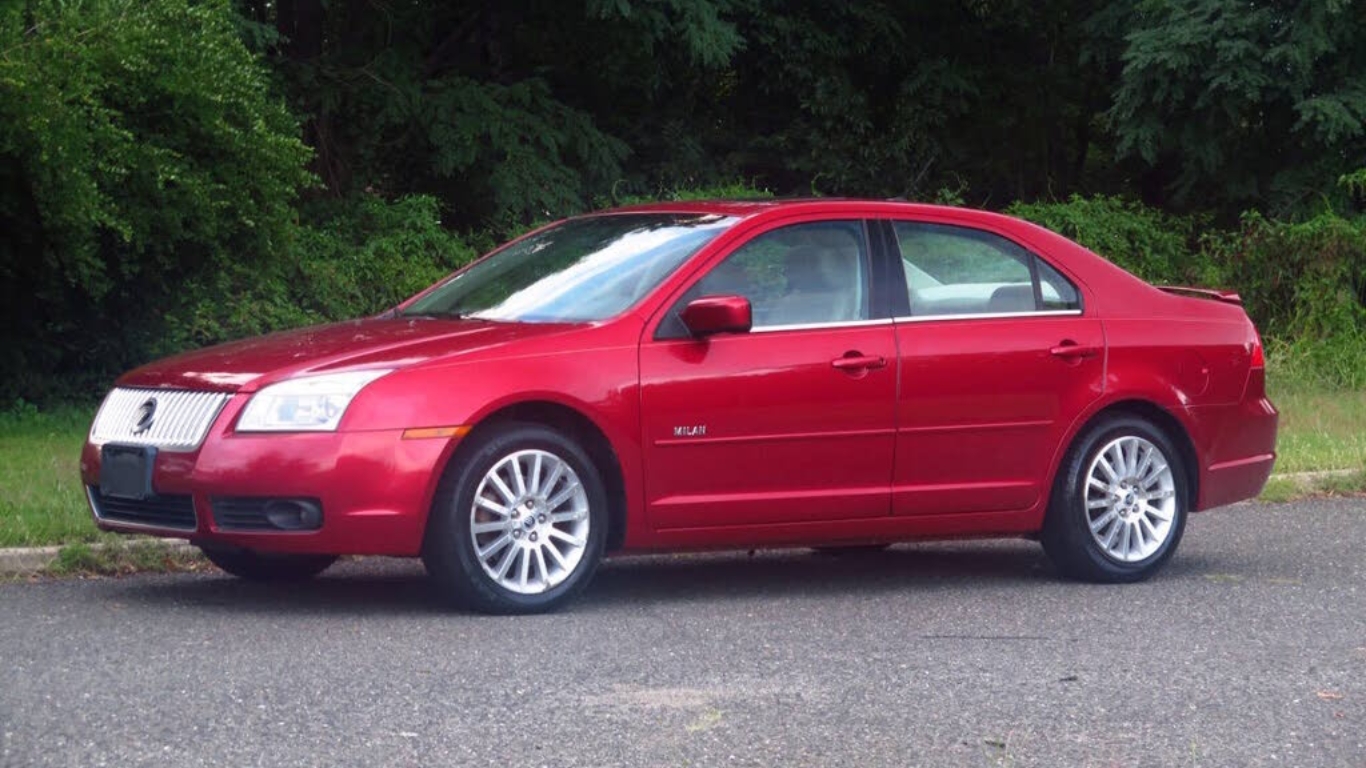
Seven decades couldn’t save Ford’s middle child from irrelevance.
Mercury served as Ford’s medium-priced division from 1939 through the 2011 model year, bridging the gap between Ford and Lincoln. By June 2, 2010, when Ford announced the brand’s discontinuation, Mercury’s U.S. market share had fallen below 1%. The lineup had contracted to just four models: Milan, Mariner, Mountaineer, and Grand Marquis.
These vehicles shared platforms and powertrains with Ford and Lincoln siblings. The Milan was a rebadged Fusion; the Mariner mirrored the Ford Escape. Overlapping products eroded Mercury’s distinct identity—buyers saw through the badge engineering.
Ford’s decision concentrated resources on its core Ford and Lincoln brands rather than supporting a redundant nameplate. The final Mercury rolled off assembly lines in late 2010. For anyone who remembers Mercury dealers, the brand’s fade illustrates what happens when badge engineering replaces genuine product differentiation.
4. Plymouth Brand and Prowler
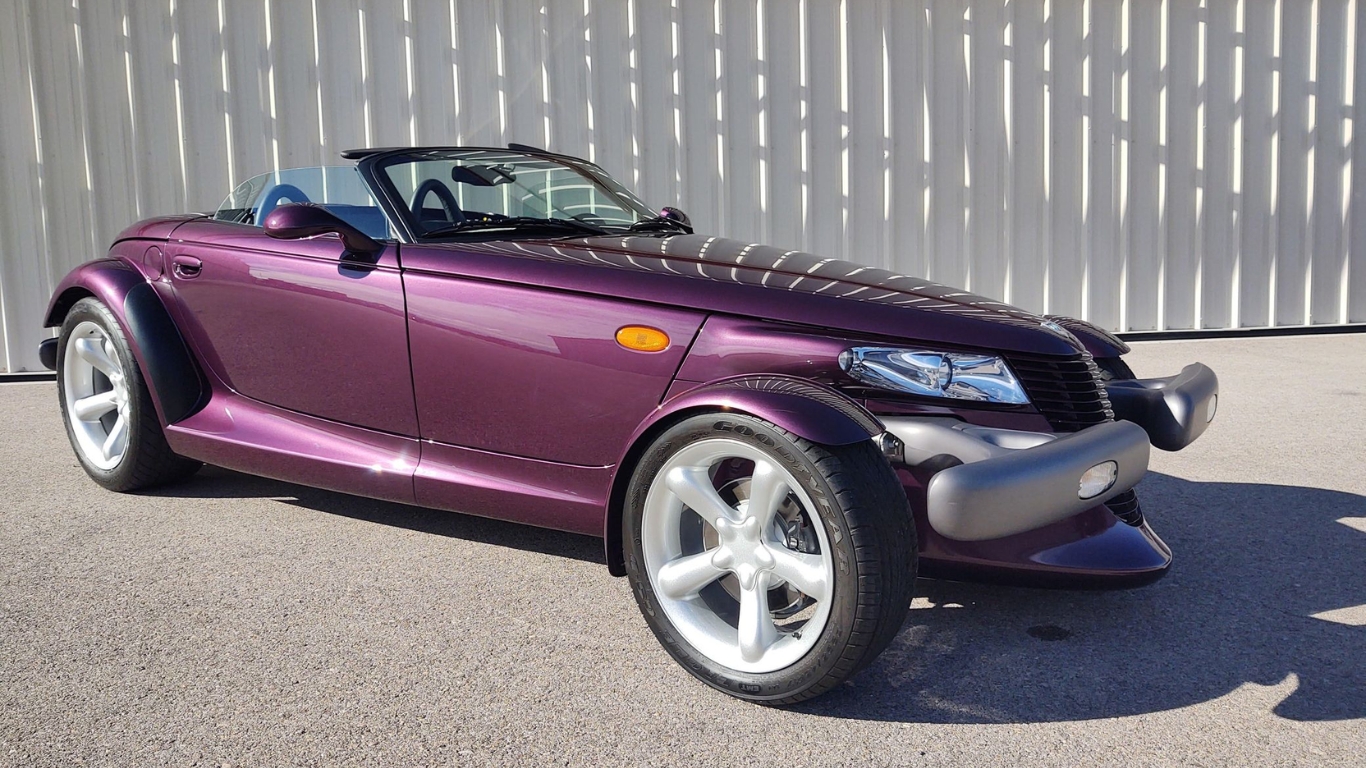
Chrysler’s entry-level brand ended with a hot-rod exclamation point.
Chrysler launched Plymouth in 1928 to offer affordable transportation. The brand thrived for decades but eventually suffered from extensive product overlap with Dodge and Chrysler divisions. By the late 1990s, most Plymouth models were thinly disguised siblings of corporate stablemates. Production ended in June 2001 when the last Plymouth Neon left the factory.
Plymouth’s final unique vehicle was the Prowler—a retro-styled, open-wheel roadster produced from 1997 through 2002 (continuing as a Chrysler after Plymouth’s discontinuation). The front mid-engine, rear-wheel-drive layout used a 3.5-litre SOHC V6 paired with a four-speed automatic transaxle borrowed from Chrysler LH sedans. Initial versions produced 214 hp; later models delivered 253 hp.
Dimensions included:
- Wheelbase: 2,878 mm
- Length: 4,199 mm
- Width: 1,943 mm
- Height: 1,293 mm
- Curb weight: 1,270–1,290 kg
The Prowler’s distinctive styling and niche appeal made it a collector favorite—proof that genuine design vision can outlast the brand that created it.
5. Volkswagen Group MQB Platform Vehicles (Škoda Octavia, SEAT Leon, VW Golf)
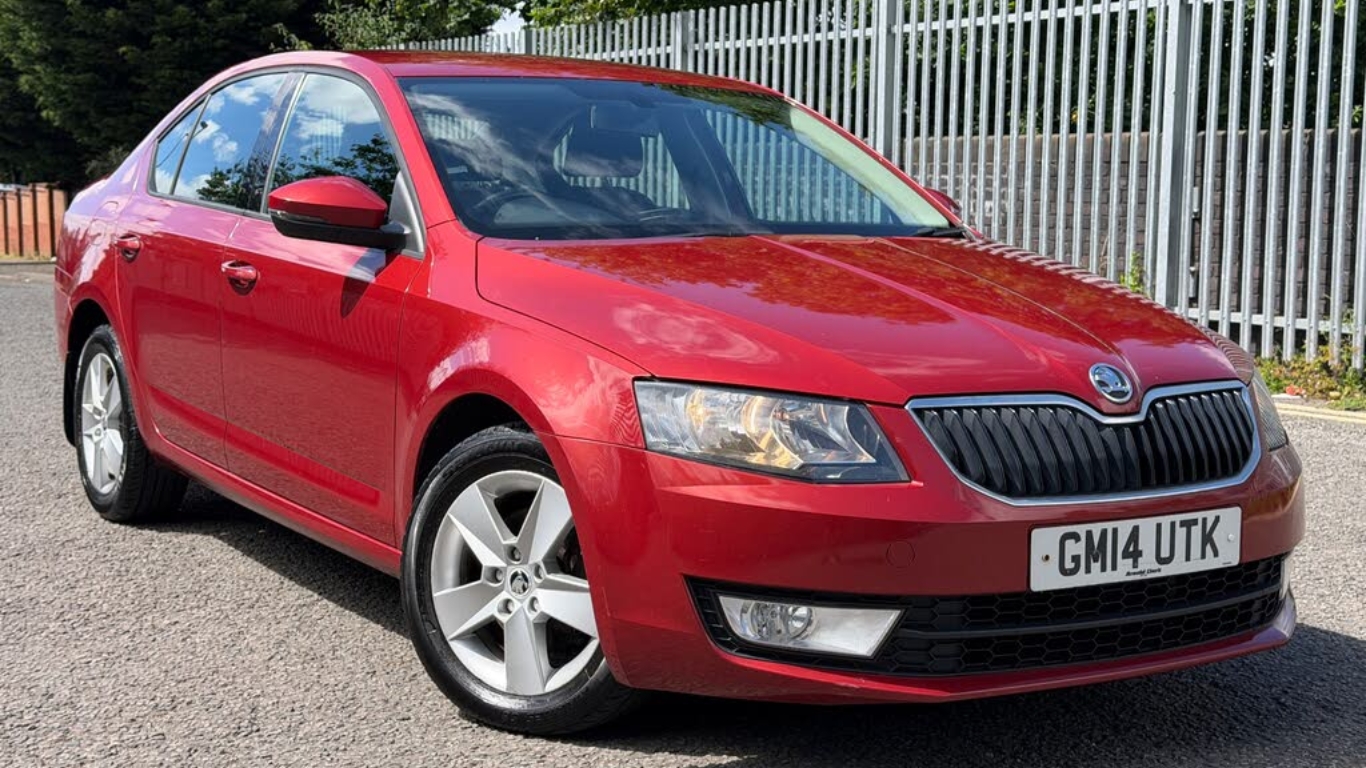
One architecture powers an entire corporate empire.
Volkswagen Group’s MQB (Modularer Querbaukasten, or Modular Transverse Toolkit) standardizes front-axle geometry, engine position, and pedal placement across multiple brands. The third-generation Škoda Octavia (2013–2020), Volkswagen Golf Mk7 (2012–2020), and third-generation SEAT Leon all ride on this architecture.
MQB allows flexibility in wheelbase and body size while sharing core components. The Octavia uses a 2,686 mm wheelbase; the Golf and Leon vary slightly but maintain the same fundamental structure. This modularity reduces development costs and enables each brand to apply unique styling and chassis tuning.
The evolved MQB Evo platform underpins the Golf Mk8 and fourth-generation Leon, supporting internal combustion, hybrid, and electric powertrains. Driving a Golf versus a Leon reveals the platform’s flexibility—shared mechanicals deliver brand-specific character through suspension tuning and steering calibration. MQB proves efficient engineering need not eliminate driving distinctions.
6. Daihatsu Rocky (A200) and its Rebadges (Toyota Raize, Perodua Ativa, Subaru Rex)
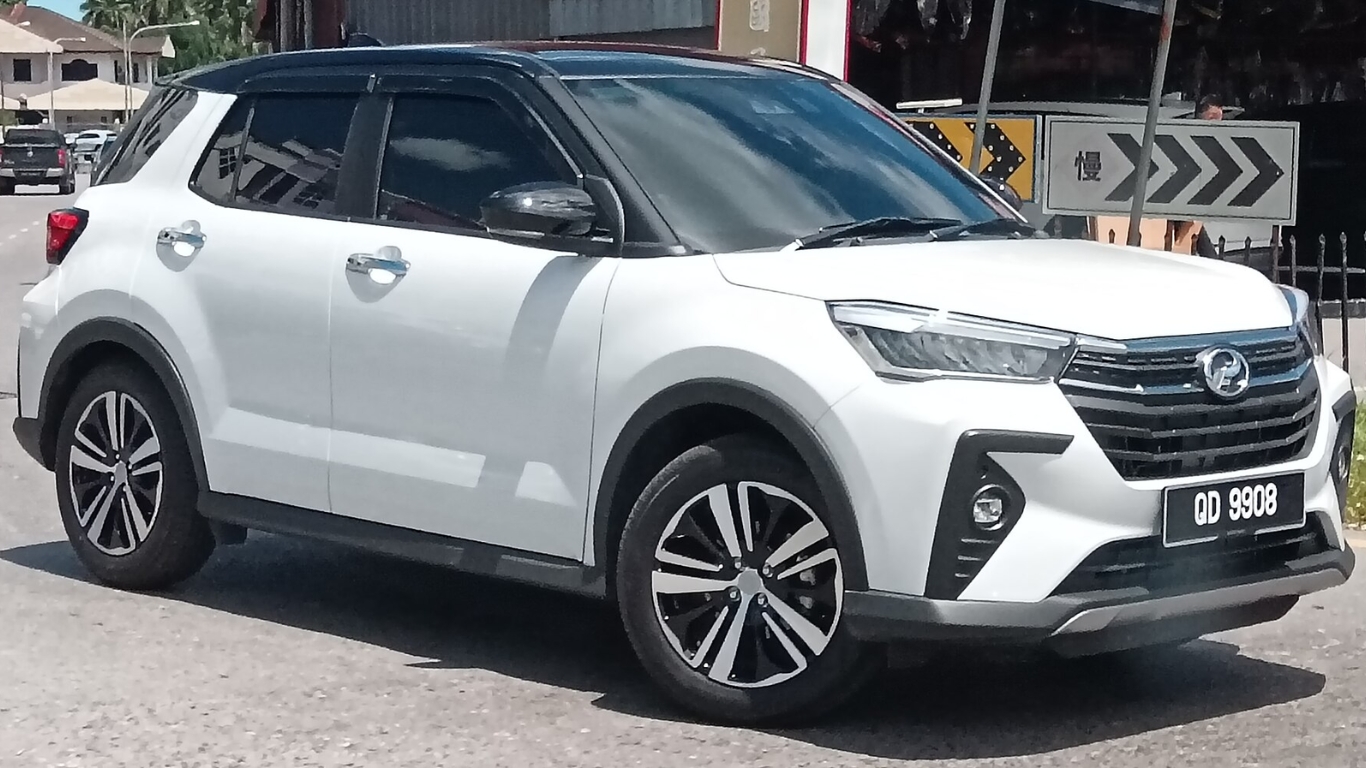
Four badges, three continents—one Japanese crossover dominates Asian markets.
The Daihatsu Rocky (A200 series), introduced in 2019, demonstrates contemporary badge engineering’s global reach. This subcompact crossover supplies the foundation for the Toyota Raize, Perodua Ativa (Malaysia), and Subaru Rex (Japan). All share a 2,525 mm wheelbase and lengths around 3,995–4,030 mm, with widths near 1,710 mm and heights approximately 1,620–1,635 mm.
Powertrains include:
- 1.0-litre turbocharged three-cylinder (1KR-VET) producing roughly 98 hp and 140 Nm
- 1.2-litre naturally aspirated three-cylinder (WA-VE) delivering about 87 hp
- Some markets offer a 1.2-litre hybrid version
Front-wheel drive comes standard; optional all-wheel drive is available. All use CVT transmissions. Curb weights range from 970–1,070 kg; seating accommodates five passengers.
Choosing between a Toyota Raize and Perodua Ativa in Malaysia means selecting badge prestige and dealer experience, not mechanical differentiation. The platform’s efficiency enables competitive pricing across multiple brands—a strategy that has made these rebadged siblings bestsellers in Asian markets.
7. Toyota-Suzuki Rebadging Partnership (India/SA)
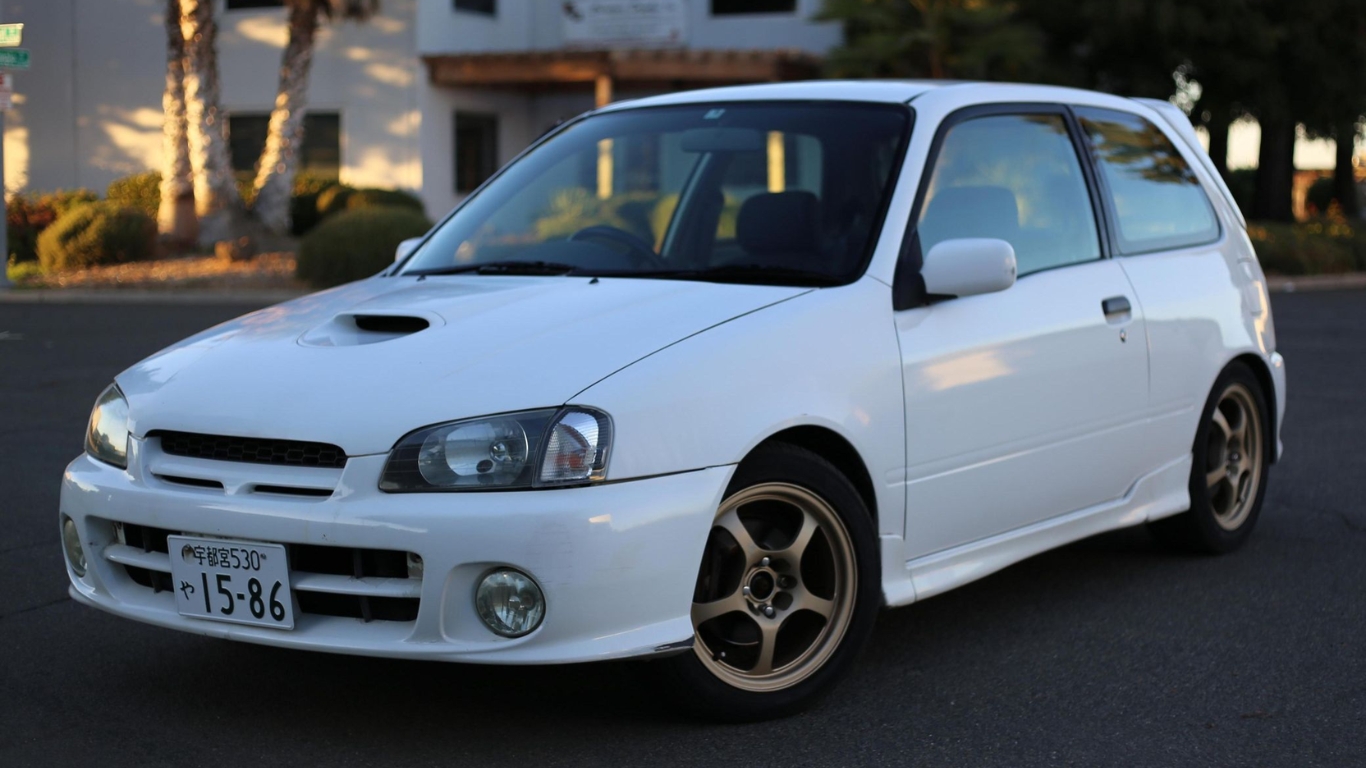
Suzuki builds them; Toyota badges them—and sales explode.
Toyota and Suzuki formed a vehicle-sharing partnership particularly prominent in India and South Africa, where Suzuki supplies compact cars that Toyota sells with minor cosmetic changes. In India, the collaboration includes the Toyota Glanza (rebadged Maruti Suzuki Baleno hatchback), Urban Cruiser Taisor (based on Maruti Suzuki Fronx), Toyota Rumion (Suzuki Ertiga MPV), and Urban Cruiser Hyryder (co-developed with Maruti Suzuki Grand Vitara).
These rebadged Suzuki-derived models account for approximately half or more of Toyota’s sales volume in India—a remarkable market shift driven by badge engineering. South Africa follows similar patterns, with Toyota selling the Vitz (Suzuki Celerio), Starlet (Suzuki Baleno), Rumion (Suzuki Ertiga), and Urban Cruiser (Suzuki Vitara Brezza / Grand Vitara).
Differences between Suzuki originals and Toyota rebadges typically involve grille design, bumpers, badging, and trim levels while sharing platforms, engines, and body panels. For Toyota, the partnership expands product range without full development costs; for Suzuki, it provides additional volume and manufacturing efficiency.
8. 1988 Suzuki Swift / Second-Generation Cultus and Global Rebadges
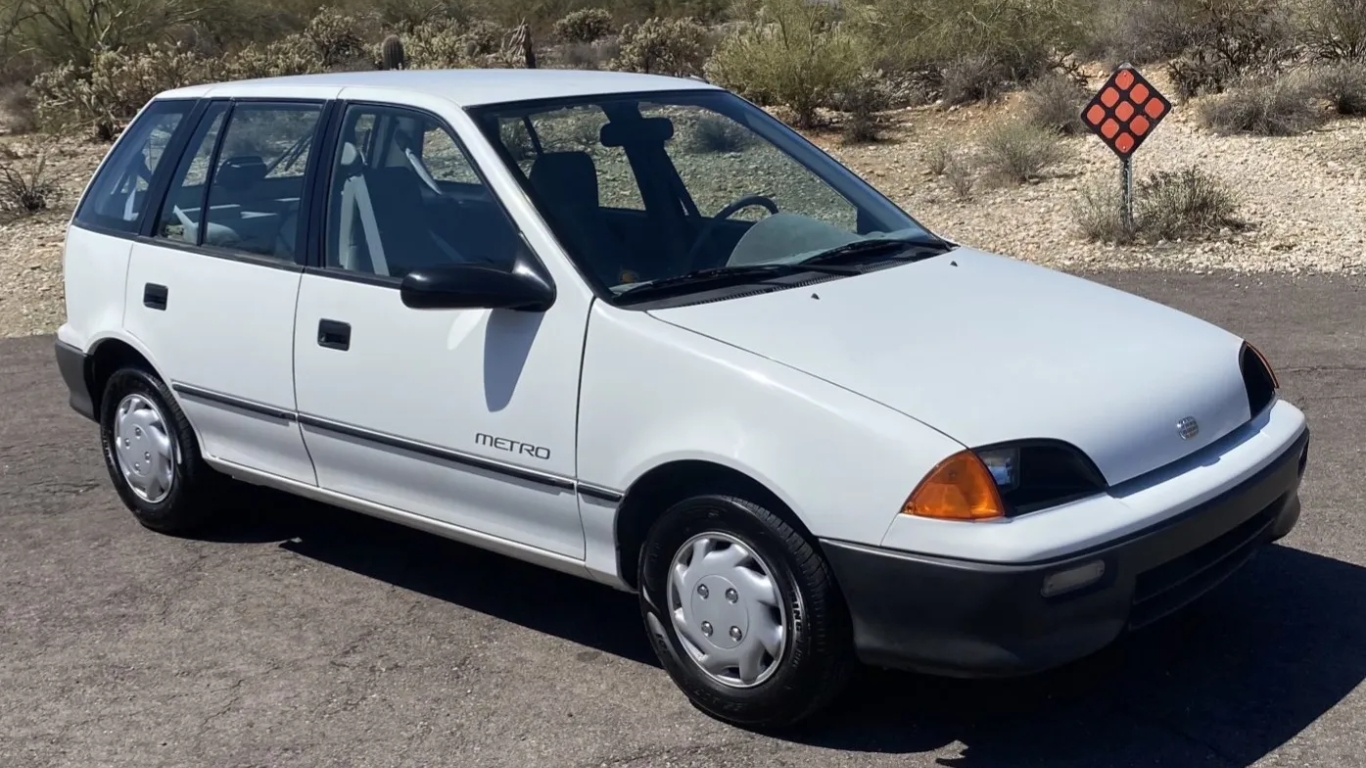
GM partnerships scattered one Japanese hatchback across dozens of nameplates.
The second-generation Suzuki Cultus/Swift (launched around 1988) became one of the most extensively rebadged small cars in automotive history. In North America, versions appeared as Suzuki Swift, Suzuki Forsa, Chevrolet Sprint, Geo Metro, and Pontiac Firefly—initially imported from Japan, later assembled at the CAMI joint venture plant in Canada.
The Geo Metro (1989–2001, later Chevrolet Metro) served as GM’s version, offered as a highly fuel-efficient subcompact with a 1.0-litre three-cylinder or 1.3-litre four-cylinder engine. Canada sold the same vehicle as Chevrolet Sprint and Pontiac Firefly. Other markets knew rebadged variants as Holden Barina (Australia), Maruti Suzuki 1000/Esteem (India), and even Subaru Justy in some European territories.
This platform’s extensive global rebadging under different brands makes the 1988-era Swift/Cultus a notable historical example of badge engineering. Corporate alliances between Suzuki, GM, and other manufacturers created dozens of nameplates from a single design—maximizing returns on development investment across continents.
9. GM T Platform (RWD) and Global Derivatives (Opel Kadett C, Chevrolet Chevette)
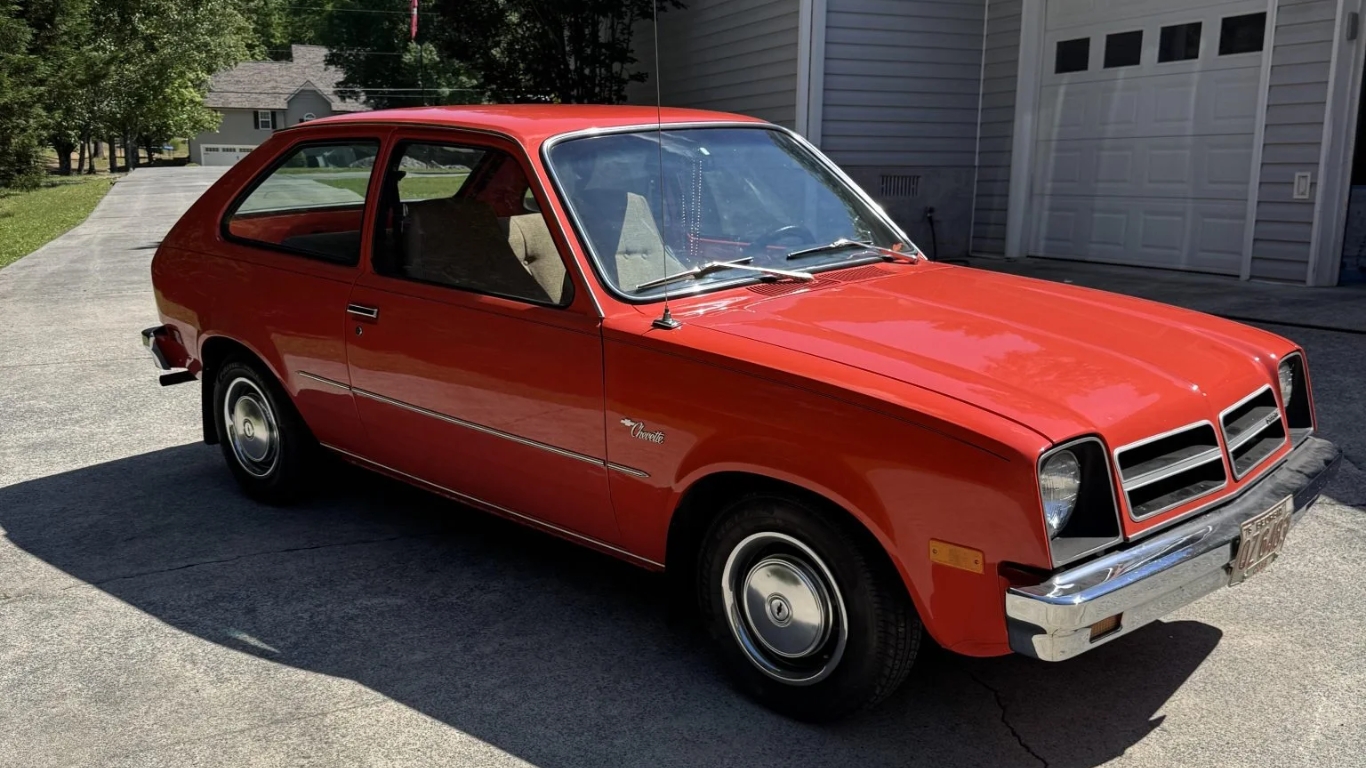
Seven million reasons why GM dominated badge engineering in the 1970s.
General Motors’ T-car rear-wheel-drive platform, introduced in the early 1970s, was a global subcompact architecture developed primarily by Opel with Isuzu input. First appearing in the Brazilian Chevrolet Chevette and Opel Kadett C (both 1973), the T-car eventually underpinned numerous small cars worldwide through extensive rebadging.
Key derivatives included Opel Kadett C, Chevrolet Chevette, Vauxhall Chevette, Isuzu Gemini, Holden Gemini, Opel K-180, and various Daewoo/Saehan products. Argentina received a GMC-badged Chevette (1992–1995) using 1.6-litre petrol and optional 1.8-litre diesel engines—proof that GM extracted maximum value from a single design language.
Worldwide production exceeded 7 million T-car derivatives under many badges. The platform’s longevity and geographic reach illustrate how one fundamental architecture could support decades of models across multiple continents. For GM, the T-car represented cost efficiency at industrial scale; for buyers, it meant proven mechanicals under regionally appropriate badges.
10. Original Mini and Luxury Rebadges (Riley Elf, Wolseley Hornet)
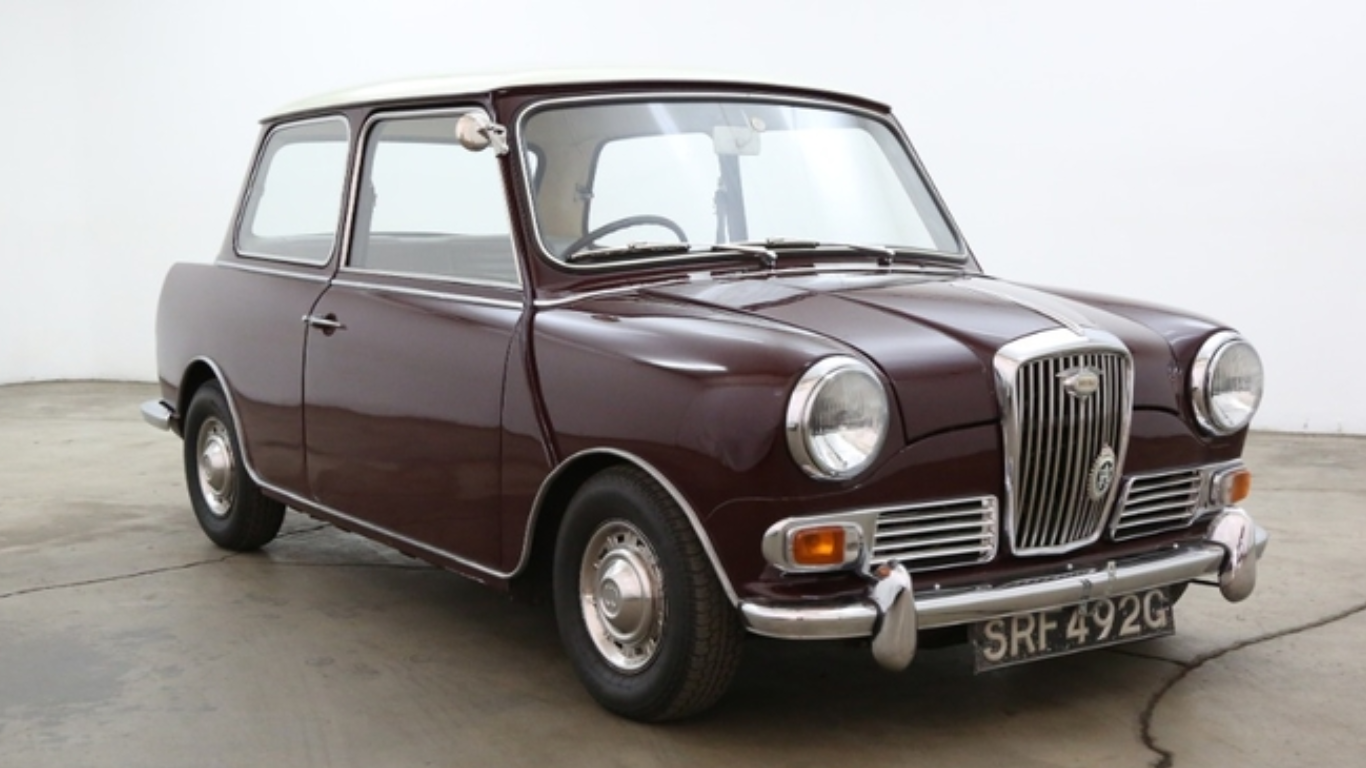
BMC turned a people’s car into a luxury statement with chrome and walnut.
The original Mini (ADO15) ran from 1959 to 2000, becoming an icon of compact, front-wheel-drive efficiency. BMC marketed the Mini under several marques including Austin, Morris, Riley, Wolseley, Leyland, and later Rover. Badge engineering yielded upmarket variants: the Riley Elf and Wolseley Hornet (1961–1969).
These luxury rebadges featured a longer rear section with protruding boot and small tailfins, plus a more traditional upright grille—yet retained the Mini’s 2,036 mm wheelbase. Overall length increased to approximately 3.27 metres, adding luggage space and creating a three-box appearance. Interiors received upgrades including walnut-veneered dashboards and higher-grade trim, positioning these models as luxury Minis for discerning buyers through Riley and Wolseley dealer networks.
Production remained modest: roughly 30,900 Riley Elfs and 28,500 Wolseley Hornets. These figures made them niche examples of British badge engineering—demonstrating how minor design changes and luxury appointments could reposition a utilitarian vehicle into an executive compact statement.
11. Second-Generation Isuzu Trooper and its Global Rebadges (Acura SLX, Opel Monterey, etc.)
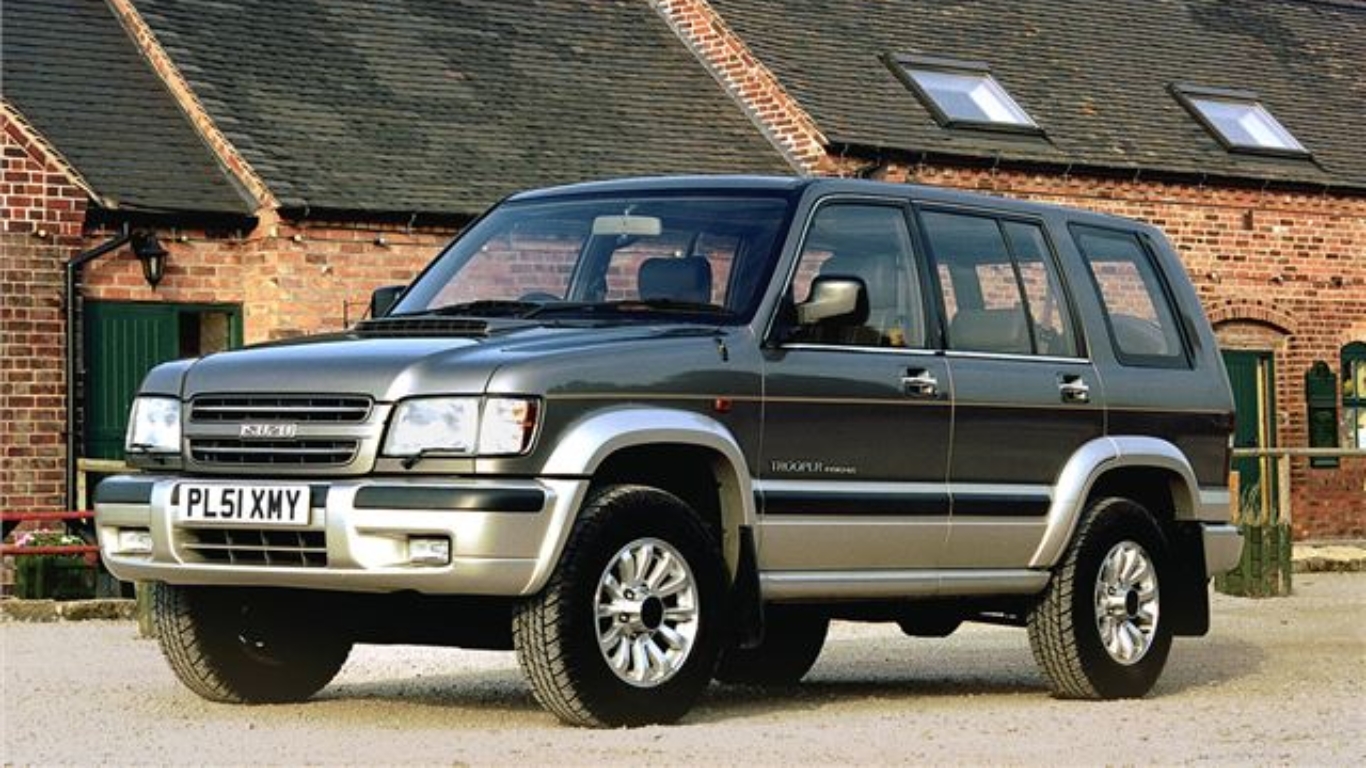
One SUV, nearly a dozen badges—the Trooper conquered continents through corporate alliances.
The second-generation Isuzu Trooper (produced approximately 1991–2002) stands as one of the most extensively rebadged SUVs in automotive history. This mid-size, body-on-frame SUV offered 3-door and 5-door configurations with part-time four-wheel drive, built in Japan with CKD assembly in China, Malaysia, Philippines, and Taiwan.
Powertrains included petrol V6 engines (3.2-litre 6VD1, 3.5-litre 6VE1) and turbo diesel four-cylinders (3.0-litre 4JX1, 3.1-litre 4JG2). Typical 5-door dimensions measured:
- Length: 4,795–4,661 mm
- Width: 1,835–1,834 mm
- Height: 1,840–1,834 mm
- Wheelbase: 2,760–2,761 mm
Rebadged versions appeared as Opel Monterey and Vauxhall Monterey (Europe), Holden Jackaroo and performance-tuned HSV Jackaroo (Australia), Subaru Bighorn (select markets), Honda Horizon (Japan), and Acura SLX (North America, 1996–1999). The Acura SLX served as a luxury SUV using the 3.2-litre V6 (approximately 190 hp) initially, later upgraded to a 3.5-litre V6 (around 215–216 hp) paired with four-speed automatic and all-wheel drive. Acura sold just 6,600 units during its brief run.
Chinese production under license further extended the Trooper’s multi-badge history, with CKD kits assembled and sold under local brands. The combination of Japanese, American, European, Australian, and Asian badges makes the second-generation Trooper one of the most rebadged vehicles ever produced—a testament to Isuzu’s willingness to supply platforms across corporate boundaries for maximum return on development investment.