

Dealer pushback just changed Mercedes’ electric strategy. The upcoming Baby G—originally planned as an EV-only compact SUV—will now offer both combustion and electric powertrains after U.S. retailers pushed for a gas option. That pivot reveals how market reality keeps colliding with automaker ambitions, even at luxury brands betting big on electrification.
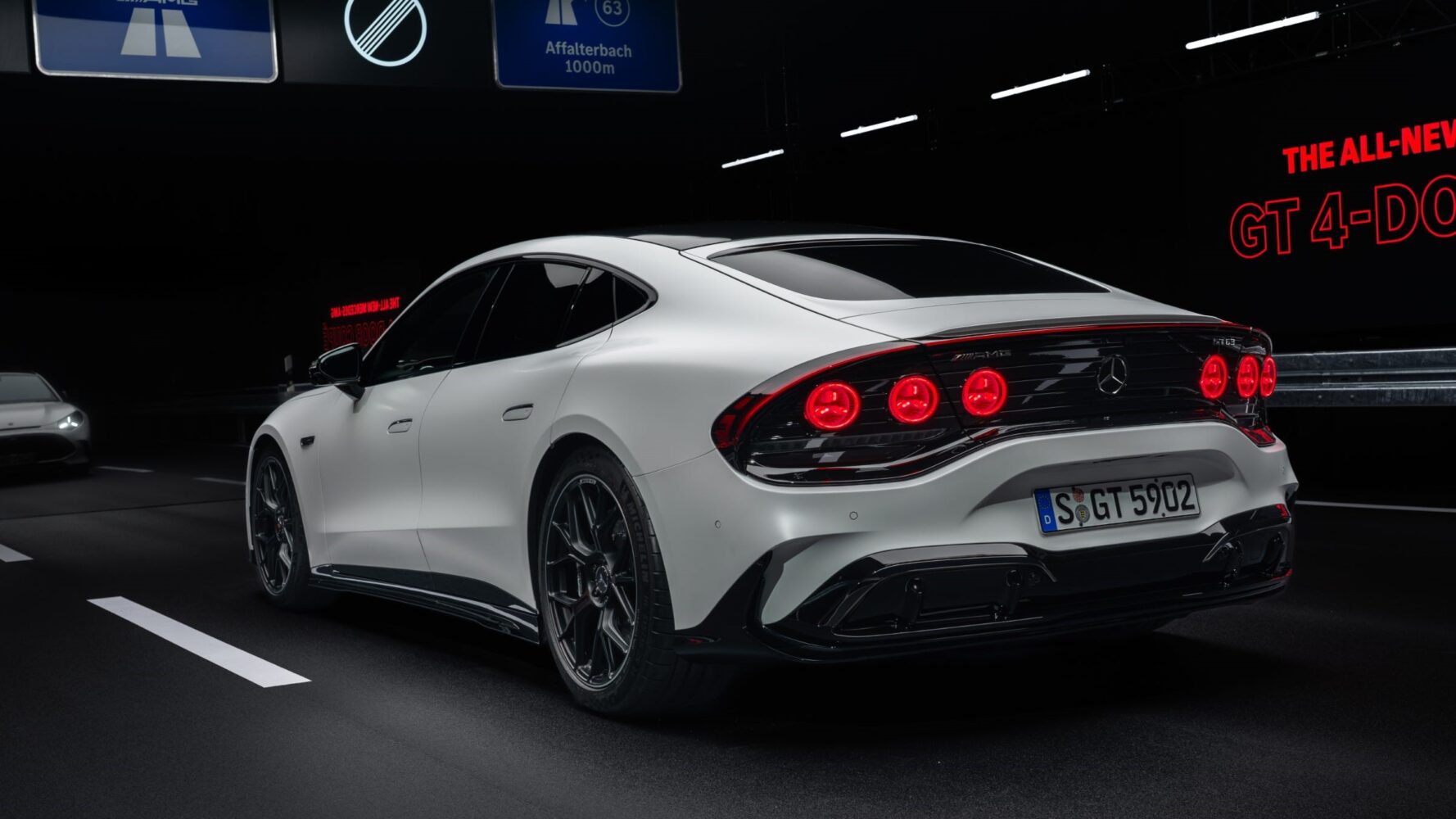
The change comes amid Mercedes’ broader performance strategy overhaul, unveiled alongside the 1,169-horsepower 2027 AMG GT 4-Door Coupe in Los Angeles. While that electric flagship showcases AMG’s technical future—axial-flux motors, 600kW charging, even fake V-8 sounds—the brand isn’t abandoning combustion engines. Instead, it’s investing in fewer, more focused powertrains.
AMG’s Engine Diet Gets Serious
Four-cylinder hybrids get axed while V-8s gain flat-plane cranks and three power levels.
AMG CEO Michael Schiebe confirmed the performance division will shrink its engine lineup from 10 variants to just four by 2026. According to reports, Schiebe emphasized AMG’s focus on core strengths, ditching the controversial four-cylinder plug-in hybrid setup from the current C63 in favor of turbocharged inline-sixes as the new entry point.
The headline act arrives as a new 4.0-liter twin-turbo V-8 featuring a flat-plane crankshaft—the same exotic hardware found in Ferrari engines and Formula 1 cars. Unlike traditional V-8s that fire cylinders in a rumbling cross-plane pattern, flat-plane designs rev higher and sound sharper, trading low-end torque for top-end drama.
Mercedes plans three versions:
- A base Mercedes-Benz variant
- An AMG version
- What CEO Ola Källenius reportedly calls a “go crazy” high-output AMG variant
Mythos Money and Engine Theater
Ultra-exclusive CLE63 Mythos costs €50,000 extra for customers to participate in engine assembly.
The new V-8 debuts in the CLE63 coupe, but the real spectacle comes with the CLE63 Mythos. Just 30 units exist, all presold to Mercedes’ VIP customers, who paid roughly €50,000 above the base price for the privilege of participating in their engine assembly at AMG’s German facility. Each gets a personalized dedication plate, because apparently, the engine-building experience costs more than most people’s entire cars.
Meanwhile, the Baby G’s dual approach—ICE and EV versions using a hybrid ladder-frame platform—shows Mercedes hedging against uncertain demand. The electric version pairs dual motors with an 85kWh battery, while the combustion model uses a turbocharged four-cylinder. Both maintain G-Class styling cues in a package 30% smaller than the full-size original.
This strategy mirrors the broader automotive moment: even luxury brands can’t go full-electric when dealers and customers aren’t ready to follow. Mercedes isn’t just building cars for 2027—it’s building them for a world where your driveway might hold both a screaming V-8 and a silent electric rocket.