

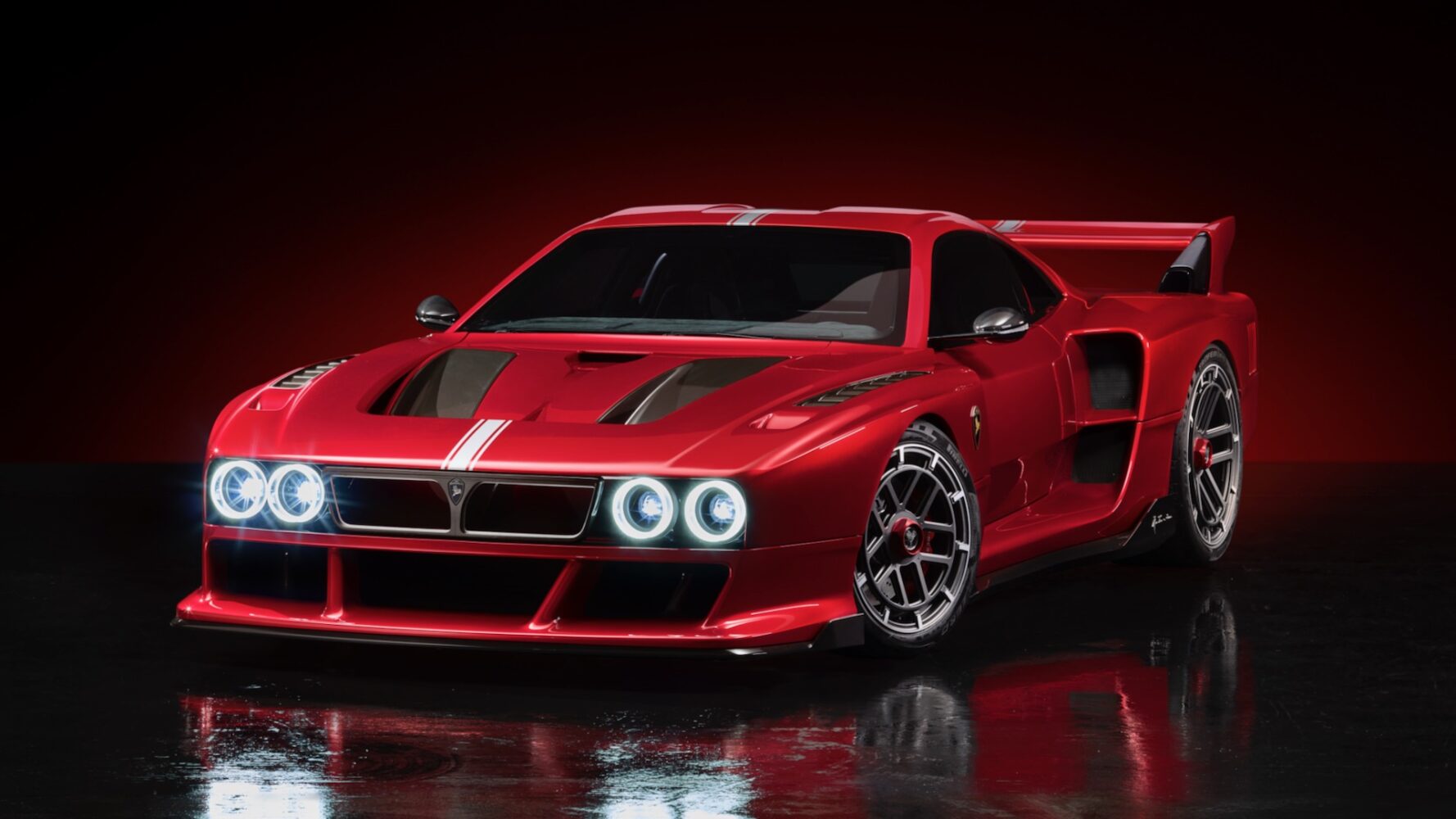
Swedish hypercar wizardry meets Italian rally heritage in the most unlikely automotive partnership of 2024. The Kimera K-39 isn’t another nostalgic restomod—it’s a ground-up hypercar that borrows the Lancia 037’s angular silhouette while stuffing a custom Koenigsegg twin-turbo V8 under its carbon-fiber skin.
This collaboration runs deeper than horsepower bragging rights. Koenigsegg developed a bespoke 1,000-hp engine specifically for Kimera, delivering peak power at 7,350 rpm with 885 lb-ft of torque and an 8,250-rpm redline that screams pure combustion theater. The Swedish company also provides cloud-based diagnostics and software updates—crucial support for Kimera’s ambitious plan to certify the K-39 as a new vehicle across multiple global markets.
Engineering Heritage, Not Copying It
The K-39 channels the 037’s DNA while embracing modern aerodynamic thinking.
The visual connection to Lancia’s 1983 World Rally Championship winner runs deeper than nostalgia. The 037 remains the last rear-wheel-drive car to claim a WRC manufacturers’ title, making it a perfect spiritual foundation for this rear-drive hypercar.
Kimera’s designers added deeper scoops, more aggressive ducting, and contemporary aerodynamic elements that prioritize function over pure retro authenticity. That approach extends to the chassis and construction.
Unlike their previous EVO37 and EVO38 tributes, the K-39 represents Kimera’s first clean-sheet design, built around the Koenigsegg powerplant from day one. The result promises the 037’s lightweight philosophy with hypercar-grade engineering underneath.
Pike’s Peak and Production Plans
Ten special examples will tackle America’s most famous hillclimb while standard models target global certification.
Kimera plans to campaign the K-39 at the Pikes Peak International Hill Climb, framing the effort as what they call a “defense of a vision of the automobile” tied to combustion technology’s evolution. Ten Pikes Peak-spec examples will feature larger rear wings and additional aerodynamic modifications for customers who want track-focused performance.
The broader production run targets markets where boutique hypercars can achieve full certification—a complex process that explains Koenigsegg’s involvement beyond just supplying engines. Their technical support infrastructure makes the K-39 viable as a properly supported supercar rather than a garage queen that requires specialist knowledge to maintain.
This partnership represents something larger than another limited-edition announcement. In an era where every manufacturer rushes toward electrification, the K-39 argues that combustion engines still have untapped potential when backed by serious engineering resources.