

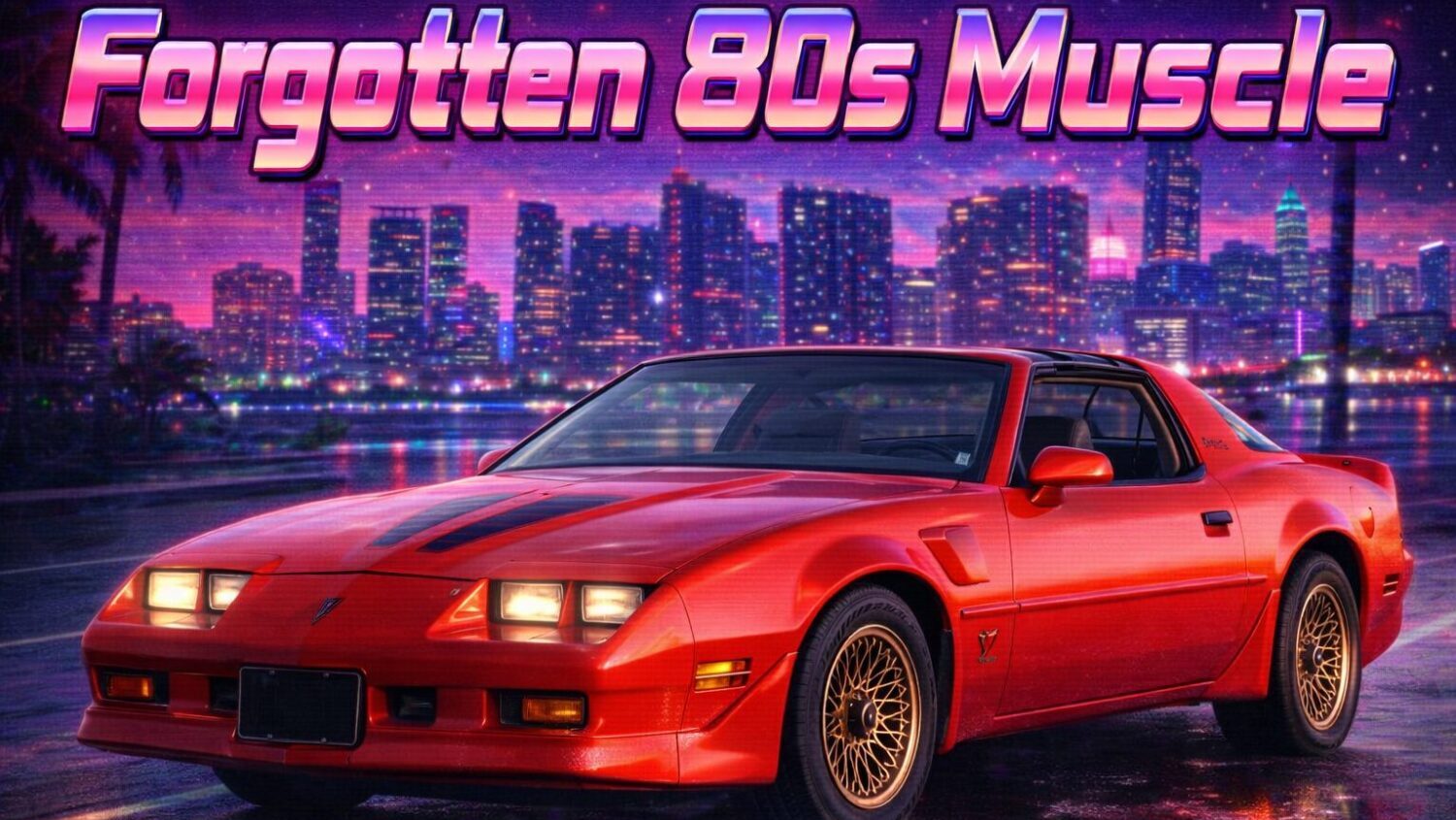
The 1980s are not the first decade that comes to mind for GM performance. Emissions regulations, fuel economy mandates, and the hangover from the 1970s horsepower decline produced a era when modest power figures were the norm. What that narrative misses is the specific vehicles GM built during this period that defied those constraints — NASCAR homologation specials built in the hundreds, a turbocharged V6 Trans Am that ran 0-60 in 4.6 seconds, and the early C4 Corvette establishing the foundation for everything that came after. These ten machines are worth finding before prices reflect what they actually are.
10. 1986 Chevrolet Monte Carlo SS Aerocoupe (Exterior)
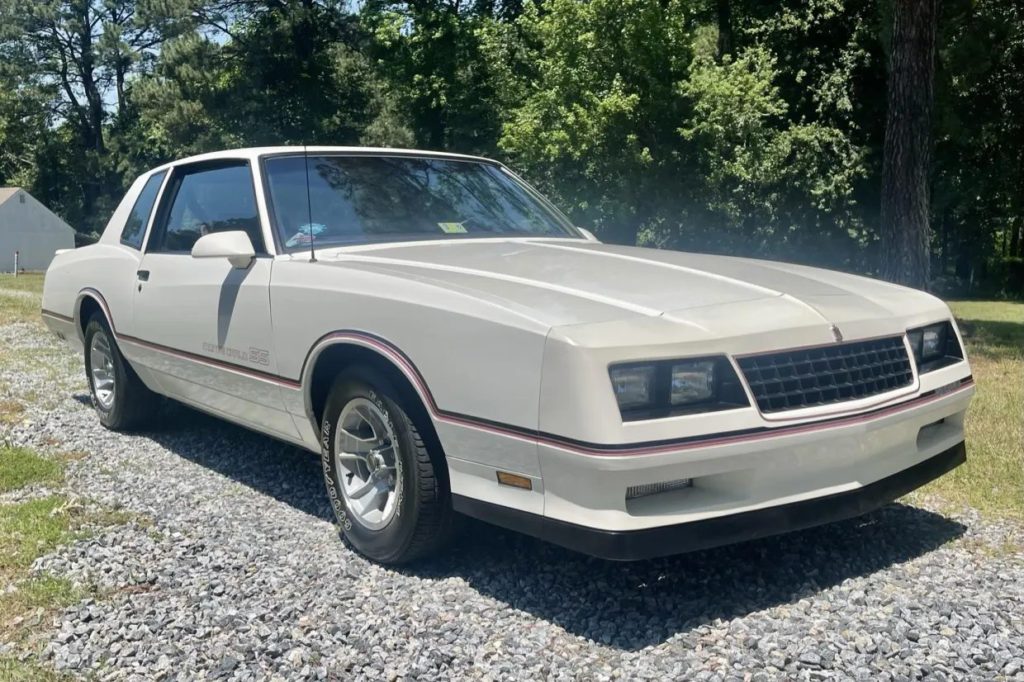
NASCAR homologation rules required Chevrolet to build a minimum number of street-legal versions of the aero configuration they wanted to run at Talladega. The result was 200 units of the 1986 Aerocoupe, with its sloped rear glass replacing the standard Monte Carlo’s vertical backlight. The 5.0L V8 produced 180 horsepower and reached 60 mph in approximately 8.5 seconds — the performance numbers were not the point. The rarity and the direct NASCAR connection are.
1986 Chevrolet Monte Carlo SS Aerocoupe (Interior)

The F41 suspension and aerodynamic modifications produced a street-legal machine that shared its body configuration with the cars winning on Sunday television. From inside, the Aerocoupe looks indistinguishable from a standard Monte Carlo until you turn around and see the rear glass that was designed for high-speed oval racing rather than rear visibility. At 200 units, this is one of the rarest GM production cars of the decade. For more context on how Chevy’s performance models evolved across eras, see Chevy Muscle Cars by Decade: Ranking the 7 Best of Each Era (LamboCARS).
9. 1987 Chevrolet Monte Carlo SS Aerocoupe (Exterior)

The 1987 Aerocoupe expanded production to 6,052 units, making it the more accessible version of the NASCAR homologation package. Performance specifications matched the 1986 model exactly — 180 horsepower from the 5.0L V8, 0-60 in approximately 8.7 seconds — but the sloped rear window and integrated spoiler were not cosmetic additions. They were the specific body modifications Chevrolet needed to run the aero configuration competitively on superspeedways.
1987 Chevrolet Monte Carlo SS Aerocoupe (Interior)

The aero package helped Chevrolet dominate NASCAR tracks during the mid-1980s superspeedway era. For buyers who want the NASCAR connection without the extreme scarcity of the 1986 model, the 1987 represents the practical choice — still rare enough to stand out, common enough to actually find. The broader context for how this era’s muscle cars navigated performance and regulation is covered in The Most Iconic ’80s Muscle Cars From The Big Three (HotCars).
8. 1984 Pontiac Fiero Indy Pace Car (Exterior)

The 1984 Fiero Indy Pace Car is the most honest example of marketing winning over engineering on this list. This mid-engine sports car paced the Indianapolis 500 carrying a 2.5L Iron Duke four-cylinder producing 92 horsepower and 135 lb-ft of torque. The mid-engine layout was genuinely significant — it was the first American production mid-engine car since the Pontiac Fiero’s introduction — but the pace car duty was ceremonial rather than a performance statement.
1984 Pontiac Fiero Indy Pace Car (Interior)

The 10-second 0-60 mph time was not a selling point. The white paint, body kit, Indy 500 decals, and 2,000-unit production run were. At current values, this is an underappreciated collector car with a genuine Indianapolis 500 connection — the kind of forgotten Pontiac that tends to appreciate once enough collectors notice what they missed.
7. 1989 Chevrolet Corvette (Exterior)

The 1989 Corvette represents the C4 at its pre-ZR1 peak. The 5.7L L98 V8 produced 245 horsepower and 345 lb-ft of torque with an optional six-speed manual transmission. The Z-51 suspension package transformed it into a car that could credibly challenge European sports cars at twice the price — a meaningful claim that period automotive press tested and confirmed repeatedly.
1989 Chevrolet Corvette (Interior)

Advanced suspension and 17-inch Goodyear Eagle tires gave the 1989 genuine handling capability rather than straight-line performance alone. Driving one today means experiencing the C4’s development arc at its most mature point before the ZR-1’s LT5 engine and the later LT1 changed the platform’s performance ceiling entirely. The 1989 is the sweet spot of early C4 evolution — developed enough to be complete, not yet overshadowed by what came next. The broader 1980s performance context is covered in 5 Of The Highest Horsepower Muscle Cars Of The 1980s (SlashGear).
6. 1983-84 Hurst Olds (Exterior)

The 1983-84 Hurst Olds revived a nameplate with genuine 1960s performance history at a moment when that history seemed permanently closed. The 5.0L V8 produced 180 horsepower and 250 lb-ft of torque. The defining hardware was the Lightning Rod shifter system — three separate levers controlling individual gear selection, a mechanism that was as theatrical as it was functional and unlike anything else available in an American production car at the time.
1983-84 Hurst Olds (Interior)

The 1983 used black over silver paint with 3,001 units produced; the 1984 reversed to silver over black with 3,500 units. Chrome Superstock wheels with red pinstripes completed both configurations. These cars were undervalued for years by collectors focused on earlier Hurst Olds models. That period is ending — a 1983 or 1984 at a car show now generates the crowd that the nameplate’s history warrants.
5. 1985 Chevrolet Corvette C4 (Exterior)

The 1985 C4 introduced tuned port injection to the Corvette, producing 230 horsepower from the 5.7L L98 — a meaningful increase over the previous year and the beginning of the fuel injection era that would define the C4’s development. A 0.34 drag coefficient gave it aerodynamic efficiency better than most European competitors at the time. The Z-51 handling package and four-wheel independent suspension proved American sports cars could manage corners rather than just straight lines.
1985 Chevrolet Corvette C4 (Interior)

The digital instrument cluster was the interior’s defining visual statement — genuinely futuristic for a 1985 production car and directly reflective of the technology integration the C4 represented relative to its predecessor. Bosch ABS brakes on the 1985 model placed it ahead of most domestic competition in braking technology. The 1985 C4 is where modern Corvette engineering DNA began — the specific year the platform started demonstrating what it was actually capable of. For the full historical context, the muscle car overview on Wikipedia covers the decade’s broader performance trajectory.
4. 1980 Oldsmobile 442 W30 (Exterior)

Fewer than 900 W30 units were built in 1980, and the car was not available in California — a regulatory restriction that further reduced the production pool. This was the last expression of the W30 performance package before fuel economy requirements made it unviable. The 5.7L Olds V8 produced 170-180 horsepower and 275 lb-ft of torque through a three-speed Turbo Hydramatic — numbers that reflected what was still possible in 1980 against the constraints already closing in around it.
1980 Oldsmobile 442 W30 (Interior)

Black and gold or white and gold two-tone paint distinguished the W30 from standard 442 models and communicated its performance specification to buyers who understood what the W30 badge meant in Oldsmobile’s history. The 1980 W30 represents the final production year of a specific performance package that traces back to the 1960s. Finding one in any condition requires serious searching — production numbers that low do not produce many survivors after 45 years.
3. 1985 Oldsmobile 442 (Exterior)

The 1985 Oldsmobile 442 combined a genuine performance specification with the kind of interior comfort that made it usable rather than punishing as a daily driver. The 5.0L V8 with four-barrel carburetor produced 180 horsepower and 245 lb-ft of torque through a four-speed automatic. A 3.73 limited-slip rear axle and sport suspension gave it handling capability that the interior comfort did not undermine.
1985 Oldsmobile 442 (Interior)

Bucket seats, a quality interior, bold two-tone paint, and 15-inch chrome wheels positioned the 1985 442 as a muscle car that worked as well as transportation as it did as a performance statement. It is the specific combination of those qualities — genuine performance credentials delivered without sacrificing day-to-day usability — that makes the 1985 442 the most practically appealing car on this list for a buyer who wants to actually drive what they buy.
2. 1986 Pontiac Grand Prix 2+2 (Exterior)

The 1986 Grand Prix 2+2’s bubble rear window was not a styling decision — it was a NASCAR aerodynamic requirement that Pontiac had to reproduce on a production car to qualify the body configuration for competition. The 5.0L V8 produced 165-180 horsepower with a 0-60 time around 9.3 seconds. The aerodynamic bodywork was the entire engineering rationale for the car’s existence, which makes the visual strangeness of that rear glass inseparable from what the 2+2 actually is.
1986 Pontiac Grand Prix 2+2 (Interior)

Pontiac built 1,225 examples, which places the 2+2 in genuinely rare territory. From the front the car reads as a standard Grand Prix; from the rear it reads as nothing else produced in 1986. Finding one today is an event — production numbers that low, combined with the specific body configuration that makes them immediately identifiable, have produced a car that collectors recognize on sight and non-collectors find genuinely confusing. For the broader muscle car context of this decade, 80s Muscle Cars Were Way Better Than People Remember (TopSpeed) covers the full picture.
1. 1989 Pontiac Turbo Trans Am 20th Anniversary (Exterior)

The 1989 Turbo Trans Am used Buick’s turbocharged 3.8L V6 officially rated at 250 horsepower, though contemporary testing consistently suggested actual output closer to 300. The result was a 0-60 mph time of 4.6 seconds — faster than most V8-powered competitors of the period, delivered from a powertrain configuration that nobody expected in a Trans Am. It is the definitive sleeper car of the decade.
1989 Pontiac Turbo Trans Am 20th Anniversary (Interior)

1,555 units were produced. The 11.9-inch brakes and Gatorback tires backed up the performance credentials with stopping and cornering capability proportional to the acceleration. A quarter-mile time of 13.4 seconds at 101 mph is a documented performance figure that holds up against modern comparison — not merely a period claim that inflation has made impressive. At current collector values, the 1989 Turbo Trans Am 20th Anniversary is the most underpriced car on this list relative to what its rarity, performance history, and production numbers actually represent.