

The 2025 e-bike market covers an unusually wide range — from a 250-watt folding commuter with 40 km of urban range to a 10,500-watt limited-production machine capable of 80 mph. Outdoor Gear Lab, Electric Bike Report, and Bicycling have tested these models across urban and trail terrain. The rankings reflect real-world balance across motor output, range, frame engineering, and regulatory compliance, which matters increasingly as jurisdictions tighten e-bike classification rules.
This content may contain affiliate links. If you wish to support us and use these links to buy something, we may earn a commission.
17. PXID ANTELOPE-P5

The PXID Antelope handles off-road terrain with genuine confidence. 24×4-inch tires provide traction across loose and technical surfaces, and the 1,000W motor reaches speeds up to 28 mph with an optional mid-drive conversion available for riders who prioritize steep-grade climbing performance. The 20Ah battery delivers approximately 80 miles of range under ideal conditions. The military-inspired camo finish suits the platform’s off-road application, and the overall package is built for riders who use remote terrain rather than those who want to look like they do.
16. Ride1Up Rev1 DRT

The Ride1Up Rev1 DRT translates dirt bike visual language into an electric platform with real engineering behind it. Integrated front suspension absorbs rocky trail impact, hydraulic disc brakes deliver precise stopping across conditions, and the 750W hub motor (1,000W peak) produces torque that makes steep climbs manageable rather than theoretical. Samsung’s 20Ah battery provides 30-60 miles of range depending on terrain and assist level — a wide spread that reflects honest real-world variation rather than optimistic marketing. Fat tires maintain traction on surfaces where standard tires lose grip.
15. Cyrusher Quest
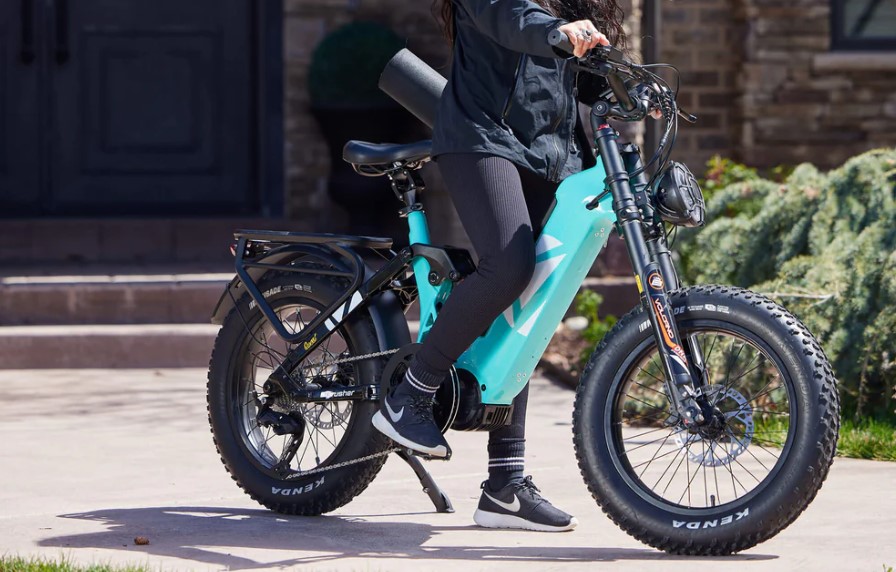
Long-distance touring demands a different engineering priority than short-range urban riding. The Cyrusher Quest addresses extended-use comfort through its DNM airshock suspension system, which absorbs vibration accumulation that causes rider fatigue over hours rather than minutes. The 750W mid-drive motor delivers consistent climbing power without heat-related performance degradation on sustained grades. The 20Ah battery supports up to 70 miles of range per charge. Every component selection on the Quest reflects sustained comfort as the primary design target rather than peak performance metrics.
14. Solar E-clipse Race Edition

The Solar E-Clipse Race Edition operates in a different regulatory category than most machines on this list. Its 16kW motor reaches 70 mph — speeds that exceed e-bike classification in every US jurisdiction and most international markets, placing it firmly in light electric motorcycle territory regardless of its bicycle-derived platform. Buyers need to verify local registration and licensing requirements before purchase. The LG battery maintains 70 miles of range at those power levels with a 3-4 hour recharge time. This is a machine for riders who understand what they are buying — it’s an electric motorcycle in bicycle packaging, not an e-bike.
13. PXID Mantis P6

The PXID Mantis P6 uses an aerospace-grade 6061 aluminum alloy frame that balances structural rigidity against weight — a materials choice with real engineering implications rather than marketing language. Battery configurations let riders trade range for reduced weight based on their specific use case. The 750W standard motor reaches 28 mph, with a 1,200W optional upgrade and 34 mph achievable with custom settings — the latter placing it outside Class 3 e-bike regulations in most jurisdictions. Four colorways allow personalization while the industrial design language sets it apart from conventional bicycle aesthetics.
12. Weeped F1
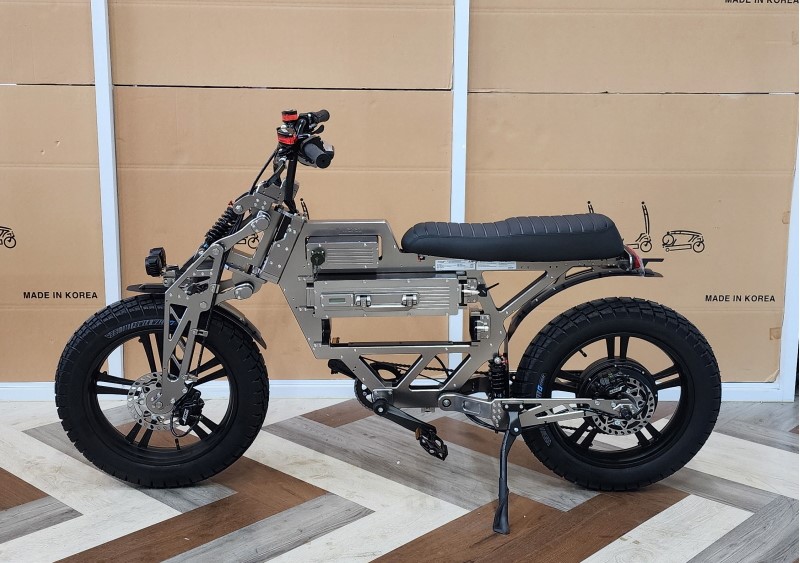
The Weeped F1’s 60V 30Ah Samsung battery system produces figures that lead the category for range-to-weight ratio: 200 km with pedal assist or 120 km on throttle. At 50 mph maximum speed, this exceeds e-bike classification in most jurisdictions — buyers need to verify local registration requirements before riding on public roads. The hydraulic braking system provides proportional stopping power, the suspension maintains stability across varied surfaces, and 20-inch fat tires improve traction on technical terrain. The lightweight frame manages overall weight despite the comprehensive drivetrain.
11. Tromox MC10

The Tromox MC10 puts a 12.5 kW peak motor inside a compact chassis — a power-to-size ratio that opens genuine capability for riders who need high performance in a form factor that fits in tight storage. The dual 72V 29Ah battery configuration provides redundancy and extended range beyond single-battery alternatives. Four-bar rear linkage and inverted front fork maintain composure over technical terrain despite the machine’s substantial weight. Multiple sources confirm a top speed of 56 mph and approximately 75 miles of off-road range — figures that, like several machines on this list, require regulatory verification before road use.
10. QuietKat Apex XD HD
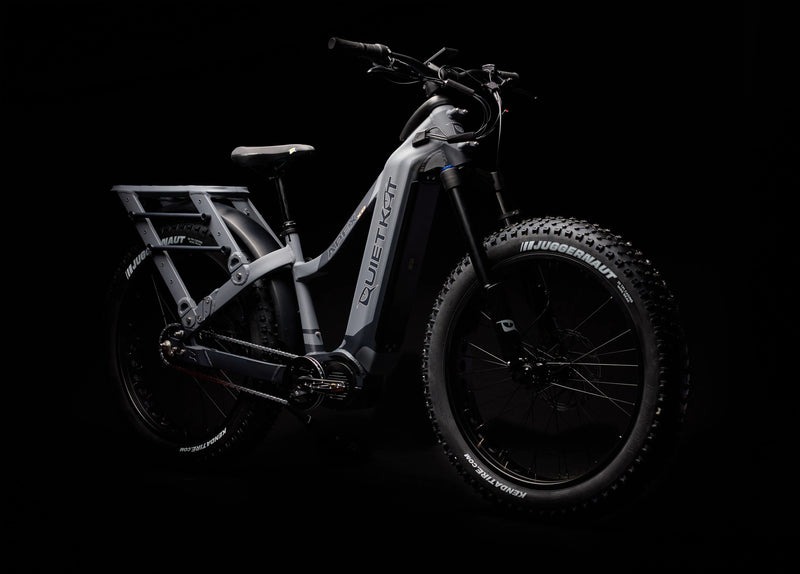
The QuietKat Apex XD HD was developed for wilderness use rather than urban commuting — a distinction that shapes every specification. The Bafang 1,000-watt mid-drive motor is calibrated for low-speed, high-load situations: hauling hunting equipment or game across uneven terrain where control matters more than top speed. Oversized 26×4.8-inch tires carry aggressive tread patterns for mud, sand, and loose surfaces. The camouflage finish serves practical field application. The premium price relative to general-purpose e-bikes reflects specialized engineering for remote environments where mechanical failure has real consequences.
9. Aventon Ramblas

The Aventon Ramblas builds around rider-motor integration rather than raw output. The 250-watt mid-drive motor (750W peak) responds to rider input with sensitivity that augments pedaling effort rather than replacing it — a riding experience that feels natural rather than motorized. Battery efficiency produces a 40-60 mile range appropriate for both commuting and recreational use. The lightweight frame produces responsive handling that benefits urban navigation and trail riding equally. Advanced suspension isolates road imperfections without the weight penalty that characterizes heavier suspension systems. The Ramblas is the machine for riders who want an e-bike that enhances cycling rather than replacing it.
8. Nakto Folding Ox
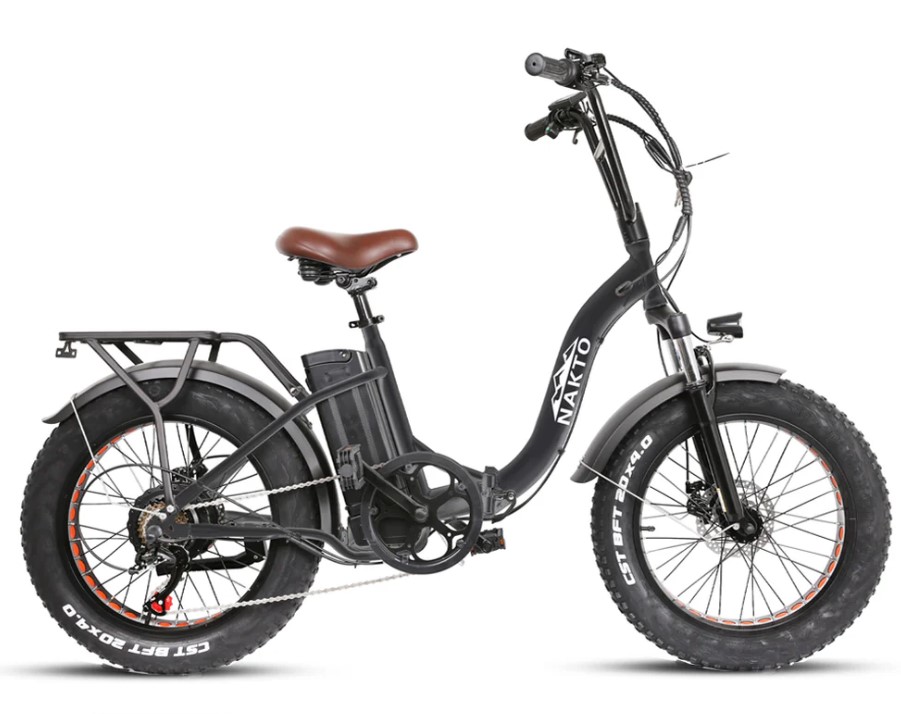
Most folding e-bikes trade capability for portability. The Nakto Folding Ox incorporates 20×4-inch CST fat tires that improve stability and obstacle management without compromising the folding mechanism — an engineering balance that most compact designs do not achieve. Front suspension adds ride quality beyond what typical folding models offer. The 500-watt hub motor (750W peak) generates 52 Nm of torque for inclines that defeat most compact alternatives, paired with a 48-volt, 12 amp-hour battery. A 20 mph top speed and approximately 22 miles of range meet urban commuting requirements. When folded, the dimensions address the storage constraints that prevent apartment dwellers from owning full-size e-bikes. Pairing it with the right e-bike accessories extends its daily usefulness further.
7. Eahora Romeo Pro 2

Dual 2,000-watt hub motors give the Eahora Romeo Pro II acceleration figures that exceed most small motorcycles, with speeds between 41-46 mph depending on rider weight and conditions. The 3,640 watt-hour battery (52V 70Ah) supports 104-200 miles with pedal assist or 70-76 miles on throttle — range figures that belong in a different category from most machines on this list. High-carbon steel frame construction manages the forces the drivetrain generates. Hydraulic disc brakes with motor cut-off integration, 2,000-lumen headlight output, and integrated brake lighting reflect the safety systems these performance levels require. Regulatory classification for road use varies by jurisdiction — buyers need to check local requirements before purchase.
6. DYU C2

The DYU C2’s two-step folding mechanism allows rapid transition between riding and storage — the specific capability urban apartment dwellers need who cannot park or store a full-size bicycle. The 250-watt nominal motor (750W peak) balances output against the weight and space constraints a folding design imposes. Magnesium alloy frame construction reduces overall weight versus aluminum alternatives, though this affects suspension performance characteristics. The 16×2.5-inch tires suit urban terrain rather than off-road use. A 48V 7.5 amp-hour battery provides approximately 40 km of range — sufficient for typical urban commuting without excess capacity that would add weight and cost. Optional cargo accessories extend utility without compromising the space efficiency that defines the C2’s value.
5. MOD Black 3
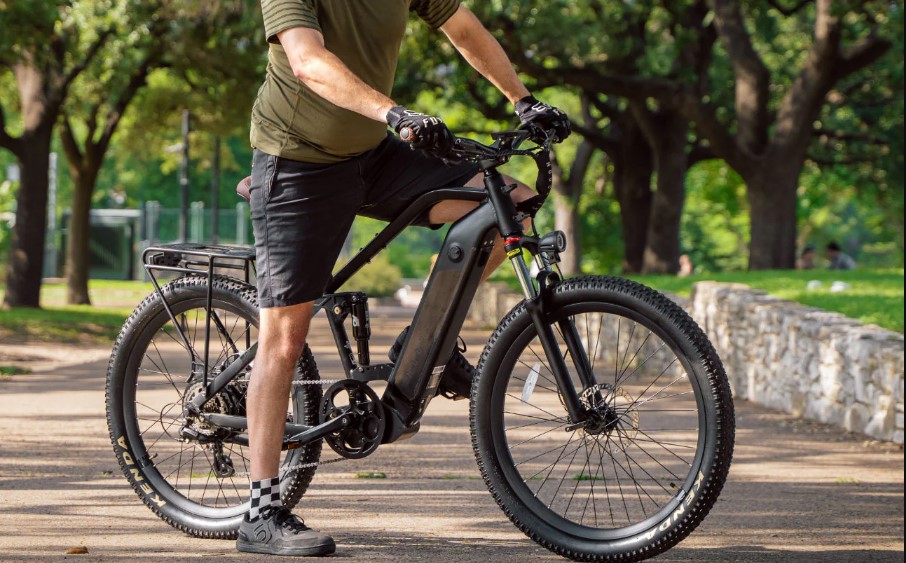
At 750 watts nominal (1,000W peak), the MOD Black 3 reaches the upper boundary of Class 3 e-bike territory with a precision-calibrated torque sensor modulating power delivery based on rider input force. Battery configurations adapt to use case: a single 48V 15Ah pack (720Wh) provides 50 miles of range, while the dual setup doubles capacity to 100 miles for extended or multi-day use. A turbo mode function provides additional output for specific situations requiring maximum climbing or acceleration. High-performance hydraulic disc brakes match the stopping capability to the propulsion system’s output — a necessary pairing at this performance level.
4. Eahora M1P Pro
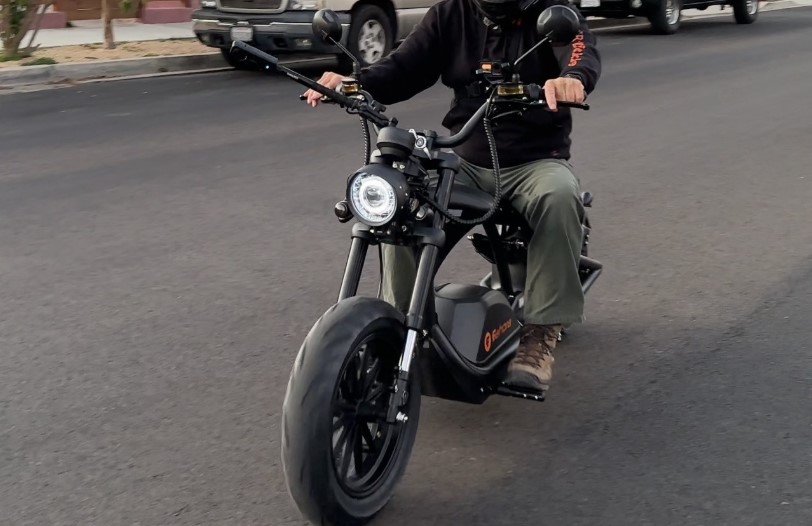
The Eahora M1P Pro’s 2,000-watt motor (2,700W peak) reaches 37 mph — speed that allows integration with vehicle traffic flow rather than confinement to bicycle lanes, which is the specific commuting advantage its buyers are paying for. The 60V 30Ah (1,800Wh) battery provides 38-46 miles of range per charge. Motorcycle-derived suspension components maintain stability at elevated speeds where conventional bicycle suspension reaches its limits. Large-diameter brake rotors improve heat dissipation during repeated high-speed deceleration. The frame accommodates riders from 5’1″ to 6’6″ without adjustment complications. The optional sidecar attachment converts the platform to cargo or passenger transport — a versatility extension beyond standard single-rider e-bike function.
3. HPC Revolution W

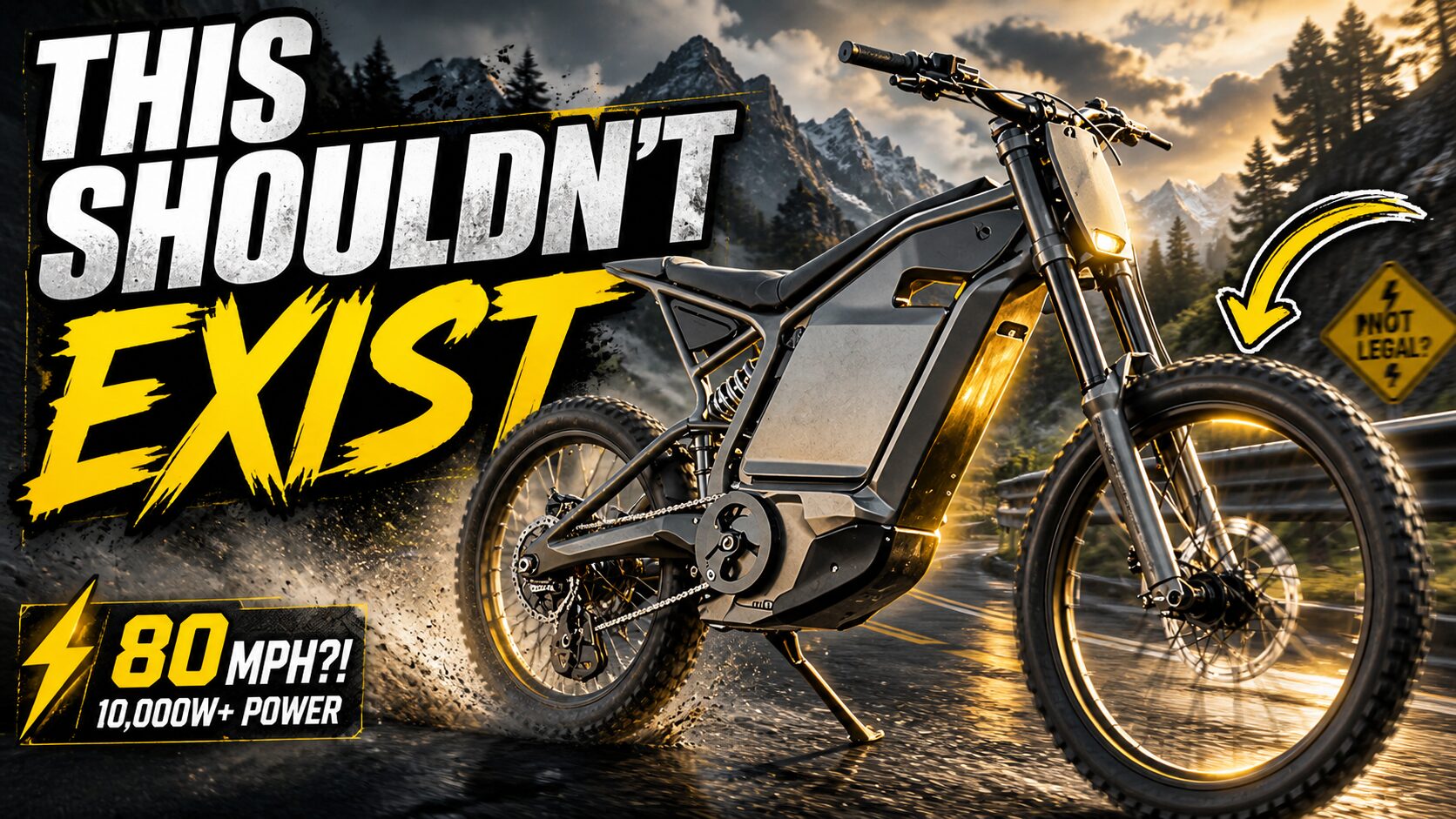
The HPC Revolution W is a limited-production Batman 85th Anniversary collaboration with Warner Brothers Discovery Global Products, built to 27 units worldwide. The collectibility here is genuine — 27 units is not a marketing figure, it is a production reality that creates inherent scarcity. The 10,500-watt motor system reaches 80 mph with up to 100 miles of range. Aerospace-grade aluminum and forged carbon fiber construction reflect materials typically found in high-end sports cars rather than bicycle manufacturing. At this speed and power level, road-legal operation requires motorcycle registration and licensing in essentially all jurisdictions — the Revolution W is a collector and performance machine, not a commuter.
2. Hidoes B10
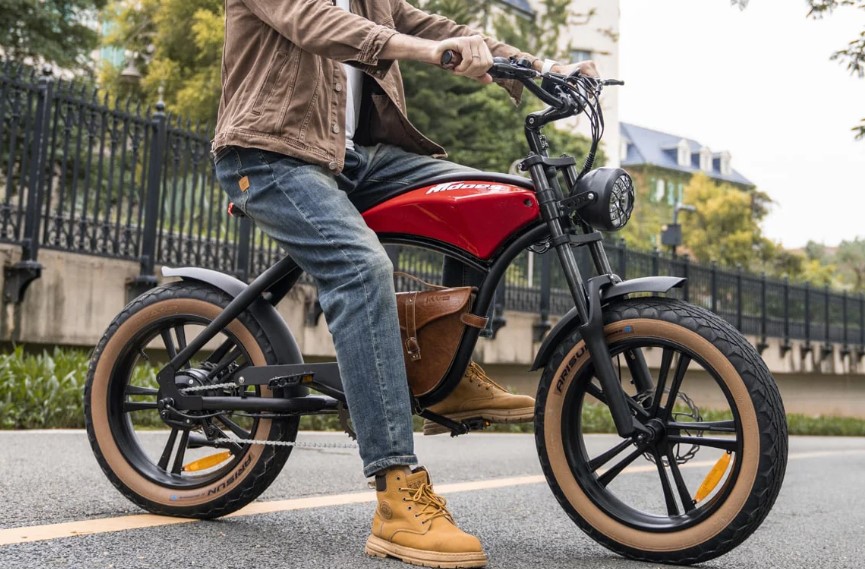
The Hidoes B10 applies vintage motorcycle aesthetics to an electric platform in a market where most e-bikes converge on similar visual language. The textured saddle and period-appropriate design details create immediate visual differentiation without compromising riding comfort. The 700-watt motor (1,000W peak) delivers 27 mph within the styling constraints of a classic silhouette. The 48V 13Ah battery provides approximately 35 miles of range, and 20×4-inch fat tires maintain stability across varied terrain. The B10 is the choice for riders who want the practical benefits of modern electric propulsion in a package that does not look like every other e-bike on the market.
1. Aventon Adventure 2

The Aventon Adventure 2 ranks first because it delivers across every category that matters for the broadest range of buyers without requiring regulatory workarounds or specialized use cases to justify the purchase. The 750-watt motor provides output appropriate for both urban commuting and moderate trail riding without overwhelming the rider. The 28 mph maximum speed meets Class 3 e-bike regulations, meaning it can be ridden legally where e-bikes are permitted without the registration and licensing complications that affect several machines higher in power output on this list. The 60-mile range handles most riding scenarios without mid-journey charging. Wide-profile tires improve stability and impact absorption without the rolling resistance penalty of full fat-tire designs. The frame geometry maintains stability on irregular surfaces while preserving the maneuverability urban riding requires.