


William Shatner’s car collection covers more ground than most collectors attempt. A $400 Morris Minor sits in the same garage as a Ferrari Enzo hypercar, and everything between those two points tells a story about a collector who buys for character rather than status. The range spans British eccentrics, American muscle, Italian supercars, and a French farm car with 9 horsepower. None of it was assembled by accident.
Here are 10 cars from William Shatner’s collection that reveal more about the man than the uniform ever did.
10. Morris Minor: Humble Beginnings
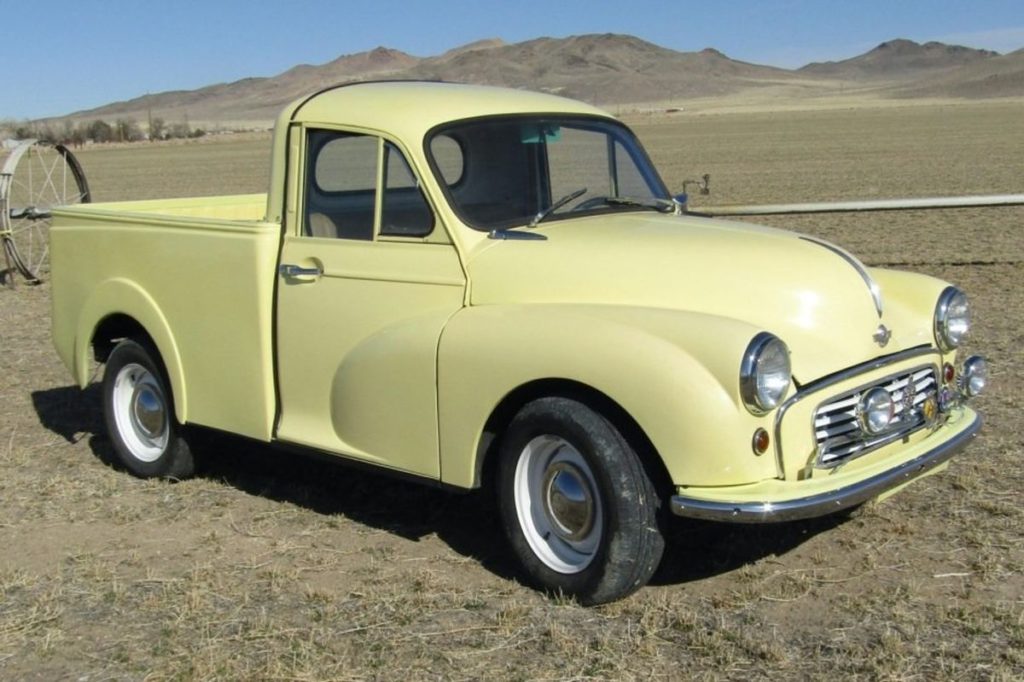
Shatner paid $400 for his first car, and it turned out to be designed by the same engineer who later created the Mini. The Morris Minor runs a 948cc inline-four making 37 horsepower with a 62 mph top speed — numbers that exist nowhere else in this collection. Monocoque construction made it genuinely modern for its era, and compact dimensions made it practical for the Toronto commutes that marked the early years of his acting career. It did the job without pretension. Well-maintained examples now command $10,000 to $25,000 in the collector market, which says something about how the automotive world values honest character over time.
Morris Minor (Interior)

The Morris cabin is straightforward British post-war pragmatism with no decoration added to distract from function. Clear gauges on a simple dashboard, hard-wearing upholstery, and minimal amenities reflect a car built to transport people reliably rather than impress them. Clever interior packaging maximizes utility within a compact footprint — more usable space than the exterior dimensions suggest. Nothing inside competes with anything else in Shatner’s garage. That contrast is exactly why it belongs here.
9. 1963 Corvette Stingray Coupe: A Spaceman’s Ride

The split rear window appeared on the 1963 Corvette for exactly one model year, making it the most collectible C2 built. Chevrolet’s 327 cubic inch V8 produces up to 360 horsepower, and Shatner chose the four-speed manual to stay fully connected to that powertrain. Independent rear suspension debuted on this generation, dramatically improving handling over the live axle setup it replaced. Fiberglass construction allowed body shapes that steel stamping could not produce at the time. Pristine examples command $100,000 to $150,000 at auction today — a number that reflects how seriously collectors take this particular car.
1963 Corvette Stingray Coupe (Interior)

Aircraft-style gauges and twin bucket seats set the sporting tone inside Shatner’s Corvette, with every control placed for a driver rather than a passenger. The C2’s cabin is notoriously tight — period reviewers complained about it regularly — but Shatner modified the car with small rear seats for his daughters, turning a two-seat sports car into a family memory-maker without compromising its essential performance character. That modification says a great deal about how he approaches ownership. Cars in this collection get adapted to fit his life, not the other way around.
8. 2011 Porsche Panamera: Performance Meets Luxury (Exterior)
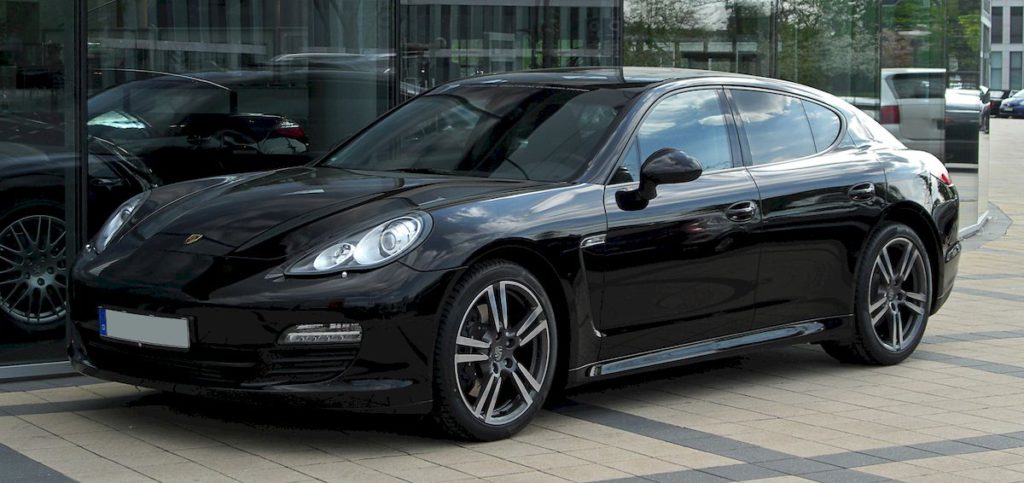
Most Porsche buyers choose the 911. Shatner chose the Panamera, which tells a different story about priorities. The 300-horsepower V6 pairs with a seven-speed PDK transmission that delivers shifts faster than any conventional automatic, and aluminum-intensive body construction keeps handling responses sharp despite the larger footprint. Long, flowing lines give it a silhouette distinct from typical luxury sedans, and unmistakable Porsche DNA shows up in the headlight design and wide rear haunches. The Panamera drew criticism when it launched for not looking like a 911. It also seats four adults in genuine comfort, which a 911 does not.
2011 Porsche Panamera (Interior)

The Panamera’s central console rises toward the dash and places every essential control within fingertip reach without cluttering the space around it. Four individual seats deliver long-distance comfort without giving up sporty lateral support during faster driving. A three-gauge instrument cluster nods to Porsche heritage inside a thoroughly modern package. Advanced infotainment handles connectivity without dominating the cabin. The interior makes a clear argument that a four-door car can feel like a Porsche from the driver’s seat without apology.
7. 2002 Aston Martin DB7: Elegance and Power (Exterior)

Ian Callum’s DB7 design uses the long-hood, short-deck proportions that define classic GT styling, and it catches light in ways that more angular cars simply cannot. The 5.9L V12 produces 420 horsepower and gets to 60 mph in 4.9 seconds on the way to 185 mph — genuine supercar performance wrapped in something that looks more like art than aggression. Shatner drove this car daily until 2016, which demonstrates real-world usability that many exotics of this era cannot claim. Originally priced around $140,000 new, good examples now trade for $30,000 to $50,000. That price-to-prestige ratio is difficult to match anywhere in the collector market.
2002 Aston Martin DB7 (Interior)

Premium leather covers nearly every surface inside the DB7, with real wood and brushed metal accents adding visual warmth that synthetic materials never replicate convincingly. The seats balance long-distance comfort with enough lateral support for spirited driving without sacrificing either quality. Hand-stitched panels and precisely machined controls feel substantial with every interaction. The infotainment system looks dated by current standards, which is a reasonable trade-off for a cabin built around craft rather than screens. Aston Martin interiors from this era age into character rather than obsolescence.
6. 2004 Volkswagen Phaeton: A Glimpse into the Future (Exterior)
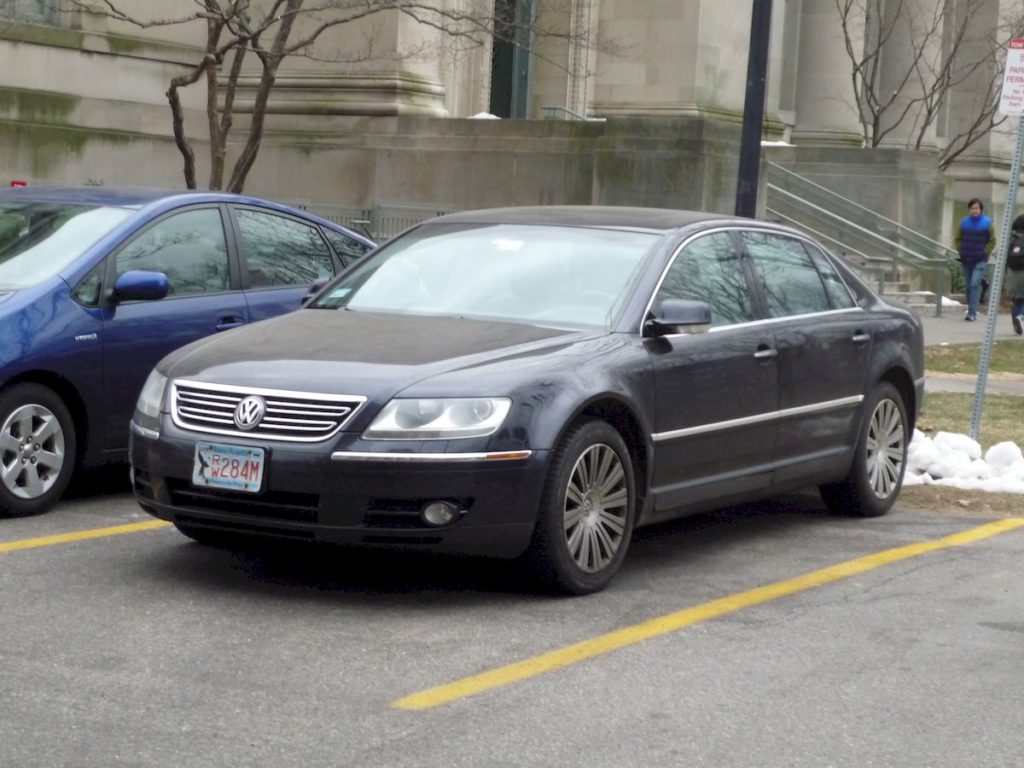
Volkswagen built a genuine flagship sedan in 2004, priced between $64,600 and $94,600, and the market largely ignored it because of the badge. The Phaeton’s 4.2L V8 produces 335 horsepower with standard all-wheel drive, and advanced air suspension delivers ride quality that rivals anything from established luxury marques regardless of road condition. Clean, understated exterior lines communicate nothing about the engineering underneath — which was exactly the problem for buyers who needed a badge to justify the price. Those same cars now trade for $5,000 to $20,000 on the secondary market. Shatner saw past the badge to the engineering, which is a collector’s instinct worth noting.
2004 Volkswagen Phaeton (Interior)

Four-zone climate control, draft-free air distribution, and acoustic glass that cuts highway noise to near silence put the Phaeton’s cabin in legitimate competition with flagship models from Bentley and Mercedes at the time. Premium materials and build quality match that ambition throughout every surface and fitting. High maintenance costs and poor fuel economy became notable ownership drawbacks that the interior excellence alone could not offset. The Phaeton cabin is luxury that outperforms its badge rather than relying on one — exactly the kind of car a collector with genuine taste finds irresistible.
5. Citroen 2CV: The Ugly Duckling (Exterior)
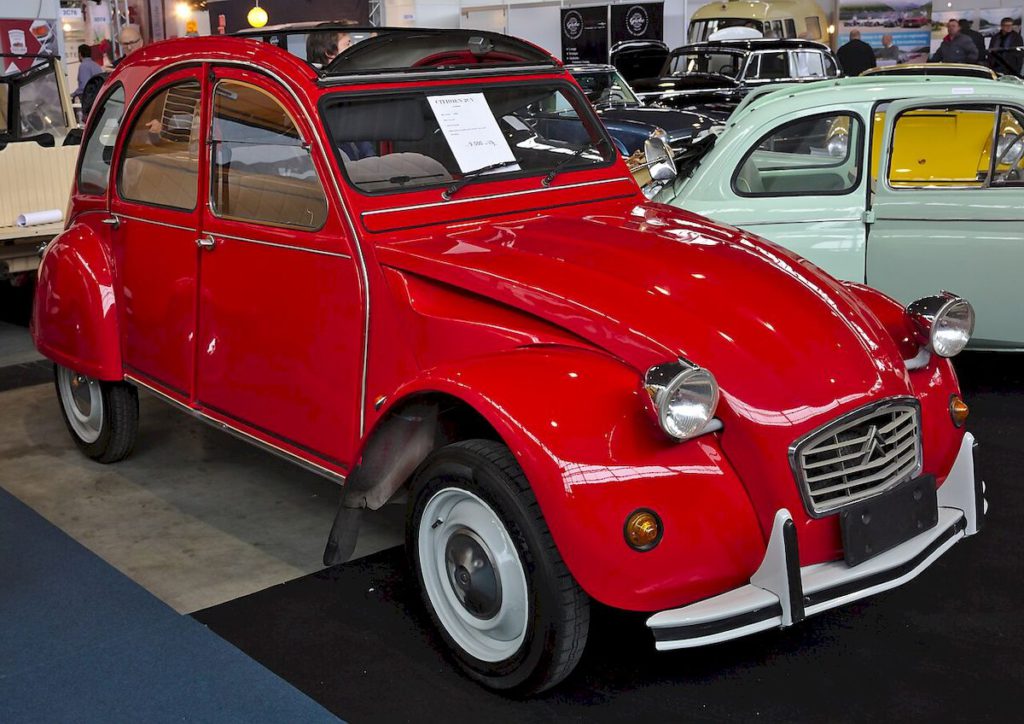
The original design brief for the Citroen 2CV was to carry farmers and their eggs across plowed fields without breaking either, and Citroen solved that problem with suspension travel that seems physically impossible for a car this small. The air-cooled 2-cylinder engine produces 9 horsepower — a figure that makes the Morris Minor feel overpowered by comparison — and the corrugated bodywork and roll-back canvas roof make it instantly recognizable on any continent. For those drawn to cars that solve problems with genuine ingenuity rather than raw power, the 2CV belongs in the same conversation as some of GM’s weirdest muscle cars as vehicles that defined their era through sheer character. Shatner’s appreciation for automotive personality beyond specifications is nowhere more evident than here.
Citroen 2CV (Interior)

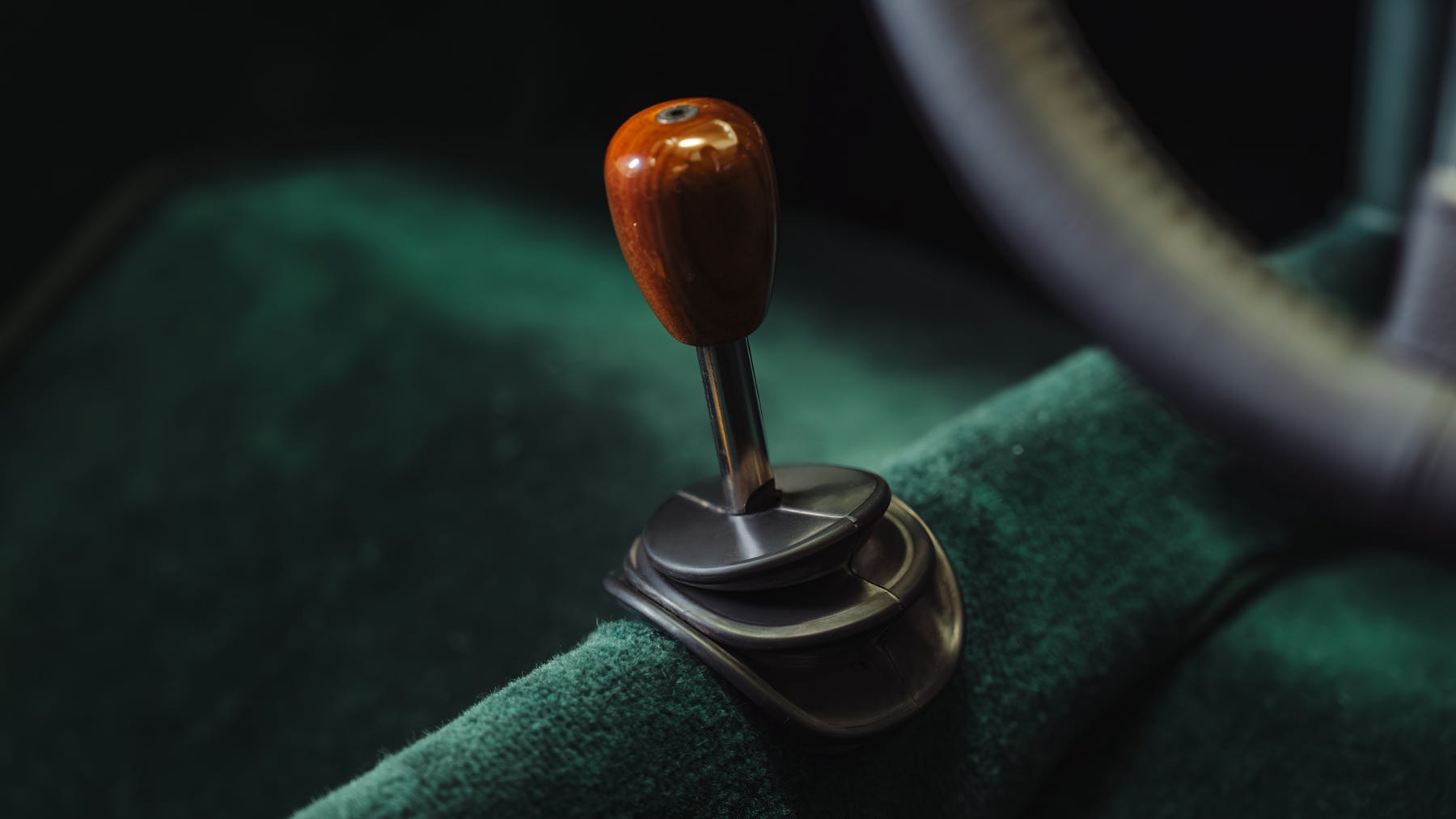
Hammock-style seats suspend passengers in surprising comfort using minimal padding, which is a clever engineering solution that costs almost nothing to produce. The umbrella-handle shifter operates through a shift pattern unlike any other production car ever built, and the dashboard contains exactly the instruments required and nothing beyond that. Remarkable interior space fits within compact exterior dimensions through efficient packaging that modern designers still study. Functional minimalism as a philosophy decades before it became fashionable in product design. The 2CV cabin is honest about what it is in a way that most cars are not.
4. 1967 Jaguar XK: Classic British Style (Exterior)

Enzo Ferrari called it the most beautiful car ever made, and the proportions of the 1967 Jaguar XK make that claim difficult to dispute. The legendary inline-six produces 265 horsepower through triple SU carburetors with an intake sound that no modern engine management system replicates. Lightweight construction delivers a 140 mph top speed and handling agility that was advanced for the period. Covered headlights in the front fenders became a Jaguar design signature that collectors recognize globally. This is purposeful design that achieved beauty as a byproduct of getting everything else right.
1967 Jaguar XK: Classic British Style (Interior)
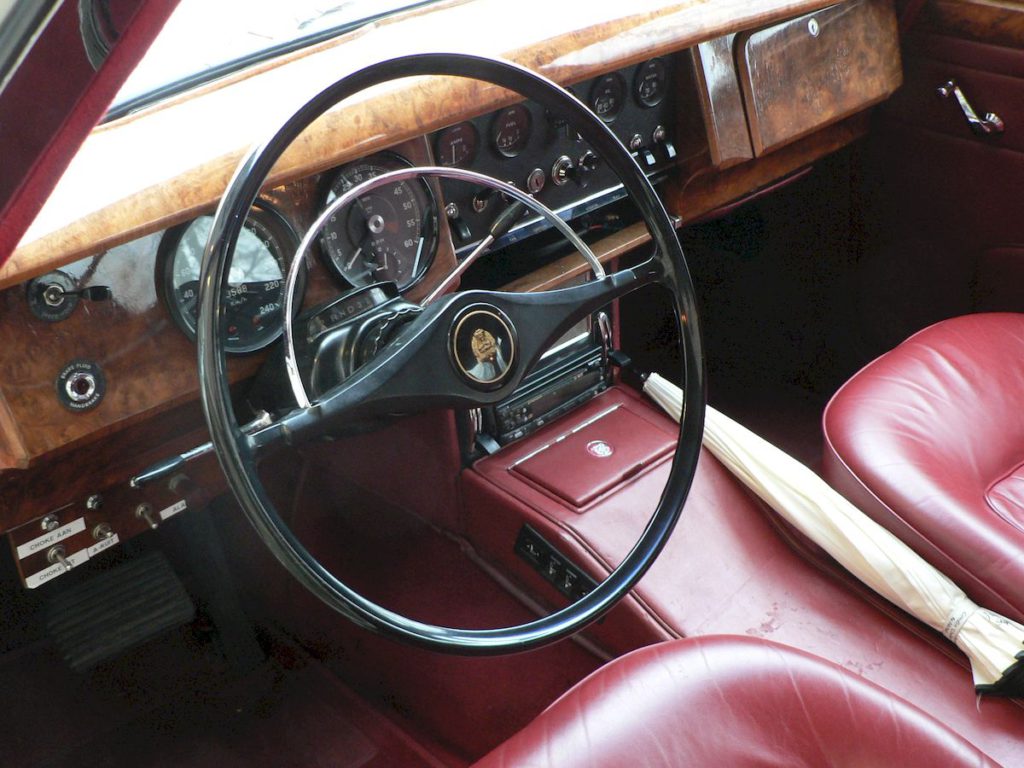
A rich wood dashboard houses classic Smiths instruments with cream faces and precise markings that put essential information directly in the driver’s sightline. Toggle switches with satisfying mechanical action control cabin functions in a way that modern touch screens cannot replicate for tactile feedback. The large wood-rimmed steering wheel delivers detailed road feedback and looks exactly right in this environment. Leather seating surfaces develop a patina over decades that tells the history of genuine use rather than careful preservation. Materials chosen for authenticity rather than cost savings define the golden age of British interior craft, and this cabin is a direct example of it.
3. 2016 Jaguar F-Type R Convertible: Modern Elegance (Exterior)

Polar white with black and red accents is not a subtle color choice, and the 2016 F-Type R Convertible does not ask for subtlety. The supercharged 5.0-liter V8 delivers 543 horsepower to the rear wheels and produces an active exhaust soundtrack that ranges from composed purr to genuine roar depending on throttle position. A deployable rear spoiler activates at speed to manage stability approaching the 186 mph top speed. Shatner signed the driver’s side sun visor personally, adding provenance to a car that already has a strong case for collectibility on its own merits. The F-Type R is the most visually aggressive Jaguar in the collection and earns every bit of the attention it receives.
2016 Jaguar F-Type R Convertible (Interior)

The joystick-style shifter rises dramatically from the center console during engine start-up — a theatrical touch that fits an actor’s car without feeling contrived. Performance seats provide genuine cornering support without punishing on longer drives, and premium materials with contrast stitching establish the quality level throughout the cabin. The 12-speaker Meridian sound system delivers exceptional audio quality, though many F-Type R owners find the supercharged V8’s natural exhaust note more compelling than anything playing through the speakers. Modern Jaguar design philosophy lands well here, blending contemporary technology with the brand’s traditional craft values without either element undermining the other.
2. 2006 Dodge Viper: American Muscle (Exterior)

The 2006 Dodge Viper makes no attempt to be anything other than what it is. An 8.3-liter V10 connected to a purpose-built six-speed manual transmission delivers 0-60 mph in under 4 seconds through a wide stance that communicates the power underneath before the engine starts. Deep side exhausts and the signature double-bubble roof are functional design elements, not styling exercises. Enormous tires provide the grip necessary to manage what the engine produces. This is American muscle in its most concentrated form — no electronic aids softening the experience, no European sophistication diluting the intent.
2006 Dodge Viper (Interior)

Pedals positioned specifically for heel-toe downshifts and a short-throw shifter with direct mechanical connection to the transmission communicate the Viper’s track-focused intent before the engine starts. Large, clear gauges monitor the V10’s vital signs without distraction, and supportive seats provide cornering grip that holds up on longer drives as well. No carpet, no excessive sound insulation, no luxury amenities competing for attention with the driving experience. The Viper interior exists entirely to enhance driver connection with the machine. Every resource went toward that goal, and nothing was spent on anything else.
1. 2002 Ferrari Enzo: The Ultimate Supercar (Exterior)

Carbon fiber construction, active aerodynamics, and a naturally-aspirated V12 producing 660 horsepower without a single turbocharger — the Ferrari Enzo transferred Formula 1 technology directly to road registration in 2002. The car reaches 60 mph in 3 seconds and approaches 270 mph at the top end, numbers that remain competitive against current hypercars more than two decades later. Doors that open upward and forward reveal the carbon fiber cockpit with the kind of drama that belongs at the top of any serious collection. F1-inspired aerodynamic elements generate downforce without compromising the visual coherence of the bodywork. This is the car that justifies everything else in the garage.
2002 Ferrari Enzo (Interior)

Exposed carbon fiber covers every structural surface inside the Enzo with no attempt to conceal the engineering underneath decorative trim. The steering wheel places LED shift lights and essential controls for immediate access at high speed, and manually adjustable carbon-fiber seats save weight while delivering the lateral support that 660 horsepower demands. No carpet. No sound insulation. Ferrari made a deliberate choice to eliminate both in favor of reducing mass. The Enzo interior is the clearest statement in Shatner’s entire collection about what a car can be when every decision prioritizes the driving experience above everything else.