

The Federal Trade Commission advises shoppers to request an out-the-door price in writing before visiting the dealership, noting that advertised prices may exclude fees or include dealer add-ons. Modern negotiation demands more than simply kicking tires; it requires a navigator’s precision. These strategies, compiled from real-world successes, equip buyers to cut through dealership smoke and mirrors. Learn to identify hidden costs and leverage market intelligence, ensuring a transparent deal. Trade the anxiety for the open road.
1. Out-the-Door Price

The complete sum paid for a vehicle, including all fees, taxes, and charges.
An out-the-door price represents the complete sum paid for a vehicle. This figure includes the negotiated selling price, all dealer fees, plus mandatory taxes, title charges, and registration. The Federal Trade Commission advises shoppers to request this comprehensive total in writing before stepping into any dealership.
Requesting the out-the-door figure prevents surprise charges. Establish the vehicle’s base price first, since the quote can shift with financing or trade-in decisions. This clarity ensures buyers know what to expect from the start.
2. Dealer Add-Ons and Appearance Packages

These optional extras can add thousands to the bottom line without genuine value.
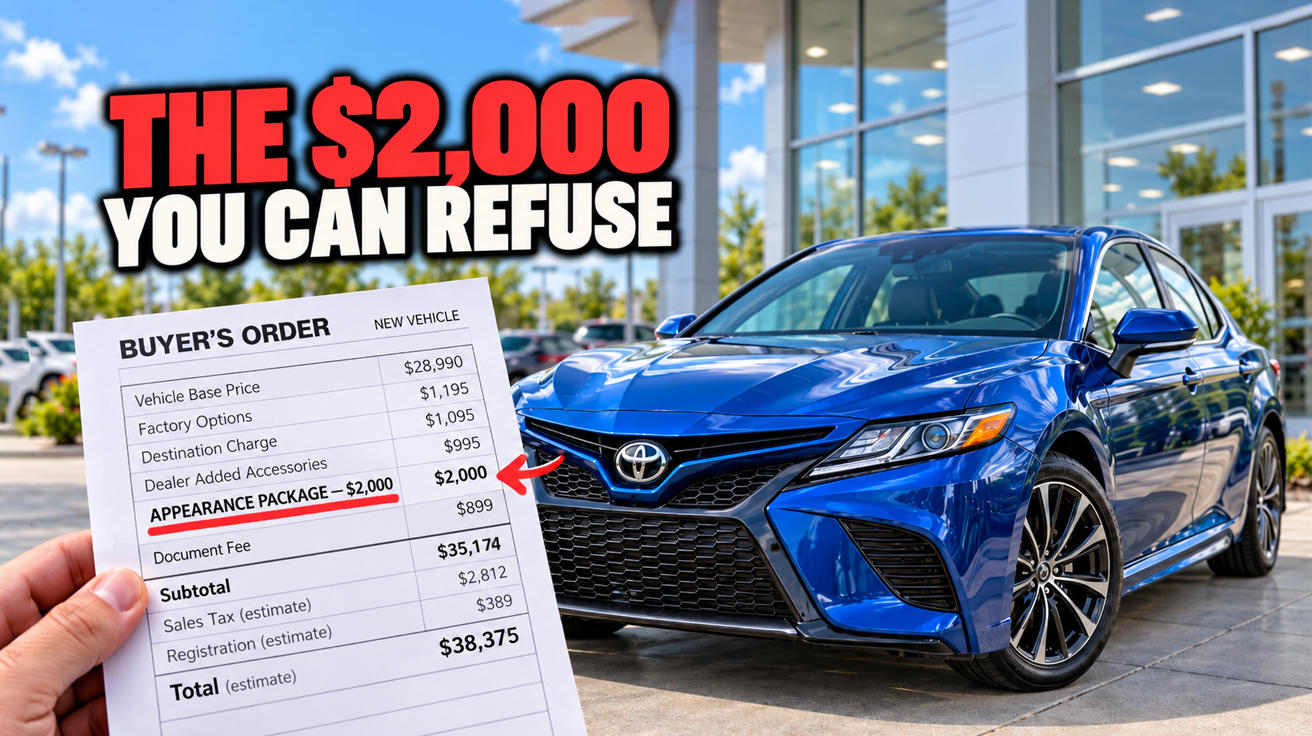
Dealerships may attempt to add thousands with appearance packages that often lack genuine value. Paint sealant, interior protection, and window etch can cost $2,000 or more. The Federal Trade Commission warns that advertised prices may exclude these various fees.
Savvy buyers understand these packages are negotiable. Decline paint sealant if the car will be garaged. Many consider window etch worthless. Protecting wallets from unnecessary extras is as crucial as checking tire pressure before a long trip.
3. Dealer Documentation Fee

This administrative charge varies by state and should appear clearly itemized.
A documentation fee covers the administrative cost of preparing paperwork, distinct from taxes, title, or registration. Its exact amount and even its legality vary by state, making it an opaque addition.
Insist on seeing the fee clearly itemized on a written out-the-door worksheet. If the state caps these fees, point to the regulation. Demand transparency and push back. Every dollar saved means more open road, not more phantom charges for paperwork.
4. Dealer Invoice Price

The amount a dealer pays the manufacturer, providing a negotiation baseline.
CarEdge recommends using the dealer invoice price as a crucial benchmark, separate from the sticker price. This figure generally represents what a dealer pays the manufacturer. Understanding this cost arms buyers with a strong negotiation baseline, preventing discussions from starting solely at the higher MSRP. The dealer’s actual net cost can fluctuate with manufacturer incentives, holdbacks, and bonuses.
Cross-reference online data with a salesperson’s initial bid, instantly highlighting discrepancies. This transparency ensures buyers know the real cost before negotiations begin.
5. Days on Lot
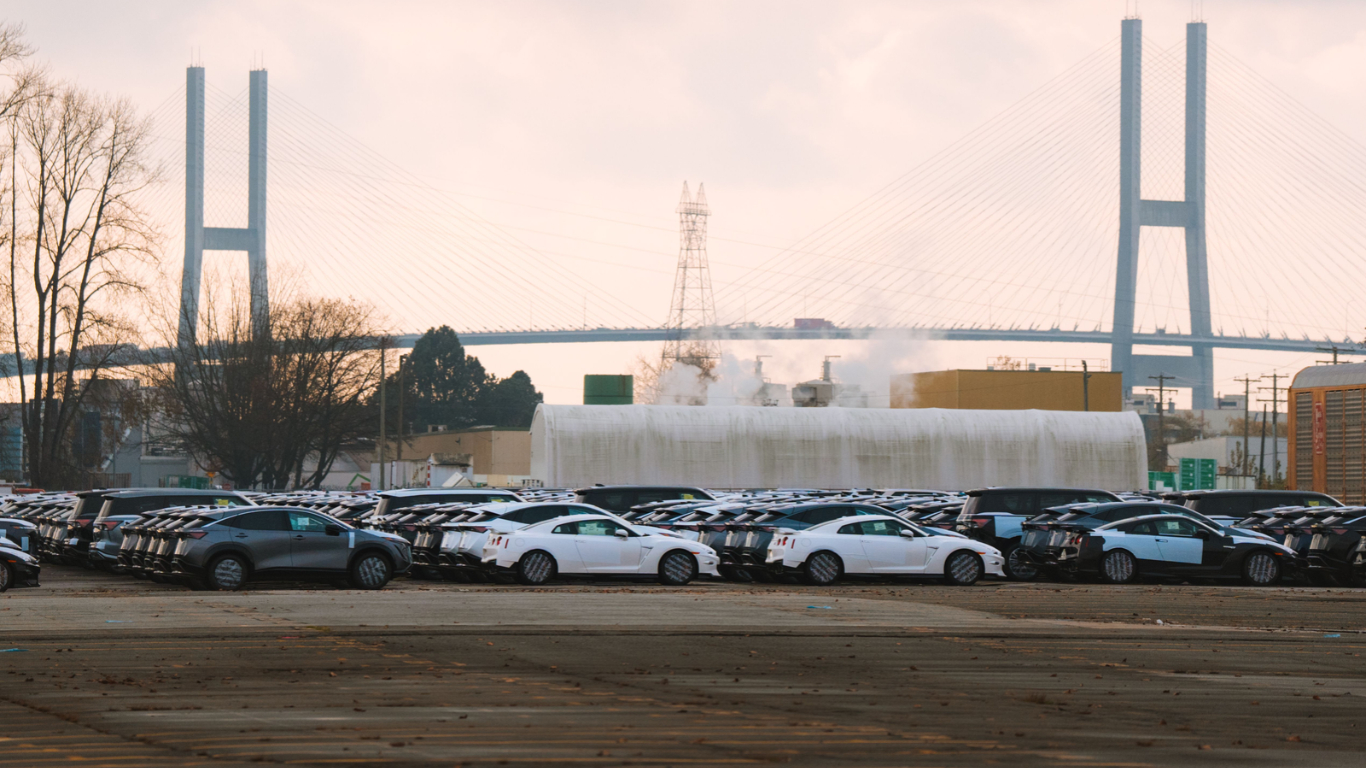
Vehicles sitting for extended periods give buyers more negotiating leverage.
A vehicle sitting on a dealer’s lot for months becomes a stranded asset for the dealership. Dealers are motivated to move aging inventory to free up capital and space. Buyers can politely reaffirm research regarding the vehicle’s time in stock, understanding that a high number signals urgency.
While a lengthy stay doesn’t guarantee a deep discount, it certainly opens the door for negotiation. Compare the vehicle’s time in inventory with local market supply for similar models. If market day supply is high, the buyer’s position strengthens significantly.
6. Market Day Supply

This metric estimates how long current inventory would last at the present sales pace.
A market day supply under 30 days signals intense demand, leaving minimal negotiation leverage. This figure estimates how long current inventory would last at its current sales pace. Expect prices to remain firm in tight markets.
Conversely, a market day supply over 60 days offers more breathing room. Dealers eager to move older stock present greater opportunity for a deal. Research regional inventory for the specific model, trim, and time period before visiting the lot.
7. Written Price Quotes by Email or Text

Remote quotes preserve exact offers and help buyers compare multiple dealerships.
The Federal Trade Commission explicitly advises consumers to obtain the complete out-the-door price in writing before stepping onto any car lot. This strategic move eliminates typical back-and-forth found in a dealer’s finance office. Buyers can secure itemized quotes remotely through email or text, allowing comparison of multiple offers from home.
This process makes clear exactly what’s being paid, including any documentation fees or dealer-added appearance packages. Written context preserves exact offers, ensuring no surprise detours on the way to a fair deal.
8. Multiple-Dealer Price Comparison

Making dealerships compete creates the best leverage for buyers.
The strongest leverage comes from making dealerships compete. Request written out-the-door quotes for the exact vehicle via email or text. Once those written quotes arrive, circulate the lowest number to other dealers.
Always compare the total out-the-door price. This includes all fees, taxes, and potential add-ons. Scrutinizing these details ensures a solid deal. The Federal Trade Commission recommends this approach to identify differences in selling price, dealer fees, add-ons, financing conditions, and availability.
9. Trade-In as a Separate Transaction

Keeping the trade-in discussion separate establishes the new vehicle’s price first.
Obtaining independent valuations from private parties or used-car retailers establishes a clear market benchmark, preventing dealerships from playing shell games. Separating the trade-in negotiation also establishes the new vehicle’s selling price first.
This clarity simplifies comparing the dealer’s trade-in offer against outside bids. Buyers avoid scenarios where a dealer inflates the trade-in value to silently boost the new car’s price, ensuring full transparency in every dollar.
10. Financing, Cash Purchase, and Leasing

The purchase method affects the transaction structure and total cost.
A vehicle’s out-the-door price transforms based on the acquisition method. Paying cash means the transaction ends at the handshake. Finance a vehicle, however, and variables like interest rate and loan term enter the equation. These factors can significantly inflate the ultimate cost over several years.
Leasing fundamentally alters the financial landscape through residual value and money factor. Crucially, establish the vehicle’s true selling price and all itemized fees separately before evaluating any payment scheme. This prevents the classic monthly-payment shell game, where attractive figures often conceal a higher underlying cost.
11. Dealership Finance Office

The final stop where contracts are signed and documents are completed.
The Federal Trade Commission advises securing the full out-the-door price in writing before stepping into the dealership. The finance office is where auto loan or lease agreements are finalized, title transfers are handled, and essential paperwork is processed.
Meticulously compare every detail of the final contract against the written quote. Decline any unrequested add-ons. This vigilance prevents unexpected charges from appearing, ensuring the deal reflects the negotiation and protects wallets from last-minute surprises.
12. Electronic Signatures and Remote Vehicle Buying

Digital communication can reduce dealership time by allowing remote document review.
E-signature capabilities are transforming how transactions are completed. Credit applications and purchase documents can be handled from home. This digital shift, available in many states, allows price requests and contract reviews before setting foot on the lot, drastically reducing time spent in negotiation.
Not every piece of the transaction can be completed remotely. Confirm which documents absolutely demand an in-person signature. Availability depends on state law, lender requirements, dealership systems, and the specific transaction.
13. 2025 Subaru Crosstrek Limited

A compact crossover with standard all-wheel drive and practical features.
The 2025 Subaru Crosstrek Limited offers standard Symmetrical All-Wheel Drive. Its 2.5-liter SUBARU BOXER engine delivers 182 horsepower and 178 lb-ft of torque. Power flows through a continuously variable transmission, providing predictable acceleration.
Standard Blind-Spot Detection and Reverse Automatic Braking enhance safety on busy roads. The 10-way power-adjustable driver’s seat with lumbar support allows optimal positioning for long hauls. Subaru lists the Limited at $31,395 MSRP, or $32,815 including destination and delivery.