

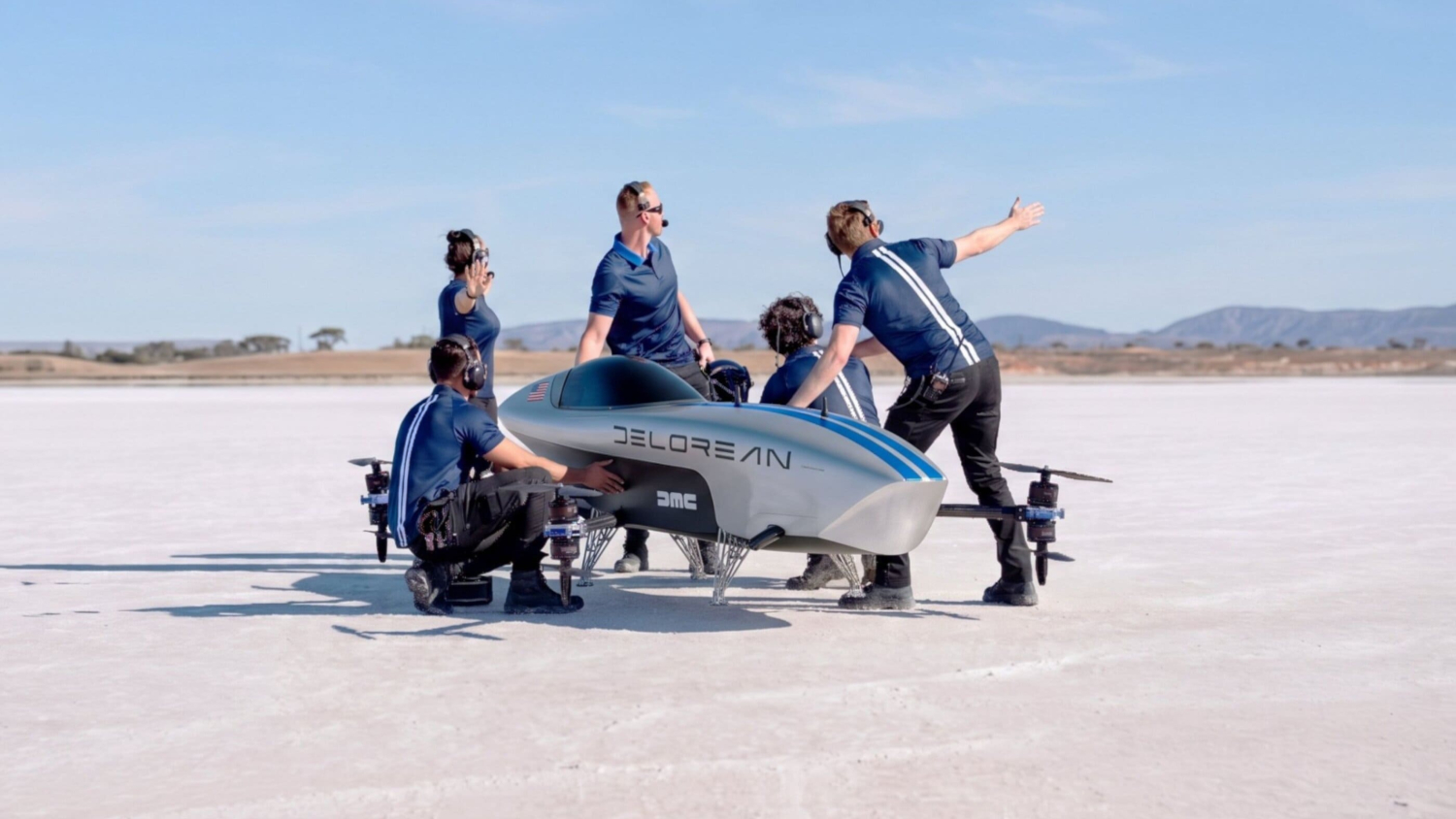
For 40 years, people have pictured a DeLorean in the sky. At TechCrunch Disrupt in San Francisco on October 13, 2026, the company moved to make that image real — or at least competitive. DeLorean announced it will enter the Airspeeder International Series as the first American constructor in the championship, competing as the DeLorean Airspeeder Team beginning November 2026. Worth flagging immediately: this is a racing team entry, not a consumer vehicle launch. The announcement contains no production plan and no commercial flying-car sales program. It is a brand with mythic airborne baggage finally putting rotors where its reputation is.
Racing Through the Air, Not the Road
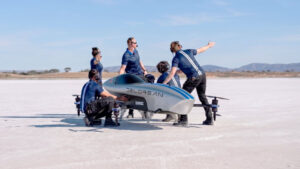
Pilots navigate electric eVTOL aircraft through three-dimensional, electronically defined courses — no oval tracks, no pit lanes, no precedent quite like it.
The format is unlike any motorsport most fans know. Airspeeder pilots operate electric eVTOL aircraft through courses marked by virtual gates, relying on onboard flight-control and collision-avoidance technology rather than painted tarmac. Airspeeder founder Matt Pearson has described the series as an effort to apply Formula 1’s competitive-development pressure to electric flight, with intended long-term applications in passenger transport, emergency response, and cargo delivery. Those remain proposed objectives, not demonstrated outcomes.
Here’s what the announcement actually confirms:
- DeLorean debuts in November 2026 using Airspeeder’s standardized Mk3C electric race aircraft — the first-season contribution centers on team branding and visual identity, not a bespoke machine
- Starting the 2027–28 season, DeLorean plans to co-develop a future race aircraft with engineering students at UC Berkeley and Georgia Tech
- DeLorean becomes the first American constructor in the Airspeeder International Series championship
- Aircraft details, pilot lineup, and full sporting program have not yet been disclosed
- The announcement contains no consumer product or commercial flying-car sales plan
Chief Brand Officer Cameron Wynne captured the brand logic directly: “People have pictured a DeLorean in the sky for 40 years.” The company, Wynne indicated, decided it was time to stop picturing it and start competing. The announced first-season role, however, centers on visual identity applied to a standardized aircraft — the deeper engineering ambition, a more DeLorean-specific machine developed with UC Berkeley and Georgia Tech, is a 2027–28 commitment with no completed deliverables yet documented.
Other automakers, including Hyundai, Toyota, Honda, and Stellantis, have explored advanced-air-mobility territory, though generally through commercial eVTOL projects rather than racing. DeLorean’s motorsport path is the distinguishing move — using competition and spectacle to connect a cinematic identity with emerging electric-flight technology.
What to Watch Before You Believe the Hype
The credibility of Pearson’s Formula 1 analogy will be tested by whether Airspeeder produces advances in electric propulsion and safety systems that move beyond the race course.
The university partnerships represent the most tangible signal of genuine engineering intent — but as a 2027–28 plan, they remain ahead of execution. Before drawing conclusions, watch for the pilot lineup, the published race schedule, and whether the Mk3C campaign produces anything beyond compelling visuals. Whether racing pressure translates to transferable technology in electric propulsion, lightweight design, or autonomous safety systems is the question the 2026–27 season will begin — but not conclusively answer.
The DeLorean flying myth is now an announced racing program, which is genuinely more than most brands do with decades of nostalgia. Whether it grows into something more substantive depends, in large part, on what emerges from those university labs starting in 2027.