

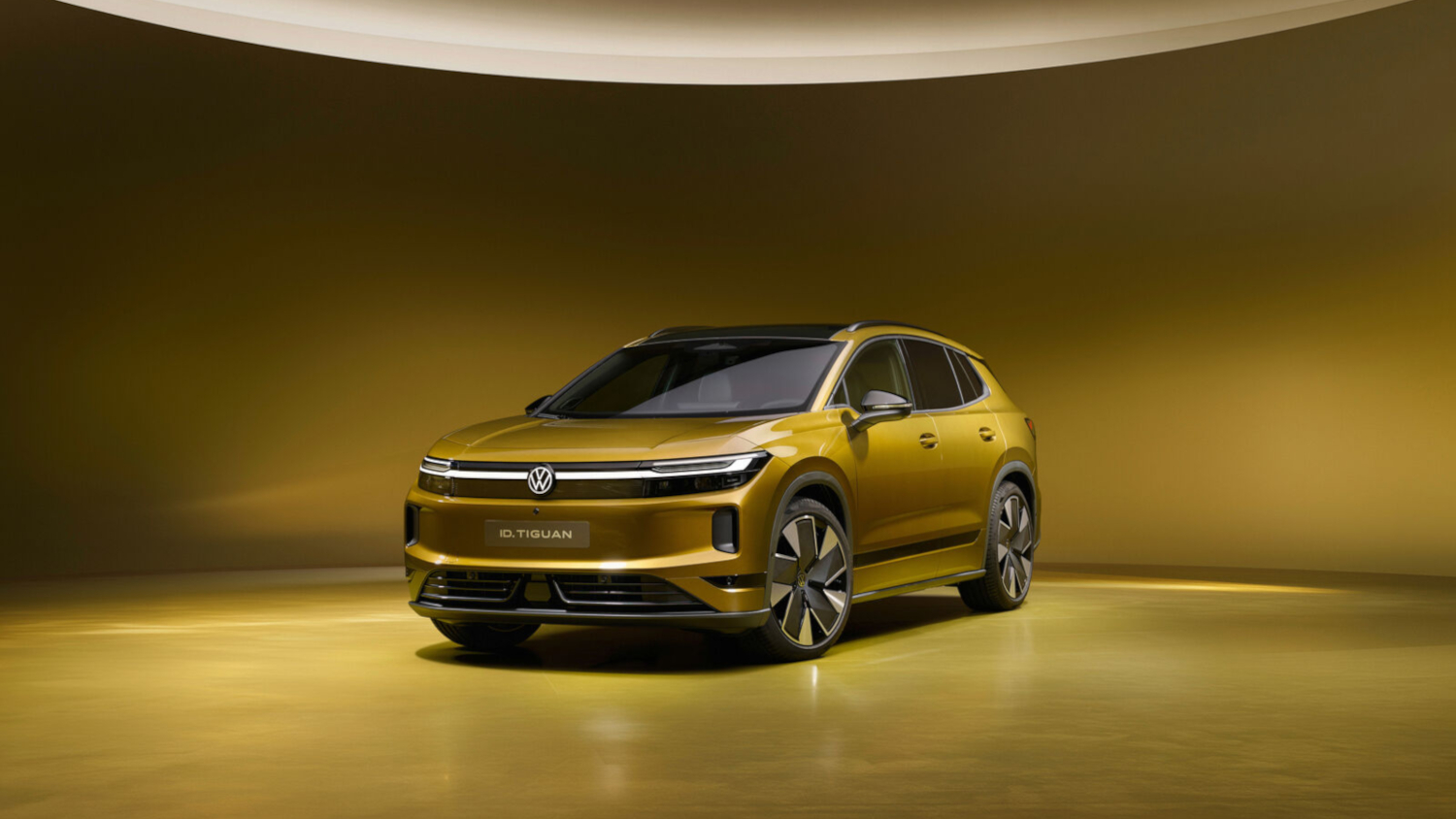
Anyone who has fumbled with an ID.4’s capacitive audio sliders in the dark — unilluminated, imprecise, requiring the tactile confidence of a safecracker — will understand Volkswagen’s next move immediately. The ID. Tiguan isn’t a refresh. It’s a systematic course correction. Confirmed to launch in Europe in early 2027, with additional markets to follow, the ID. Tiguan succeeds both the ID.4 and ID.5. Volkswagen hasn’t issued an apology. It just built one.
Everything You Hated About the ID.4, Fixed (Mostly)
The outgoing model’s shortcomings were never catastrophic — but they were relentless, and Volkswagen appears to have catalogued every one of them.
The ID.4’s problems were death by a thousand ergonomic cuts. A 5.3-inch driver display that felt borrowed from a budget hatchback. Two window switches requiring a secondary button press to reach the rear windows. Touch-sensitive steering-wheel controls. A silhouette that could generously be described as “present.” The ID. Tiguan addresses several of these specifically, according to Volkswagen’s official launch materials.
What’s Actually Different:
- Driver display grows from 5.3 inches to a configurable 10.0 inches; central touchscreen reaches 15.0 inches
- Physical button bar replaces capacitive audio sliders; rotary controller handles volume and media selection
- Four individual window switches replace the two-switch arrangement that required a secondary button for rear windows
- Steering-wheel controls return to conventional physical buttons — confirmed explicitly in Volkswagen’s launch release
- Three European powertrains confirmed: 58-kWh/190 PS rear-drive, 77-kWh/286 PS rear-drive, and 77-kWh/299 PS all-wheel-drive, with WLTP range reaching approximately 373 miles — a European figure; U.S. EPA ratings typically run lower and remain unconfirmed
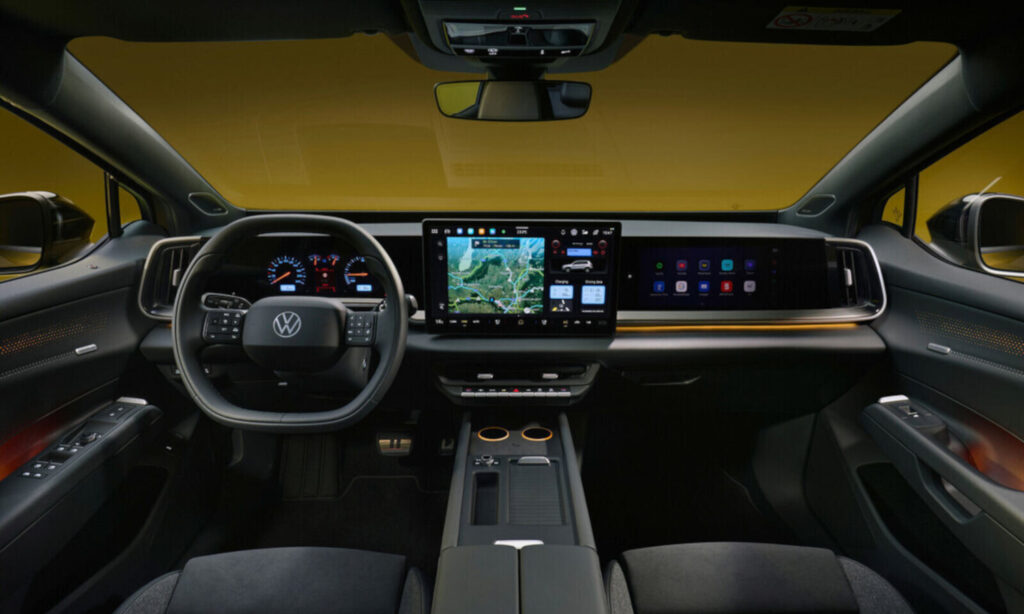
“Important functions are accessed using physical buttons incorporated where drivers would intuitively expect them.” — Volkswagen official launch materials
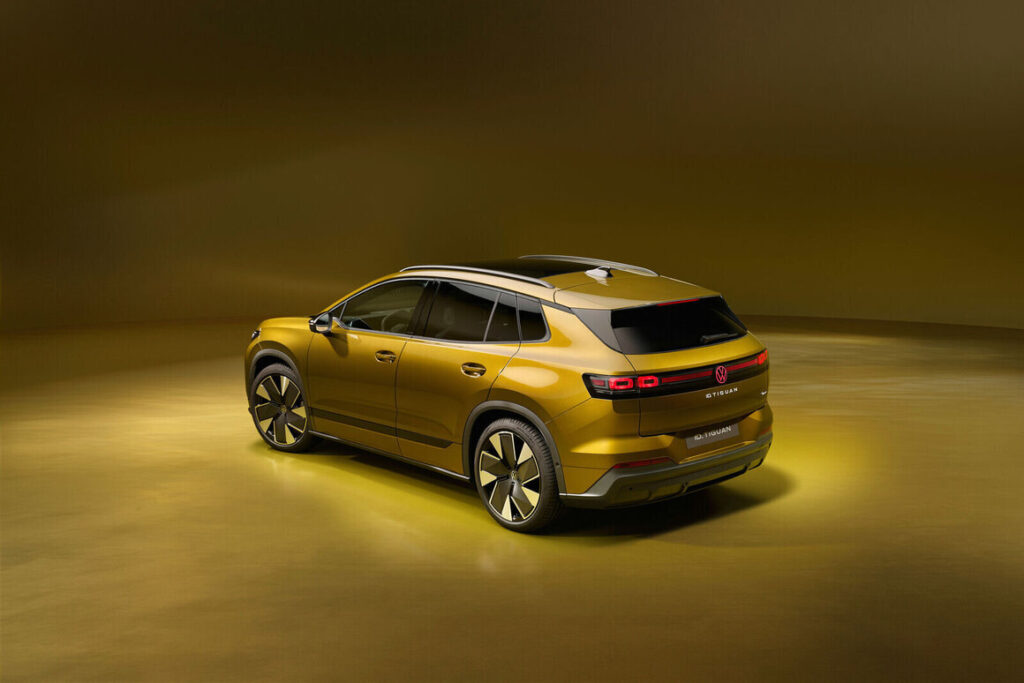
Rather than invent another abstract ID-something badge, Volkswagen reached for one of its most established SUV nameplates. That’s a strategic signal, not a coincidence. The ID. Tiguan will sell alongside combustion and hybrid Tiguan variants, narrowing the psychological distance between VW’s electric and conventional lineups. More upright, squared-off proportions replace the ID.4’s rounded styling — a clear design departure, even if Volkswagen doesn’t frame it as a correction.
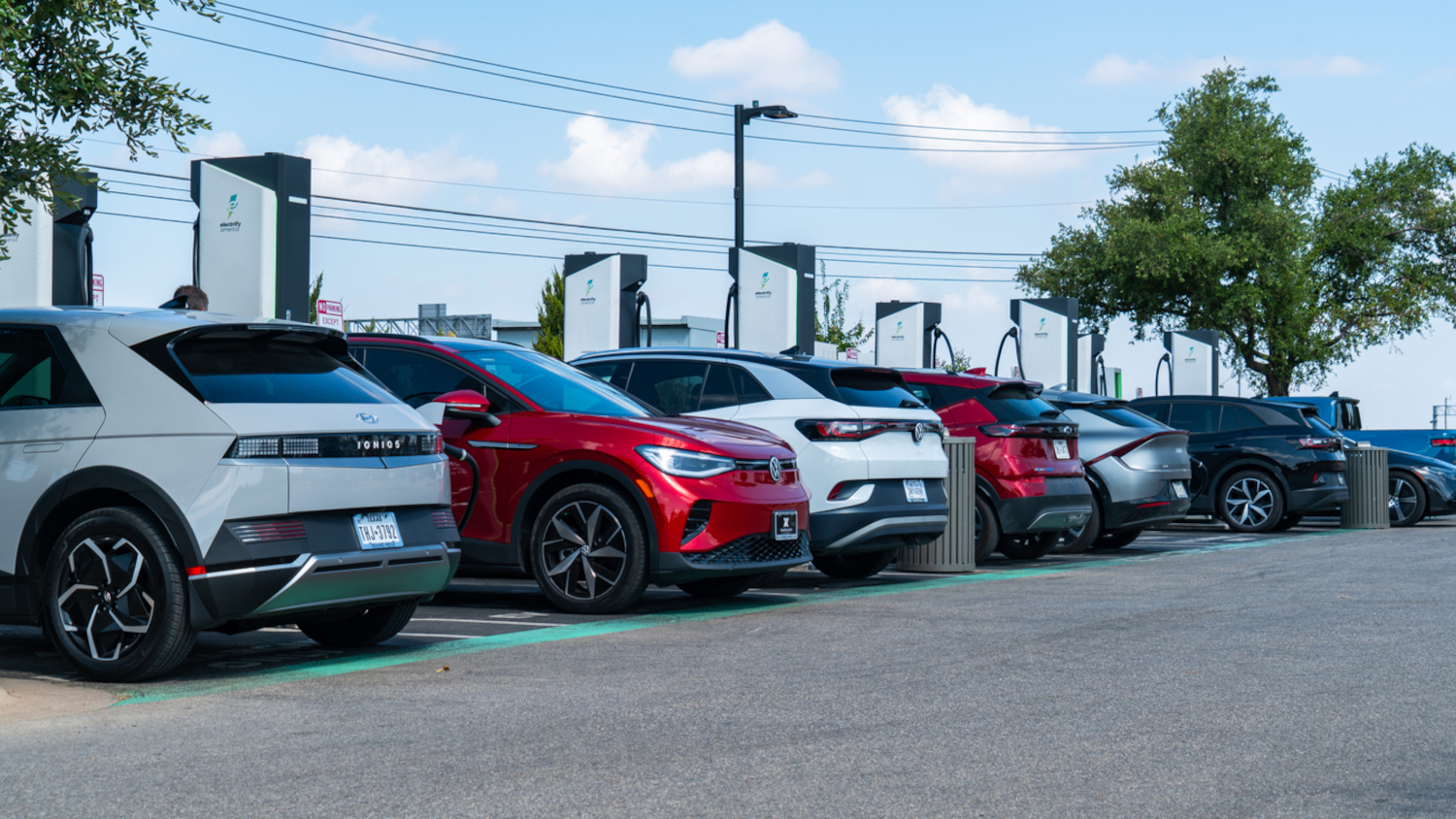
Here’s where the story gets complicated. Specialist reporting — not confirmed in Volkswagen’s official launch materials — suggests the 58-kWh version may be capped at 105 kW DC charging and the 77-kWh versions at 165 kW, with no 800-volt architecture. Hyundai and Kia already offer 800-volt systems in this segment, enabling significantly faster replenishment. If those figures hold for production models, Volkswagen may have fixed the car’s personality without fixing its patience at a charger.
The Question That Matters Most for U.S. Buyers
American shoppers will need answers that Volkswagen hasn’t provided yet — and the range figures already confirmed don’t tell the whole story.
U.S. timing, EPA-rated range, powertrain availability, and pricing all remain unconfirmed ahead of the early-2027 European launch. That 373-mile WLTP claim will likely translate to a lower number under American testing conditions — treat it accordingly. Whether the reported towing capacity of up to 2.0 tonnes carries over to U.S. specification is also unknown. Buyers wondering what else might be worth waiting for have other options worth considering in the meantime.
The ID. Tiguan gets the name, the proportions, and the controls right. A road test in 2027 will reveal whether Volkswagen also fixed the part drivers feel every time they stop for a charge.