

For wheelchair users, the question of whether Zion was ever truly accessible has long had a frustrating answer. That answer is now more complicated — in the best possible way. Five Utah national parks — Zion, Bryce Canyon, Capitol Reef, Canyonlands, and Arches — are loaning all-terrain wheelchairs free of charge. It’s a genuine step forward, and it comes with real conditions worth understanding before any trip planning begins. If you’re also considering easy entry vehicles to complement accessible travel, that’s another piece of the puzzle worth exploring.
What the Chair Actually Does
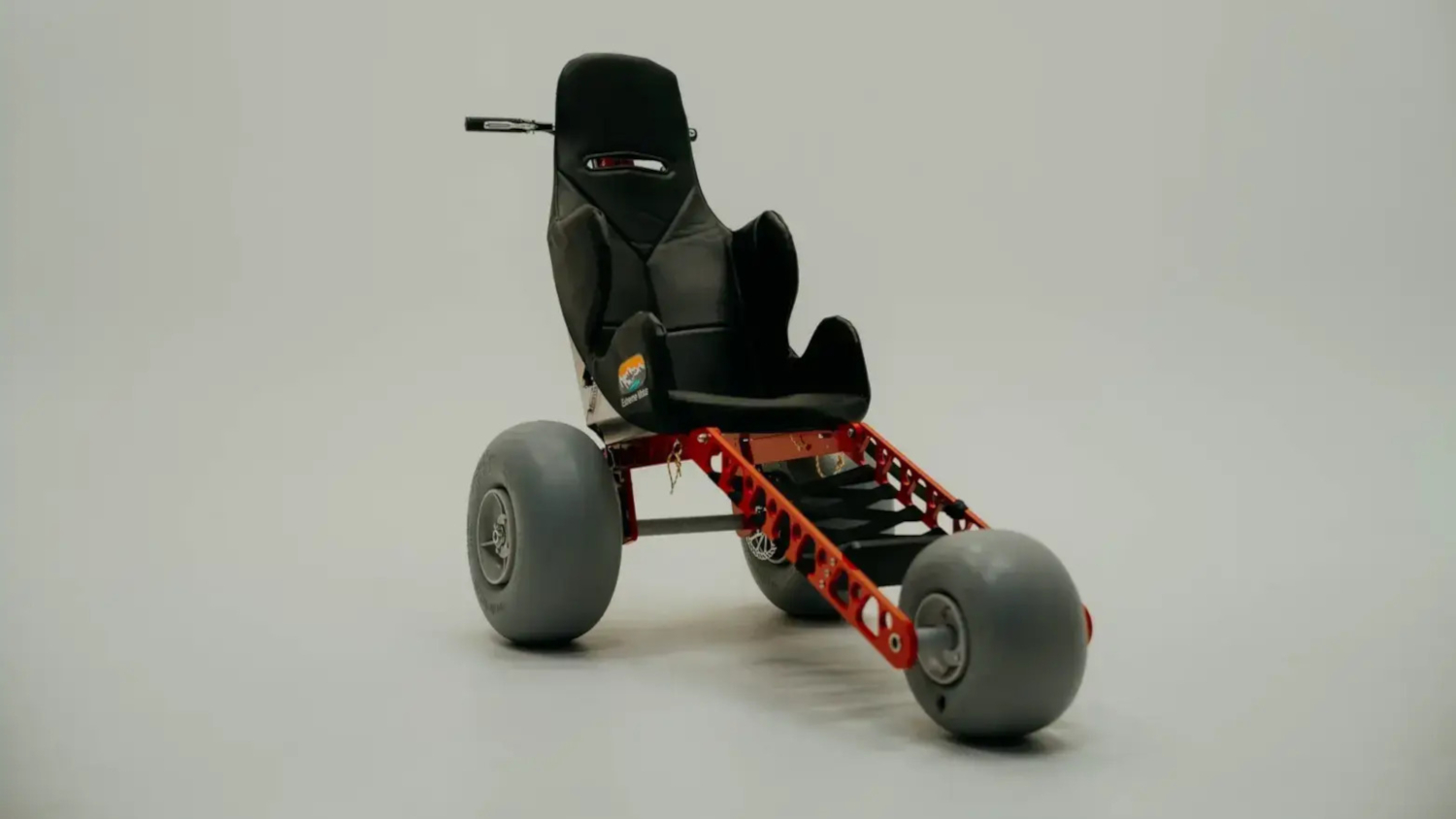
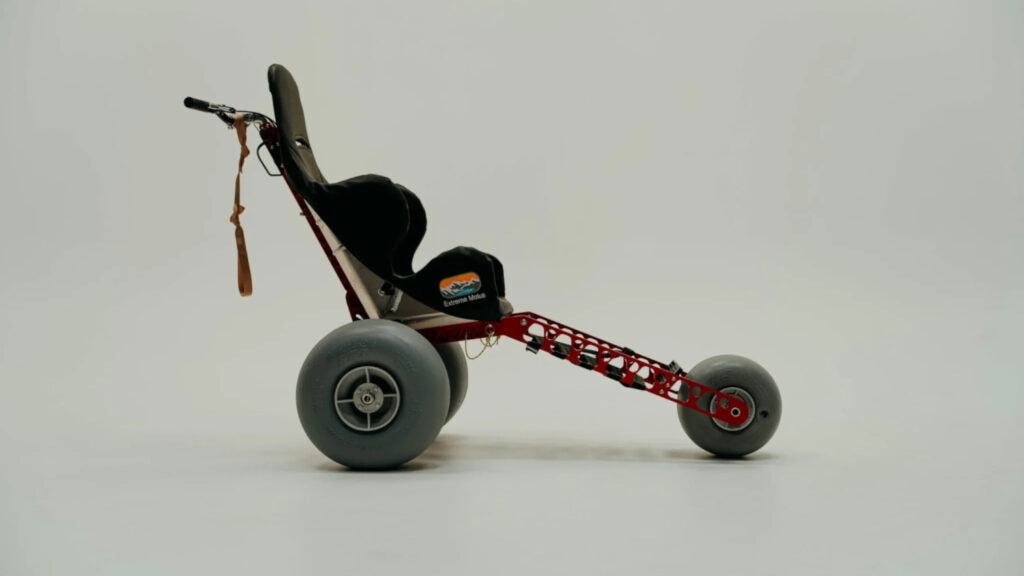
The Extreme Motus is a rugged, manually operated chair designed for surfaces that standard wheelchairs simply cannot handle.
The Extreme Motus is a manual, non-motorized chair built for outdoor terrain. Oversized balloon tires handle sand, gravel, dirt, grass, snow, and shallow water — and the manufacturer describes the frame as buoyant in shallow water, though it is not designed for immersion or moving water. The manufacturer describes the reclined seat and 47-inch wheelbase as features intended to improve stability on rough ground. It folds for transport and weighs 55 pounds.
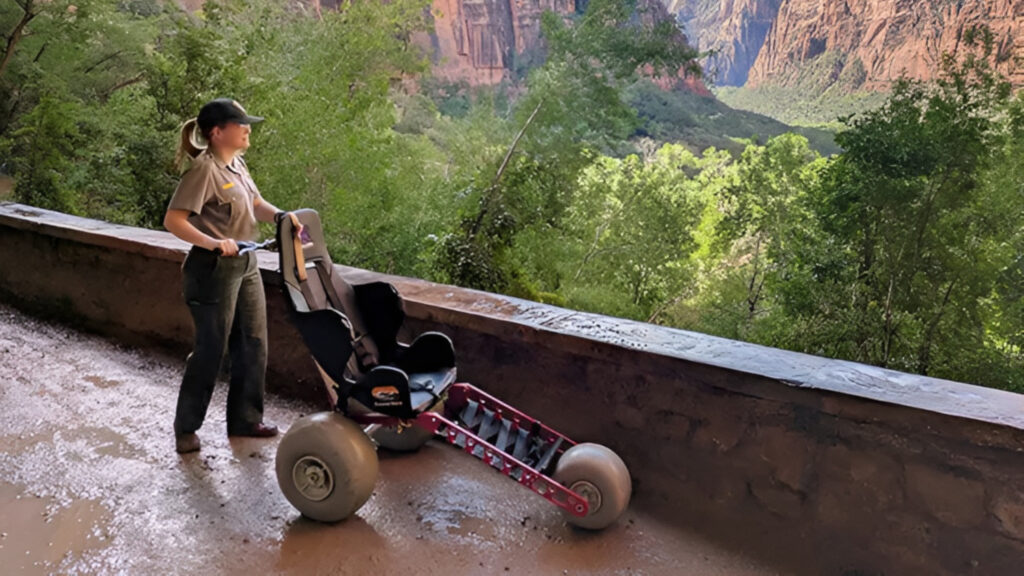
That last detail is critical: the chair requires an assistant to push and operate it at all times.
At retail, the Extreme Motus starts at $4,500, excluding shipping and optional accessories. That number explains exactly why the free-loan program matters.
Before arriving at Zion, know these five things:
- No reservations. The chair is first-come, first-served at the Zion Canyon Visitor Center.
- Both the user and assistant must sign waivers. Either one must show ID and proof of insurance.
- A ranger provides brief training before checkout.
- The chair must be returned the same day, before the visitor center closes.
- The park does not store personal wheelchairs during the rental period.
The Equipment Problem Is Solved. The Other Problems Remain.
Borrowing the chair eliminates one significant obstacle — the cost of specialized gear — while leaving other real challenges squarely in place.
Accessing the Extreme Motus removes the cost and logistics of sourcing specialized equipment. What it does not remove is everything else. Trail grades, surface conditions, distances, restroom access, and the physical effort of pushing 55 pounds plus a rider over uneven terrain are all still factors. Procedures, chair availability, and eligible trails also vary by park — what applies at Zion may not apply at Arches or Capitol Reef. For broader context on equipment and vehicle costs, the data behind the affordable new car market helps illustrate why programs like this one matter so much.
Think of the program as a gear library, not a trail-access guarantee.
Before You Go, Make One Phone Call
Calling ahead is the single most useful thing any visitor can do before building an itinerary around this program.
Each park has a limited supply of chairs and its own eligible routes. Contact the specific park before traveling to confirm availability, trail options, and the day’s return window. Match the planned route honestly to the assistant’s physical capacity — and show up with a real plan.