

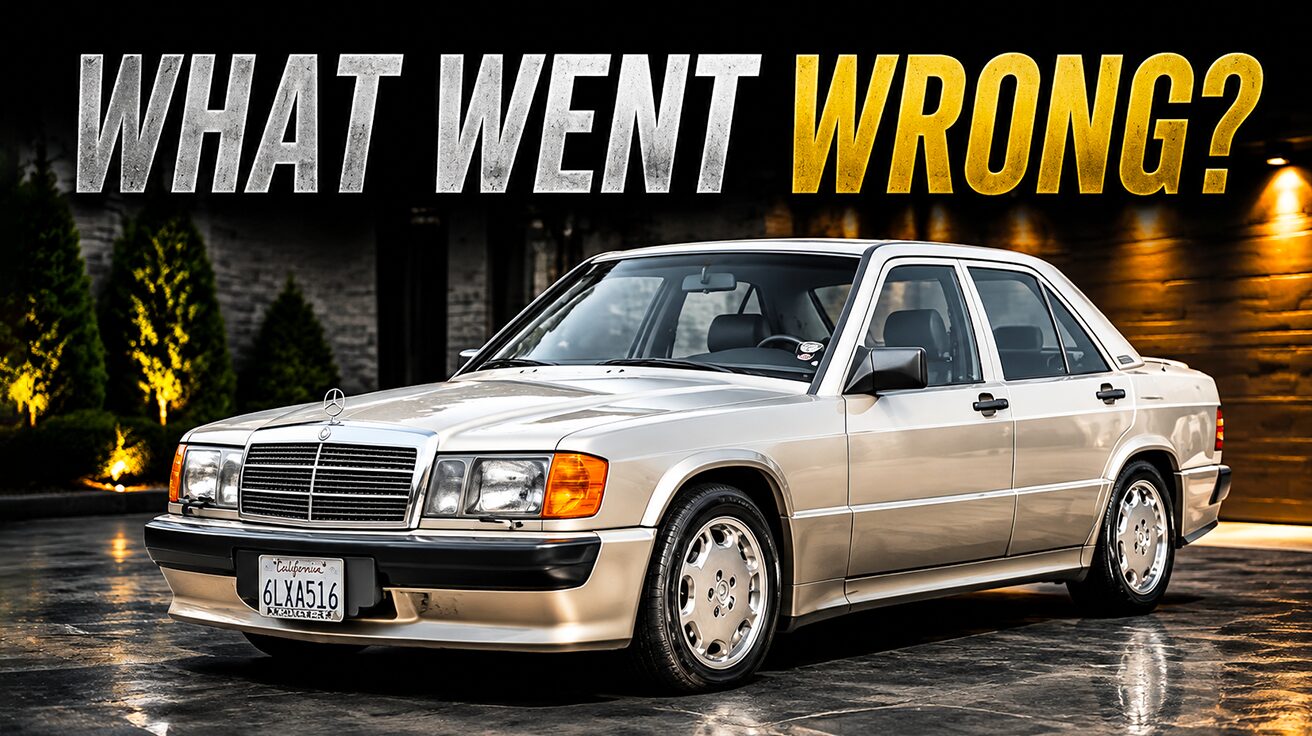
Automotive manufacturing once prioritized engineering above all, striving for bulletproof durability. Mercedes-Benz cemented its reputation by crafting cars with precision that bordered on obsession. You expected a legacy of robust design. Then fierce market competition arrived, with rivals investing over $1 billion into single models. This era forced a shift, sometimes leading engineers to trade precision for penny-pinching. Understanding this evolution lets you identify genuine value beyond brand perception—which Mercedes models truly connect with the road and deliver real driving joy on your next weekend escape.
1. Mercedes-Benz 190E (W201)
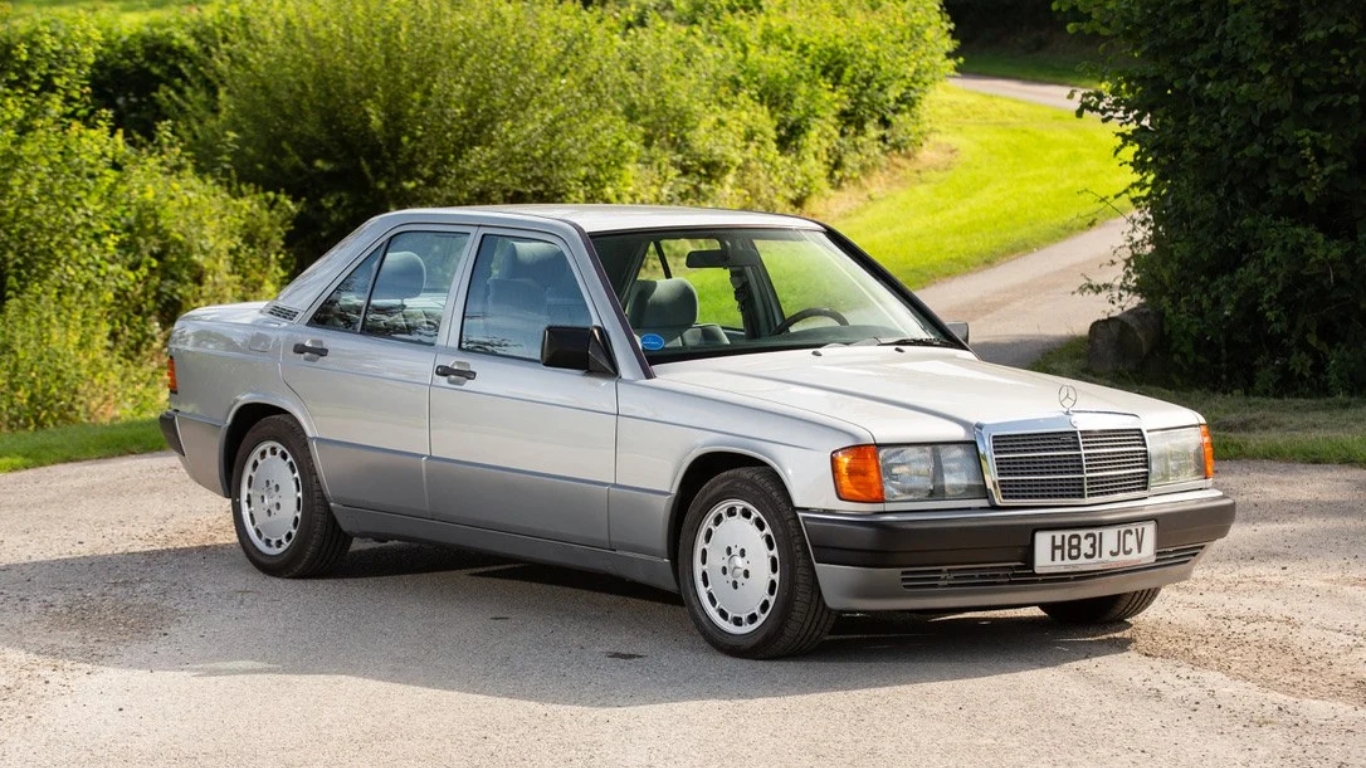
The compact executive that proved Mercedes could build durability into every chassis bolt.
Nearly 1.9 million units of the W201 series were sold globally, cementing the 190E’s reputation for pure durability. Designed by Bruno Sacco, this chassis introduced Mercedes’ pioneering multi-link rear suspension, a system that became the template for every subsequent model. Its impressive drag coefficient of 0.33 contributed to quiet highway cruising. Mercedes proved endurance credentials with three prototypes at Nardò, covering 50,000 km in 10 days, averaging 154 mph (247 km/h). That record run made a serious statement about unwavering reliability.
Driving this car provides vault-like solidity, a reassuring heft you feel immediately. Standard 2.0-liter models produced 118-122 hp and hit 0-60 mph in about 10 seconds—not headline-grabbing acceleration, but adequate for everyday use. This car was built for the long haul, ready for any road trip without drama. With available ABS and a rigid passenger cell, it raised safety standards significantly. The 190E remains your trusty road companion, always ready to roll.
2. Lexus LS 400 (XF10)
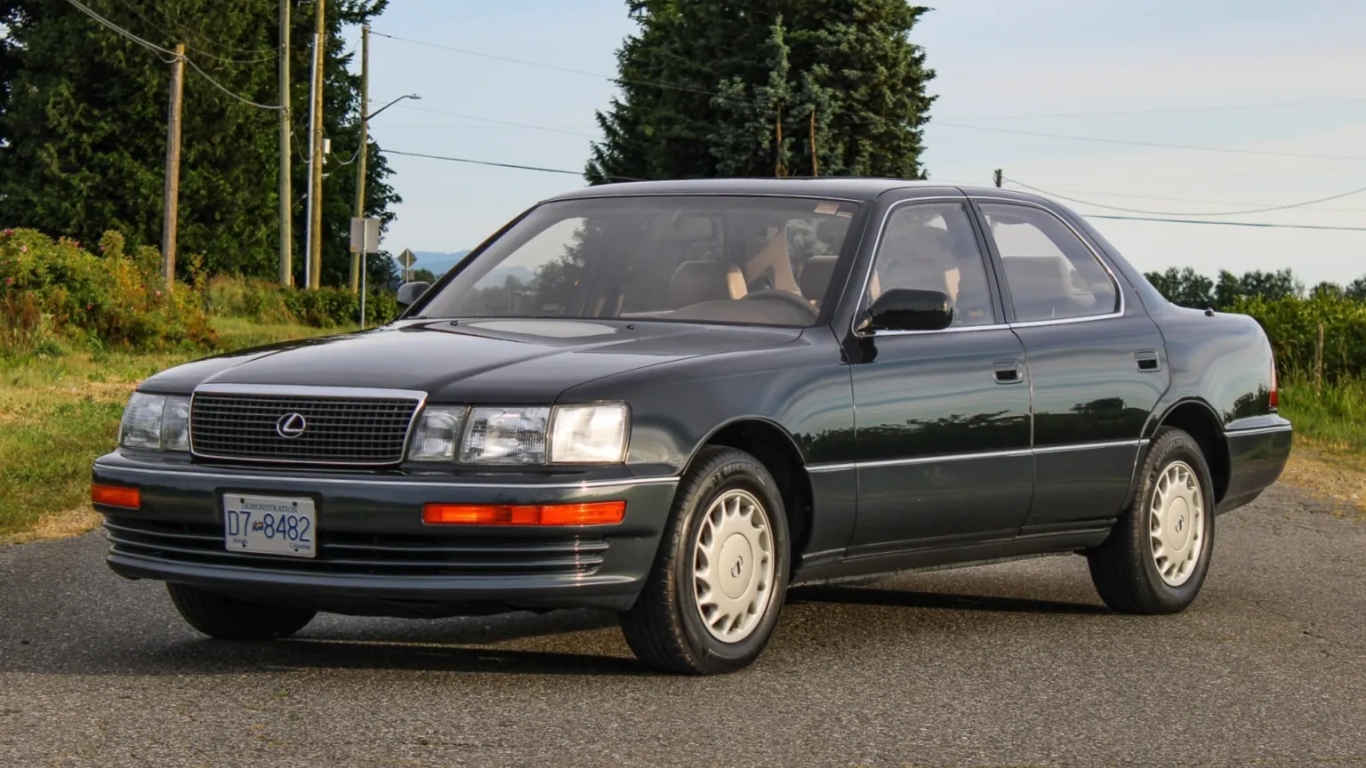
Toyota’s billion-dollar commitment to redefining what luxury should cost.
In 1989, the Lexus LS 400 emerged, backed by over $1 billion in development. The 1UZ-FE 4.0-liter V8 engine was engineered for surgical precision and whisper-quiet operation, delivering around 250 hp. This new challenger focused on eliminating noise, vibration, and harshness (NVH) to levels previously unseen at its price, redefining luxury expectations and putting direct competitive pressure on Mercedes.
You noticed the difference immediately behind the wheel. Its cabin was hushed, every control operating with paramount quality that felt more expensive than its sticker. Pull up to a weekend getaway; your friend’s Mercedes suddenly felt dated while your LS 400 offered serene luxury for thousands less. This commitment to refinement and value altered the luxury landscape, sending European rivals scrambling to justify their premium pricing.
3. Mercedes-Benz W140 S-Class
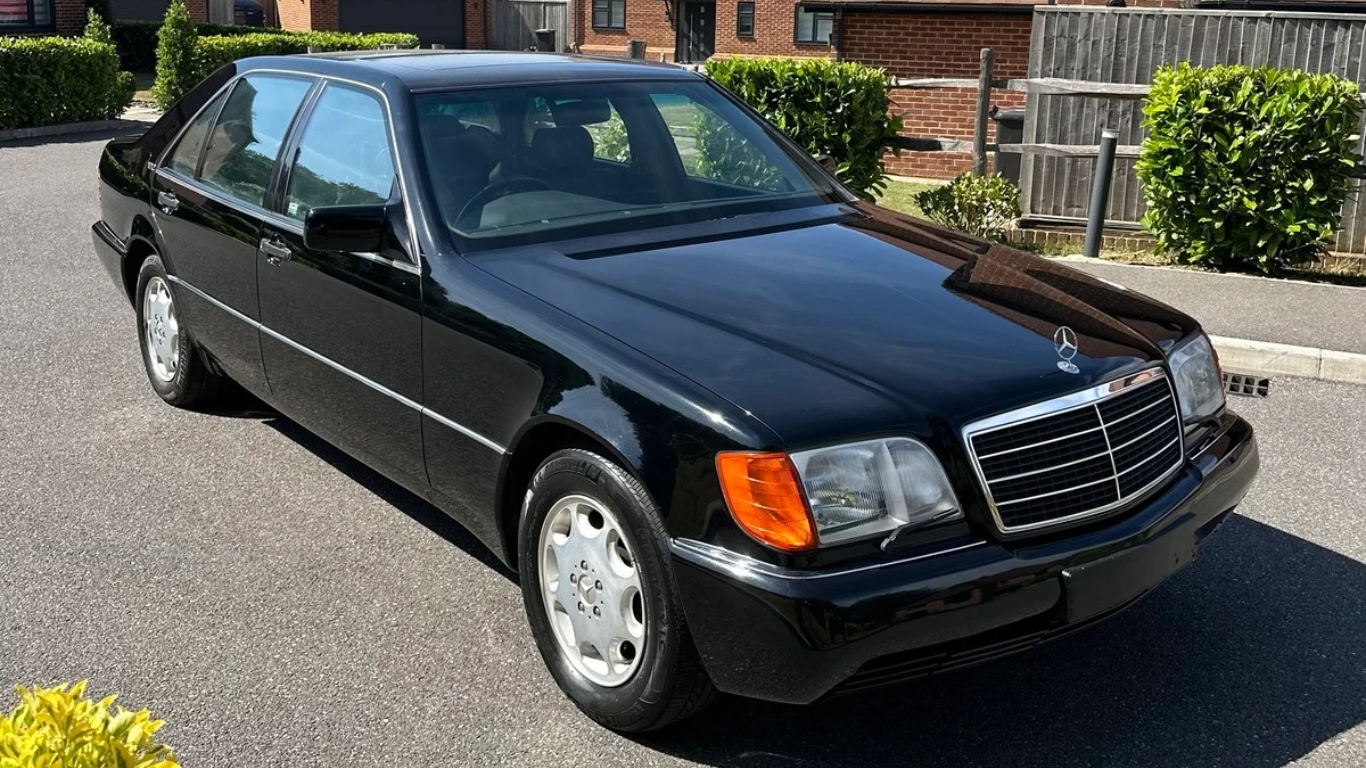
The flagship that nearly bankrupted Mercedes through obsessive over-engineering.
Development of the W140 S-Class in the early 1990s required such high investment that industry commentary notes it heavily strained Mercedes’ finances. This car was a technological declaration, built like a bank vault on wheels. Its double-glazed side windows provided superior noise reduction, creating a cabin so profoundly quiet you could hear your own thoughts. A whispered joke from the backseat would simply land unheard, silenced by the sheer lack of ambient noise.
The W140’s obsessive refinement extended to its soft-close doors and boot lid, making every closure feel significant. Mercedes aimed to maintain leadership against rising competition, equipping this S-Class with advanced electronic stability enhancements. This vehicle delivered a presence as weighty as a proper cast-iron engine block for those appreciating true substance. But the extreme cost of development, combined with shifting market pressures from Lexus, heavily influenced later decisions to cut costs on subsequent models.
4. Mercedes-Benz A-Class (W168)
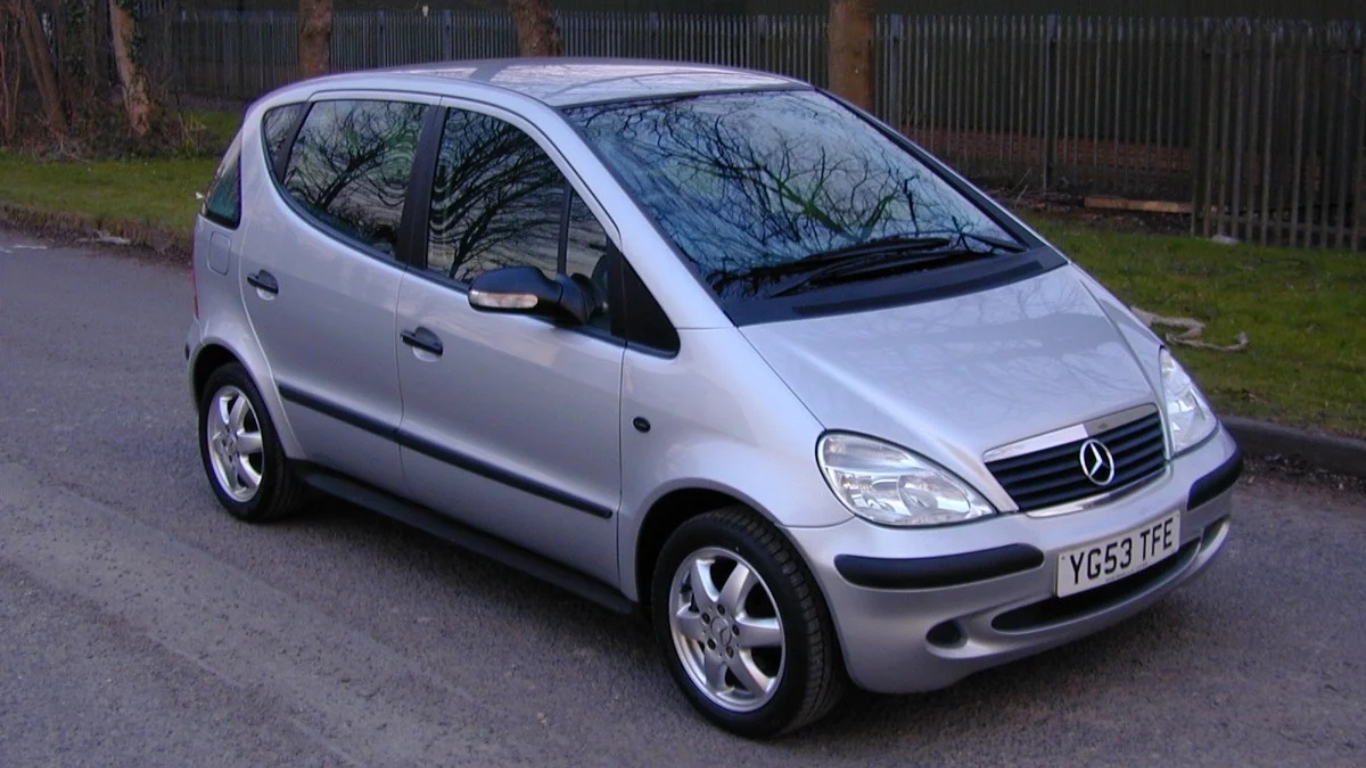
The rollover that transformed automotive safety standards overnight.
On October 21, 1997, a first-generation Mercedes A-Class (W168) notoriously failed the “moose test” in Sweden, rolling over at just 60-65 km/h (37-40 mph) during a simulated double-lane-change maneuver. This public incident exposed the innovative “sandwich” platform’s flaw: a relatively high center of gravity that made the tall hatchback behave unpredictably when pushed. The unexpected rollover prompted an immediate halt in production and vehicle recalls.
Mercedes recalibrated the suspension and, critically, made Electronic Stability Program (ESP) standard on the A-Class. This decision transformed a PR disaster into a safety triumph, accelerating ESP’s widespread adoption across the automotive industry. You benefit from this legacy every time your car stays composed during an unexpected swerve on a slick highway. The moose test scandal became a milestone in automotive safety history, pushing Mercedes to become a pioneer in stability control systems.
5. Mercedes-Benz SLK (R170/R171)

The roadster that taught Mercedes a painful lesson about corrosion protection.
Mercedes’ engineering reputation faced a stern test with early R170 and R171 SLK models, which suffered notorious corrosion. R171 versions built from 2004 to 2008 notoriously lacked internal anti-corrosion treatment in their rear subframes. This allowed rust to spread unseen, undermining the car’s integrity. Typical weak points include rust on the rear subframe tubes and on the boot lid around seals, which owners and specialists advise inspecting carefully—ideally with an endoscope to assess hidden internal damage. You expected more from a premium German roadster.
The facelifted R171 models improved materials and corrosion protection compared with the earliest cars. You’d feel the difference, enjoying a more solid road presence from the 1.8-liter supercharged petrol engine and signature vario-roof. Mercedes learned, turning a prior quality embarrassment into a much more competent driving machine. The electro-hydraulic metal folding roof remained a major selling point, emphasizing engineering novelty and lifestyle appeal.
6. Mercedes-Benz C300 (2021 C-Class Night Edition Premium Plus)

Premium pricing meets questionable quality control in the modern era.
The 2021 C300 AMG Line Night Edition Premium Plus coupe uses a 2.0-liter (1991 cc) turbocharged four-cylinder petrol engine, delivering 258 bhp through a 9G-Tronic gearbox. This setup pushes the coupe from 0 to 62 mph in 6.1 seconds. You get a panoramic sunroof and Burmester audio, wrapped in ‘Night Edition’ trim with large alloy wheels and dark exterior details. On paper, it sounds compelling.
Consider build quality for a car priced at £50k+, though. A window switch failing on a new car is a tiny crack in the veneer, the kind of detail that shouldn’t appear on a premium product. This C300 hits 155 mph and achieves 36 mpg combined, but these figures don’t absolve build issues. Has that vaunted Mercedes engineering ethos, once built like a bank vault, faded into inconsistency?