

The classic car market tempts buyers with nostalgia-wrapped time bombs—vehicles that promise glory but deliver financial despair and roadside breakdowns. Between badge-engineered disappointments and maintenance nightmares that devour bank accounts faster than a teenager with a credit card, countless “collector opportunities” exist only to separate enthusiasts from their money. This unvarnished look at automotive history separates genuinely worthwhile road-trip machines from the ones that belong firmly in the past, where they can’t hurt anyone’s wallet.
1. 1958 Edsel Corsair
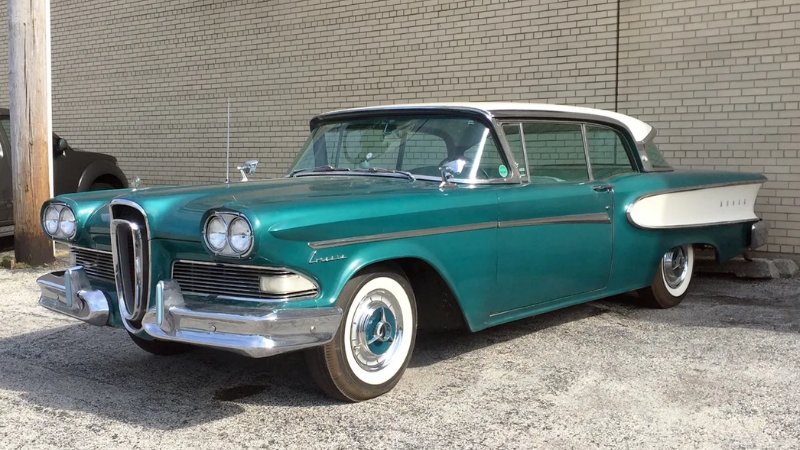
The horse-collar grille became automotive shorthand for spectacular failure, and the parts situation ensures every restoration turns into a treasure hunt with no treasure.
The 1958 Edsel Corsair achieved instant notoriety as a design punchline, its distinctive “horse collar” grille becoming automotive folklore. A clean Corsair fetches around $23,000 at auction, appearing deceptively affordable for such a historically significant machine. But parts for this orphan brand prove elusive in practice, transforming any restoration into an endless scavenger hunt. Costs spiral far beyond market value, proving that notoriety and collector worth occupy completely different zip codes.
2. 1971-1980 Ford Pinto Runabout
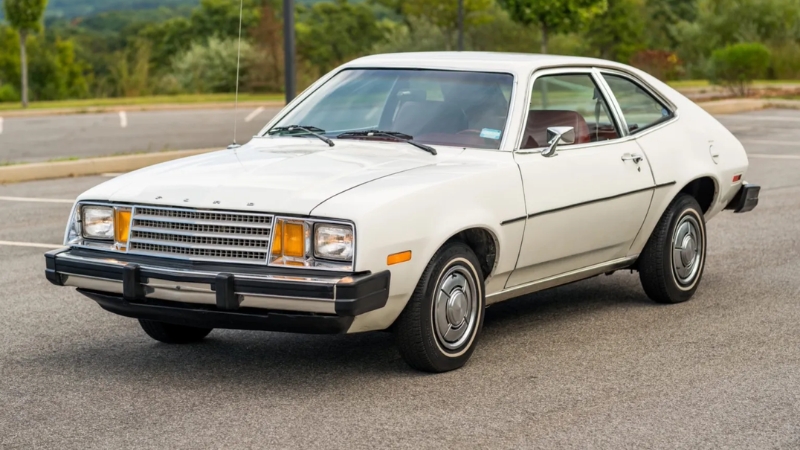
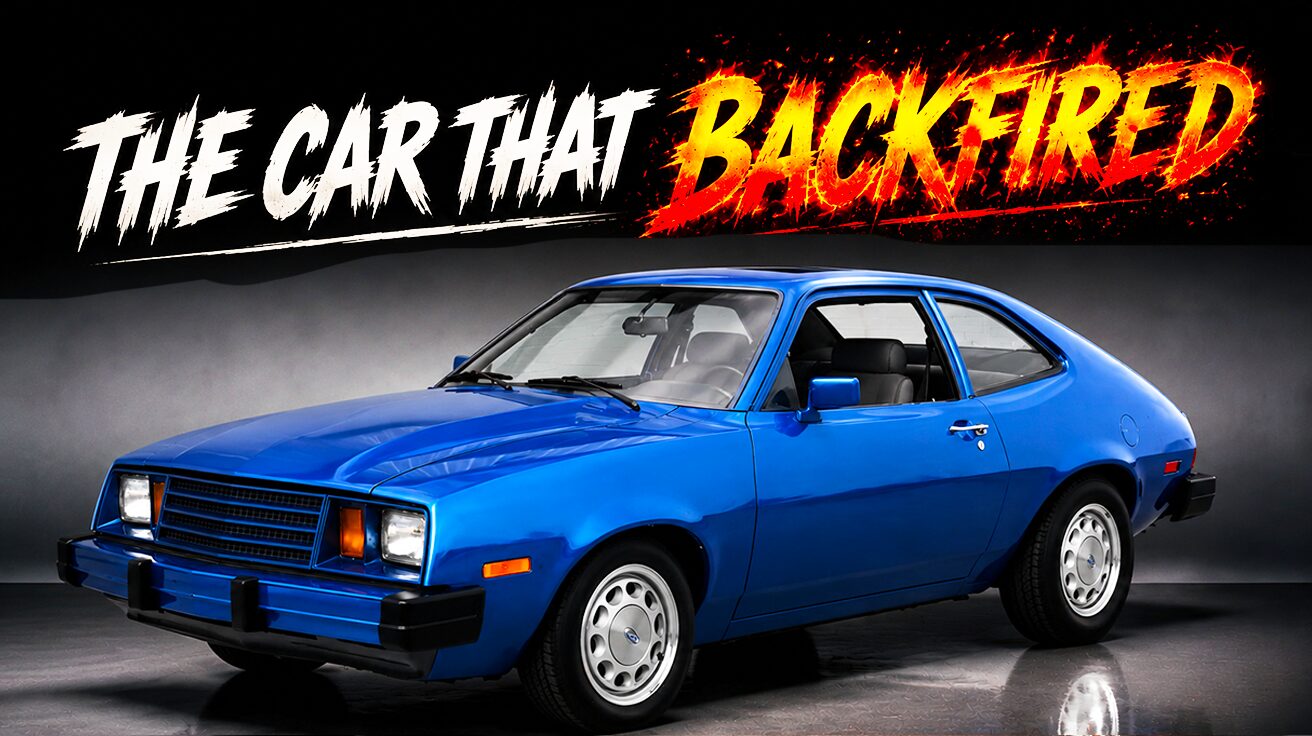
The math says investment opportunity, but the rear-end fuel tank scandal permanently torched any legitimate collector appeal.
Enthusiasts occasionally float the Ford Pinto as a hidden gem, conveniently ignoring the fiery elephant in the room. The 1973 Pinto 3 Door Runabout Hatchback originally retailed for $2,144 and now averages $3,250 according to JD Power—modest appreciation for five decades. Yet its infamous rear-end fuel tank design became a benchmark case study in corporate negligence, permanently staining its legacy. Historical notoriety tied to tragedy, not driving pleasure, ensures this remains a poor bet. Any claimed “upside” ignores reality as thoroughly as Ford once ignored safety engineers.
3. 1953-1955 Kaiser Manhattan
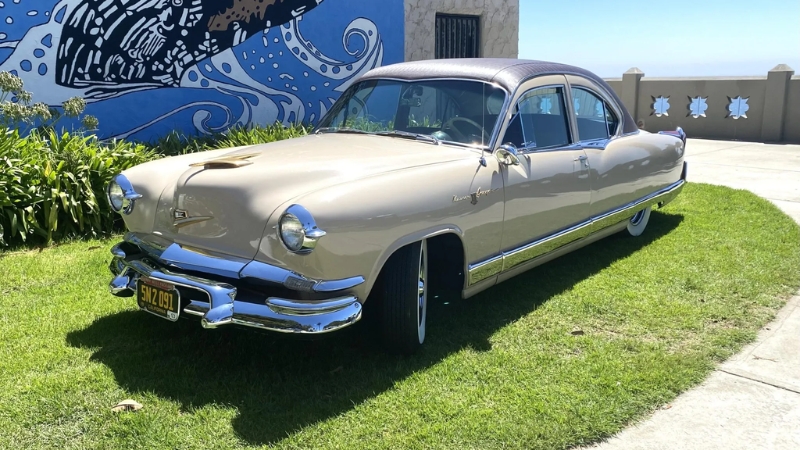
Kaiser vanished from the market by 1955, taking its entire parts supply with it and leaving owners stranded in restoration purgatory.
Kaiser Motors’ ambitious postwar entry ended by 1955, creating an immediate parts crisis that persists today. Components were custom-manufactured rather than shared with mainstream brands, meaning standard salvage yards offer zero help. Restoring one becomes a financial canyon—easily sinking $80,000 into a car the market values at $50,000. Ownership demands the devotion of someone rebuilding a historical artifact, minus any hope of financial return or even completing weekend errands without anxiety.
4. 1957-1958 Packard (Studebaker-based)
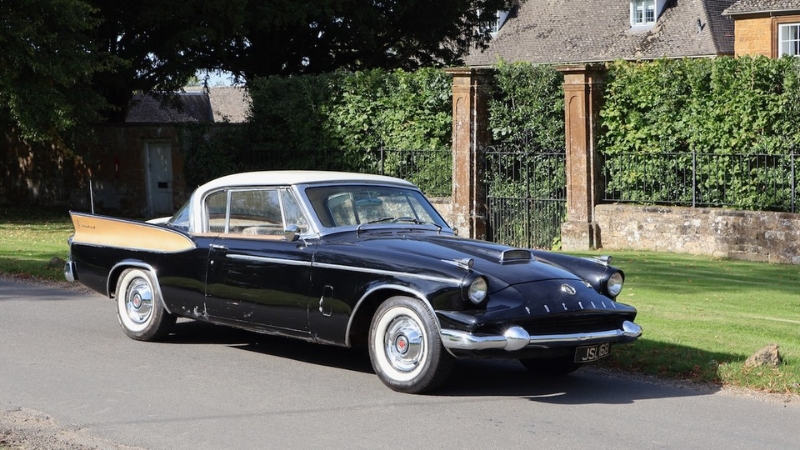
The prestigious Packard name badges a fundamentally different machine underneath—Studebaker hardware with aristocratic pretensions.
Packard once represented automotive royalty, revered for pre-war elegance and the confident slogan “Ask the man who owns one.” That legacy derailed after the 1954 Studebaker merger. The 1957–1958 models—final cars wearing the Packard badge—rode on Studebaker platforms with different wheelbases. Collectors drawn by the illustrious name discover badge-engineered disappointment, like ordering a Michelin meal and receiving a drive-through burger. An incomplete parts supply chain tests devotion without rewarding it, making these final Packards more burden than treasure.
5. 1975-1978 Pontiac Firebird Base and Esprit
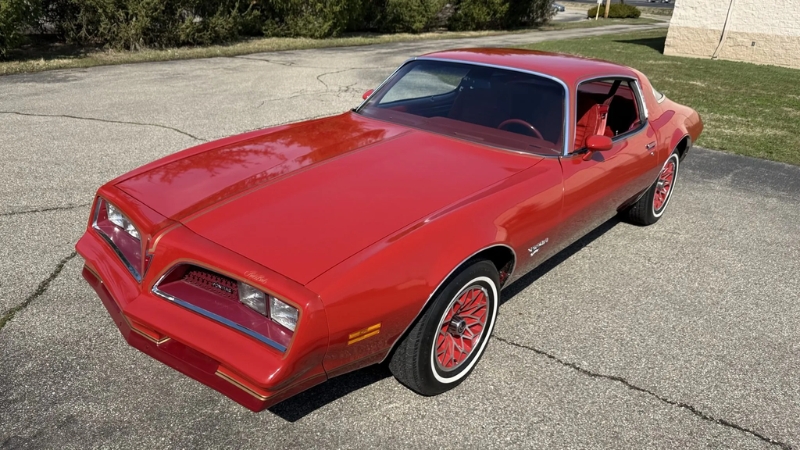
Base Firebirds and Esprits shared the Trans Am’s body but delivered land-yacht performance instead of muscle-car thrills.
The Firebird name conjures images of raw American muscle, but late-’70s base models and Esprit trims arrived with a whimper. These versions often carried a base 231 cubic inch Buick V6 struggling to produce 105 horsepower while moving over 3,400 lbs. Even optional V8s felt choked by emissions controls, delivering tired cruising instead of tire-burning excitement.
Restoration costs mirror those of desirable Trans Ams since body panels and interiors overlap, but resale values remain dramatically lower. What appears to be an affordable entry into Firebird ownership becomes a slow-motion money pit—all the expense of the muscle-car cousin without any of the street credibility or resale protection.
6. 1980-1981 Chevrolet Corvette California-spec
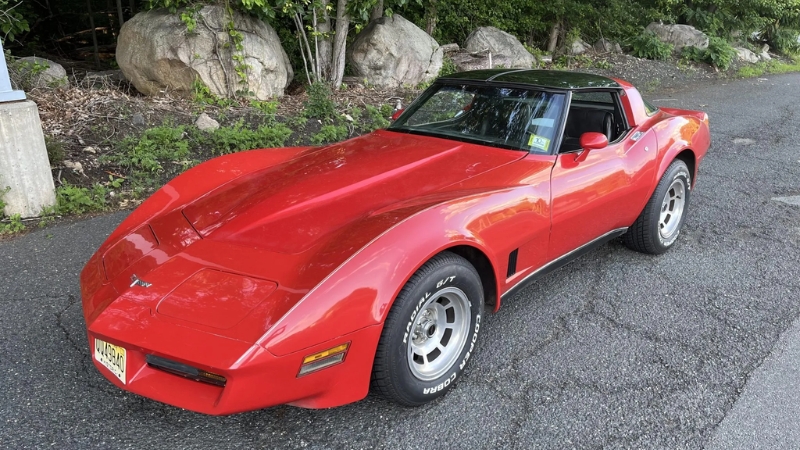
America’s sports car hit rock bottom with emission-strangled California models featuring temperamental digital dashboards that have been failing for decades.
The 1980-1981 California-spec Corvette represents America’s sports car at its weakest moment. Built to satisfy stringent emission requirements, the 305 cubic inch V8 produced only 180 horsepower—barely enough motivation for spirited driving. These cars came standard with automatic transmissions, further neutering performance.
Uninformed buyers also inherit the early digital dashboard introduced in 1980, a technological experiment that has been failing consistently for over four decades. Sellers frequently obscure the “California-spec” designation, leaving buyers stuck with a compromised classic that disappoints on every drive and devours repair budgets replacing proprietary electronic components.
7. 1961-1963 Oldsmobile Jetfire
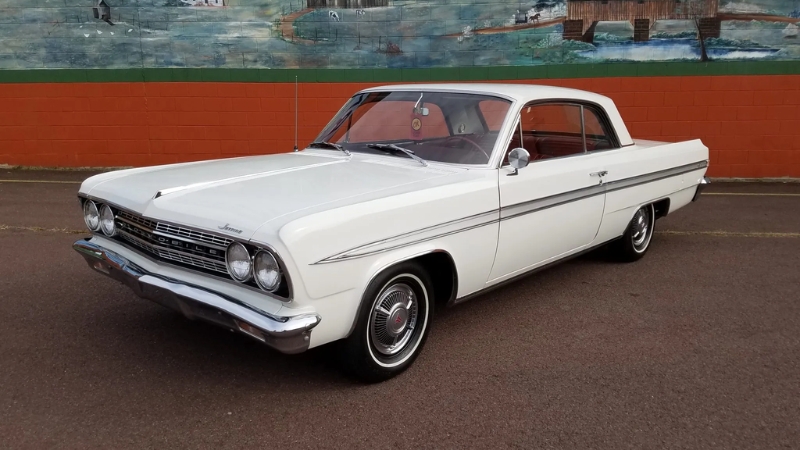
Pioneering turbocharging sounds impressive until owners discover the system required constant feeding of special fluid or faced inevitable self-destruction.
The 1961-1963 Oldsmobile Jetfire pioneered production turbocharging but serves as a cautionary tale about innovation outrunning reliability. Its Turbo-Rocket V8 promised thrilling power while demanding constant specialized attention. Owners had to regularly top off a unique water-methanol blend called “Turbo-Rocket fluid” to prevent turbo damage.
Many owners eventually swapped out these complex turbos for simpler naturally aspirated engines just to achieve basic reliability. Finding a Jetfire with its original functional turbo system today proves exceptionally rare, requiring disproportionate investment and a true specialist’s touch to maintain its temperamental engineering. The car demands vintage-console-cartridge levels of dedication for obsolete technology.
8. 1958-1960 Edsel Ranger
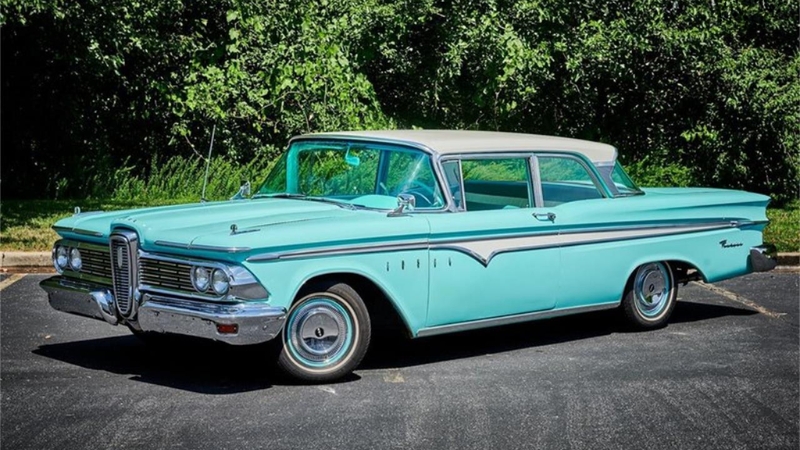
The Ranger represents the least desirable version of an already infamous failure, riding on Ford underpinnings without distinctive features or serious engines.
Even within the notorious Edsel lineage, the Ranger stands out as particularly uncollectible. As the division’s lower-line model, it rides on Ford-based underpinnings minus the flash and bigger engines—no 332 cu in V8 like the Corsair offered. Fewer distinctive trim features and standard equipment mean even dedicated Edsel enthusiasts skip past Rangers.
Parts remain nearly impossible to source, requiring serious treasure-hunting for unique components. The Ranger’s market value plainly reflects its status as the least desirable form of a famous automotive failure—holding the worst hand in an already-losing poker game.
9. 1973-1974 AMC Javelin AMX
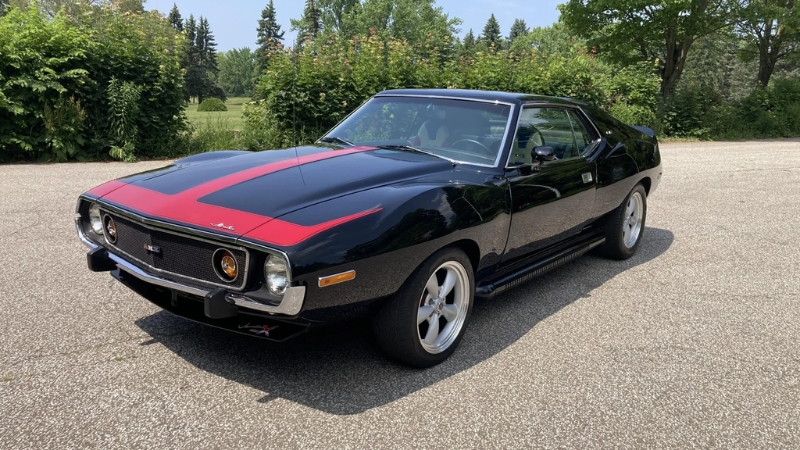
Late-run Javelins abandoned the early models’ genuine performance credentials for emission-choked survival mode, and AMC’s 1987 demise killed the parts supply.
Early AMC Javelin AMX models from 1968-1970 earned genuine muscle credentials with Trans-Am victories, but the 1973-1974 versions tell a different story entirely. By 1973, AMC fought for survival, and even the available 401 cubic inch V8 was severely choked by emissions controls—delivering whispers when drivers expected roars.
Low production numbers reflected minimal market demand, not desirable rarity. With AMC’s 1987 demise, sourcing parts requires scavenger-hunt dedication. Restoration becomes a financial sinkhole, with critical components scattered across dusty shelves nationwide. Breaking down on a road trip means discovering the closest replacement part sits 1,000 miles away in someone’s barn.
10. 1971-1973 Mustang Mach 1 351 C2V
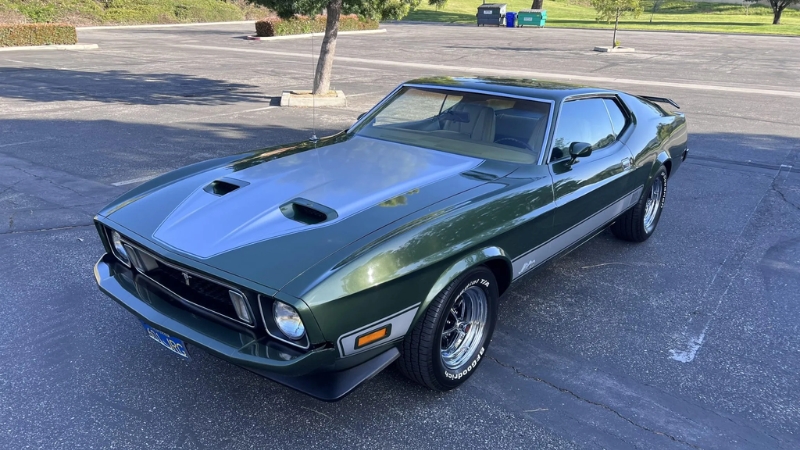
Identical aggressive styling hides massive power differences—the two-barrel C2V version costs tens of thousands less than four-barrel models for good reason.
The 1971-1973 Mustang Mach 1 with a 351 Cleveland two-barrel (C2V) engine represents a financial trap hidden behind aggressive styling. This version delivered approximately 240 horsepower to a 3,500 lb chassis—significantly less than its four-barrel counterpart despite identical exterior appearance.
Properly documented four-barrel 1971 Mach 1 models fetch $60,000 to $70,000+, while C2V versions command substantially less. External appearances deceive, making verification critical. Always pull the door tag to confirm engine codes and inspect for common rust in shock towers and torque boxes. A pre-purchase inspection from a Mustang specialist prevents expensive mistakes—these cars prove that aggressive stripes and hood scoops don’t automatically equal serious performance or collector value.