

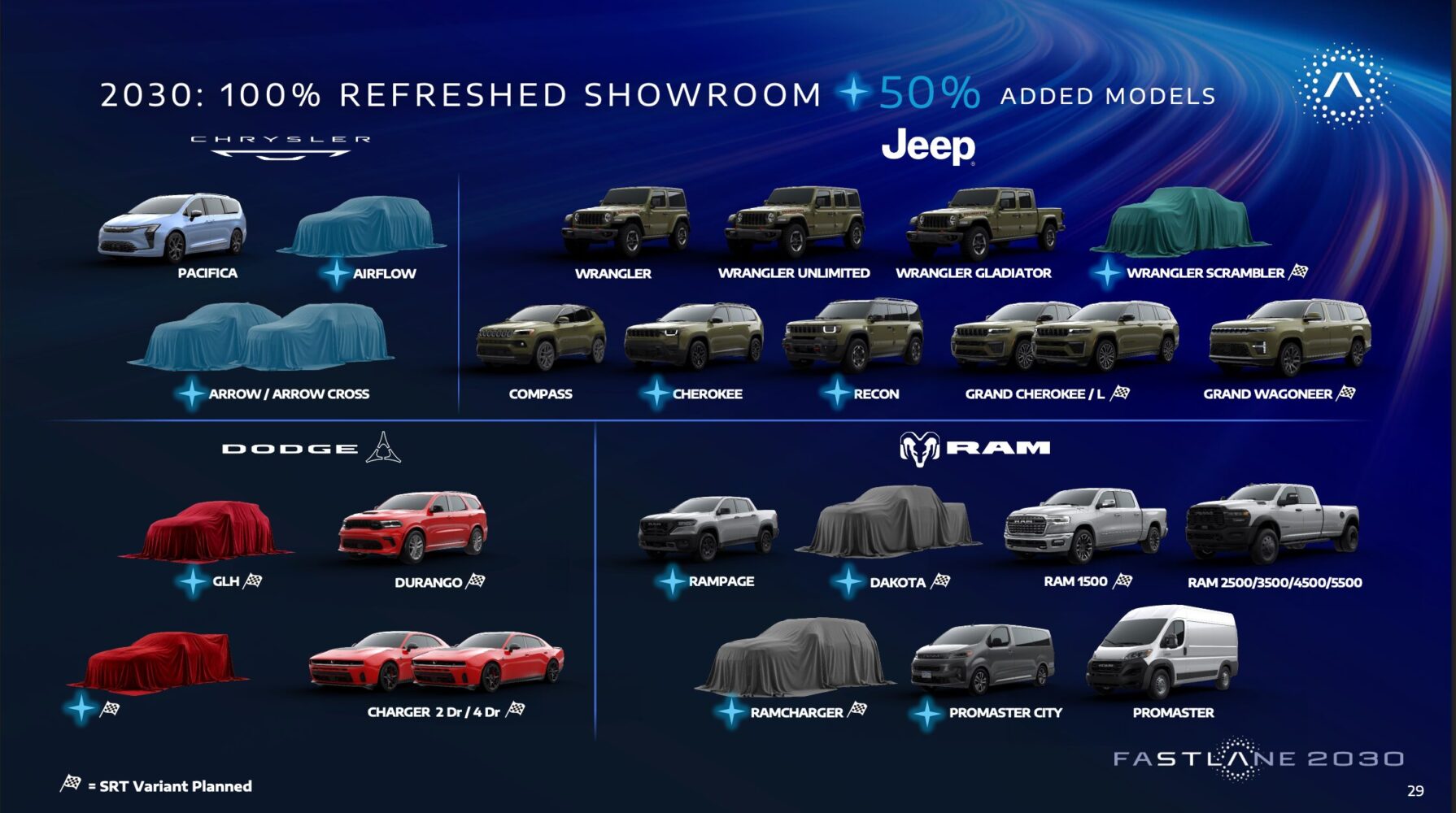
While the industry pivots toward electrification, Stellantis is charging in the opposite direction. According to an investor presentation reported by Car and Driver, the automaker outlined an ambitious U.S. product blitz spanning 11 new nameplates and 12 refreshed models by 2030, with performance taking center stage. This isn’t subtle portfolio management—it’s a full-throttle commitment to muscle car DNA in an increasingly digital world.
The strategy targets expanding North American market coverage from 60% to 90%, entering five new segments with vehicles that prioritize horsepower over efficiency messaging. For enthusiasts watching Detroit’s direction, this represents either brilliant contrarian thinking or spectacular timing miscalculation.
Dodge Doubles Down on SRT Performance
New GLH SUV and mid-size muscle car reportedly signal brand’s commitment to big power.
Dodge’s expansion centers on two key additions that embrace the brand’s go-fast identity. The GLH nameplate returns as a compact SUV slotting below the Durango, with an SRT performance variant expected from launch. According to reports, Tim Kuniskis described this as essentially the next-generation Hornet, but done “how they should have done it the first time.”
More intriguing is a reported mid-size muscle car featuring coupe-like proportions and a prominent rear wing—design language that screams track-focused intent. Both vehicles are expected to receive SRT treatment, joining a refreshed Durango and updated Charger in maintaining Dodge’s performance tradition.
The current Durango SRT Hellcat already delivers over 700 horsepower with its supercharged 6.2-liter V8, establishing the performance benchmark these newcomers must meet.
Jeep Revives Scrambler Heritage with SRT Twist
Two-door pickup concept resurrects 1980s nameplate for modern off-road performance.
The Wrangler Scrambler represents Stellantis’ boldest heritage play—reviving a nameplate dormant since 1986. The original CJ-8 Scrambler stretched the CJ-7 platform into pickup configuration, creating a niche vehicle that today commands collector premiums despite limited production numbers.
Reports suggest the modern interpretation maintains the two-door pickup formula while adding convertible hardtop functionality. More significantly, both the Scrambler and Grand Cherokee are reportedly slated for SRT variants, extending high-performance treatment beyond traditional muscle car territory into Jeep’s off-road domain.
This positioning creates something unique in today’s truck market—a lifestyle vehicle that prioritizes capability over comfort, nostalgia over efficiency. Whether enough buyers exist for such a specific product remains unclear, but Stellantis appears willing to find out.
The stakes couldn’t be higher. This product offensive represents Stellantis’ clearest statement about competing in America: performance sells, heritage matters, and horsepower still moves metal.