

Most car gadgets solve problems that do not exist or duplicate features already built into your vehicle. These ten address real, recurring issues — dead batteries in parking lots, tire pressure drops that go unnoticed, blind spots that mirrors do not cover, and the cable tangle that accumulates on every dashboard. Prices range from $5 to $150, and several of them will pay for themselves the first time you actually need them.
This content may contain affiliate links. If you wish to support us and use these links to buy something, we may earn a commission.
10. Blind Spot Mirrors

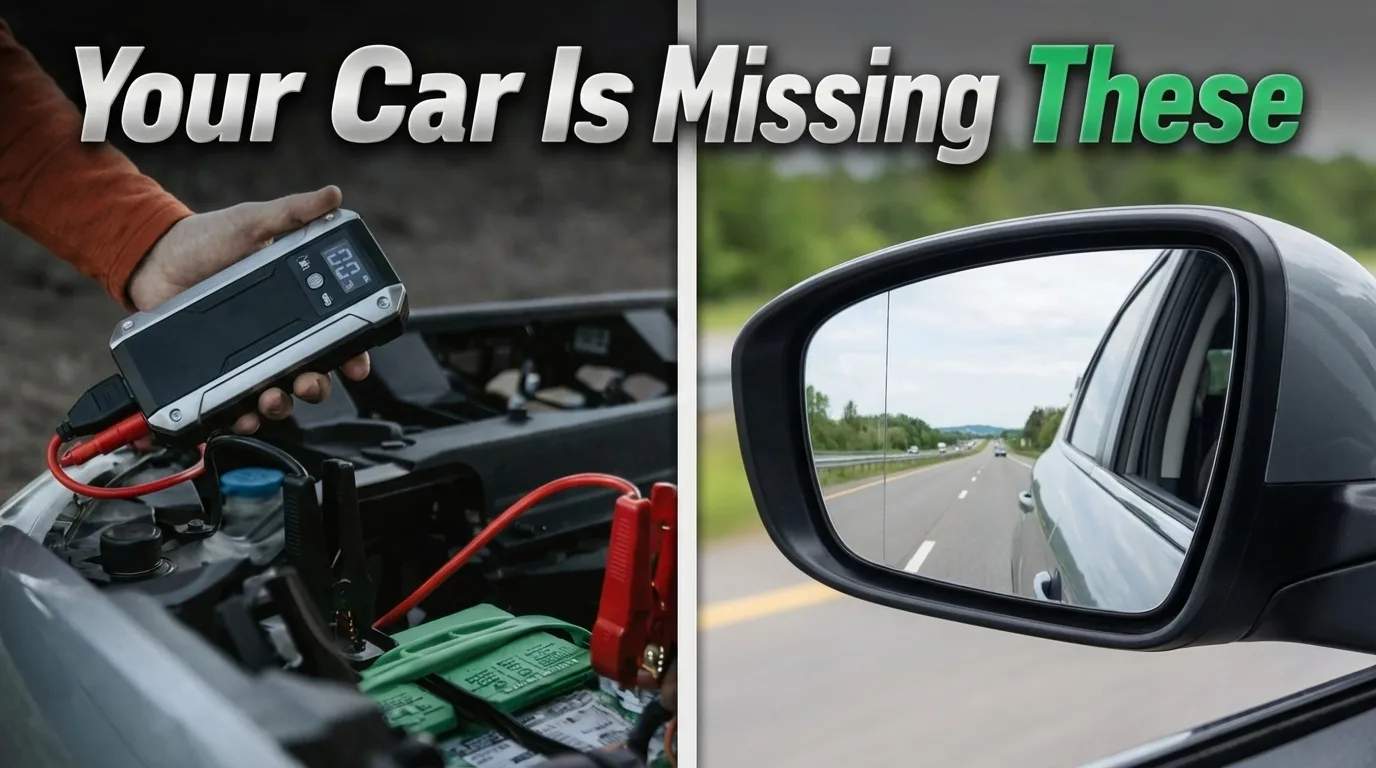
Small convex mirrors that attach to your existing side mirrors, expanding your field of vision to cover the zones your standard mirrors do not reach. At $5-$15, they prevent more accidents per dollar than virtually any other safety device available for passenger vehicles. Safety research indicates they are significantly more cost-effective than electronic blind spot monitoring systems — which are useful but arrive as a $500-$1,500 dealer option rather than a $10 attachment.
9. Car Jump Starter

A portable jump starter handles a dead battery without requiring another vehicle, roadside assistance, or a stranger willing to help in a parking lot at midnight. Nearly 20% of roadside service calls involve dead batteries — this $50-$150 device pays for itself the first time you use it rather than waiting an hour for a tow truck. Quality models handle multiple jump starts on a single charge and double as phone chargers for the rest of the time they spend in your glovebox.
8. Car Vacuum Cleaner

A compact vacuum with genuine suction power and specialized attachments that reach the gaps between and under seats where standard vacuum heads cannot. Professional detailers confirm that regular interior vacuuming preserves resale value more effectively than most maintenance items that cost significantly more. At $25-$80, it costs less than a single professional cleaning session and handles the ongoing maintenance that prevents the kind of accumulated grime that reduces trade-in value.
7. Digital Tire Inflator

Portable tire inflator with sensors accurate to +/- 0.5 PSI and an automatic shut-off that stops inflation at the target pressure without manual monitoring. Proper tire inflation reduces tire wear by 25% and improves fuel efficiency measurably — both outcomes that accumulate over months and years of driving. Most drivers check tire pressure less often than they should; a device that makes the process fast and accurate rather than requiring a trip to a gas station removes the friction that causes the habit to lapse. Quality models run $30-$70 and pay for themselves in extended tire life and fuel savings.
6. Smart Tire Safety Monitor

Wireless sensors that monitor real-time tire pressure and temperature across all four tires, relaying data to your phone and alerting you to slow leaks or sudden pressure drops before they become blowouts. With over 11,000 tire-related accidents annually, the case for catching pressure problems while they are still manageable rather than after they cause a highway emergency is straightforward. At $40-$100, this costs less than a single tow truck call and addresses a failure mode that TPMS systems built into most vehicles catch late rather than early.
5. Wireless Car Charger Mount

A mount that holds your phone at eye level and charges it simultaneously, replacing the cable tangle that most dashboards accumulate. One-handed docking and undocking means the phone goes in and comes out without requiring attention from the road. Qi wireless charging delivers 7.5W-15W depending on device compatibility. Quality options run $20-$60 — less than the deductible on replacing a cracked phone that slid off the seat during a stop.
4. Car Seat Organizer

Multiple pockets and compartments that hang behind the front seat and keep the back seat organized for families and regular road trippers. Waterproof materials handle spills and gear without requiring cleaning or replacement. At $15-$40, this is the kind of straightforward solution that addresses a daily irritation — losing items under seats, children’s items scattered across the back floor — without requiring installation or technical knowledge to use.
3. Car Humidifier

A compact ultrasonic humidifier that plugs into a USB port and adds moisture to the cabin during winter driving — addressing the dry air that vehicle heating systems produce and that causes dry skin, irritated airways, and static electricity on long cold-weather drives. Compatible with essential oils for optional aromatherapy use. At $15-$40 with no installation required, this is the easiest comfort upgrade on the list for drivers who spend significant time in their vehicles during winter months.
2. Backup Camera

An aftermarket wide-angle camera that covers what mirrors miss when reversing — the full area directly behind the bumper, in low light conditions, that neck-craning and mirror adjustment cannot adequately cover. Safety research indicates backup cameras prevent approximately 25% of backing accidents. For vehicles that predate the federal backup camera requirement, aftermarket options run $40-$150 and deliver the same core protection without the cost of a newer vehicle. The installation difficulty varies by model, but basic versions require only a power connection and camera mounting.
1. Portable Head-Up Display (HUD)

A HUD projects speed, navigation directions, and alerts onto the windshield — keeping critical driving information in the driver’s forward sightline rather than requiring a downward glance at the instrument cluster or phone mount. Users report reduced eye strain on long drives, which is the practical outcome of eliminating the repeated refocusing between windshield distance and dashboard proximity. At $30-$120, this delivers a feature that luxury vehicles include as standard equipment to any vehicle with an OBD-II port, without requiring a new car purchase to access it.