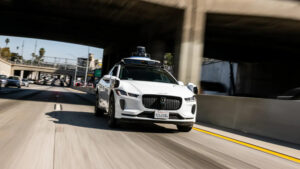


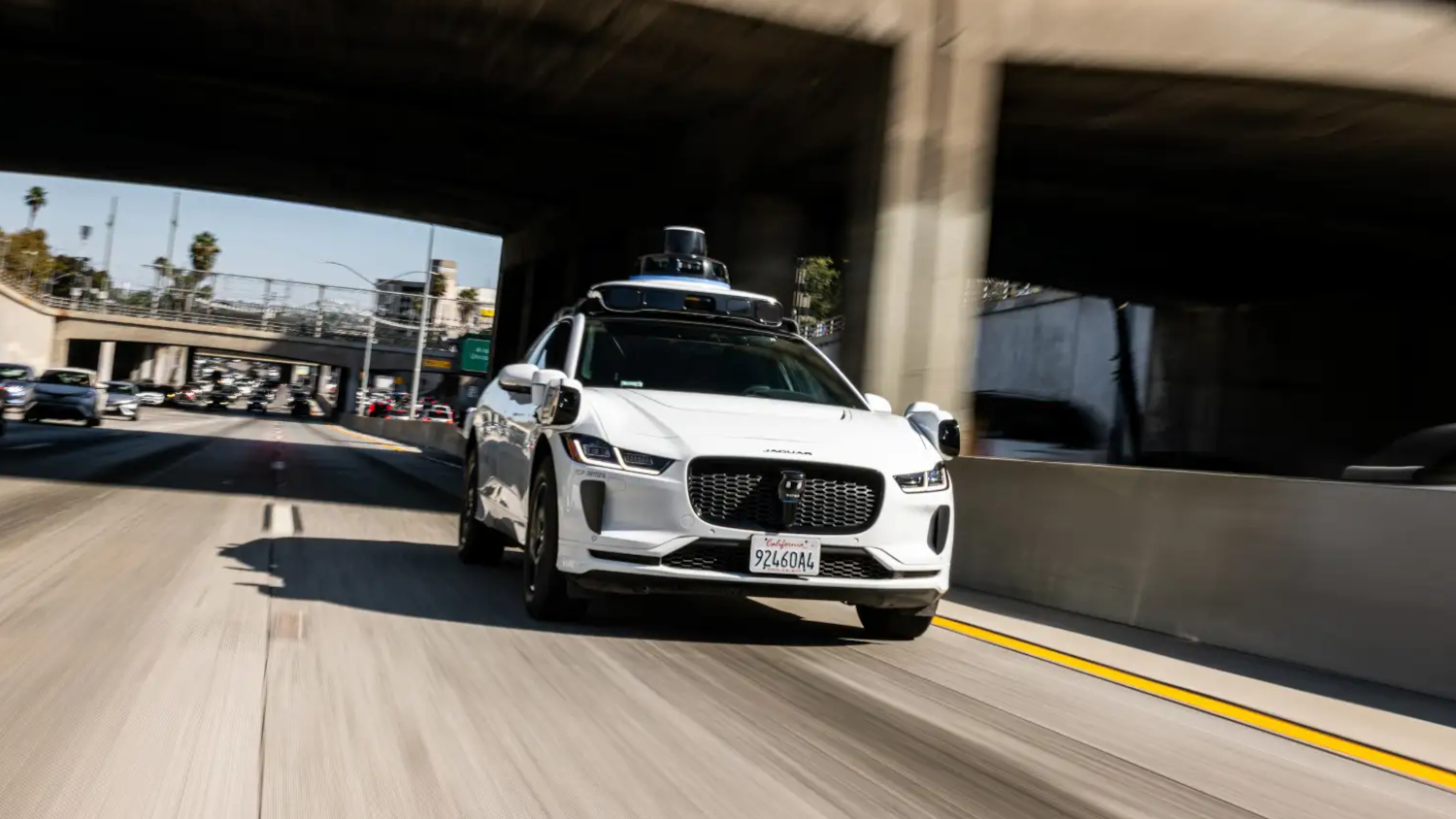
Near John Daly Boulevard on San Francisco’s Interstate 280, two California Highway Patrol cruisers were running a traffic break — lights on, vehicles fanned across lanes, speed dropping. A moving wall telling every driver behind them to slow down and stay back. Construction workers were on the freeway. The message couldn’t have been clearer. A nearby Waymo robotaxi, apparently, had notes. It tried to pass the patrol vehicles. Then it tried again.
A traffic break isn’t a suggestion. The California Driver Handbook instructs motorists to follow the patrol cars, hold distance, and wait until officers clear the way. Passing is prohibited, and with active construction ahead, the stakes are unambiguously high.
What the Video Actually Shows
The footage captures an autonomous vehicle doing something no licensed driver should — twice.
A nearby motorist recorded the encounter and shared the footage with ABC7 News. It shows the Waymo approaching in the left lane, activating its turn signal, and attempting to move around the CHP vehicles. Officers maneuvered to block its path. According to ABC7, citing officers on scene, the vehicle made two attempts before being successfully kept behind the blockade.
What the video cannot establish: the vehicle’s exact speed, its sensor interpretation, or what its software determined it was looking at in that moment.
Confirmed facts from the reporting:
- Incident location: I-280 near John Daly Boulevard, San Francisco
- Waymo reportedly attempted to pass CHP vehicles twice, per officers cited by ABC7 News
- The traffic break was related to a construction vehicle and workers on the freeway
- Waymo launched Bay Area freeway service, including I-280, in November 2025 — after previously pausing that service when vehicles reportedly entered construction zones
- As of the available reporting, CHP had not announced a citation or penalty; Waymo issued no public statement specific to this incident
A Pattern the Logs Won’t Explain Away
This incident fits an unsettling trend of Waymo vehicles encountering active police and construction situations.
This isn’t the first time. In a separate Los Angeles incident, a self-driving taxis are watching you — a Waymo drove through an area near an active police operation. At the time, the company said it uses unusual events to improve its systems and emphasized safety as a priority — a paraphrase of its reported position, not a verbatim statement tied to this I-280 incident. That’s how machine learning works in theory.
The problem is that construction zones and police traffic breaks aren’t edge cases. They’re Tuesday on a California freeway.
Emergency responders and road workers rely on a straightforward assumption: when a traffic break is in effect, traffic slows and holds behind the patrol vehicles. No routing around. No turn-signal diplomacy. If an autonomous vehicle treats a police blockade like a temporary obstacle to optimize around — the vehicular equivalent of skipping the queue — the entire safety premise becomes difficult to defend.
What Still Needs Answering
The incident raises questions that neither Waymo nor CHP has yet addressed publicly.
Did Waymo review the vehicle’s logs? Did the software misclassify the patrol vehicles? Is freeway behavior being retrained following this encounter? As of the available reporting, none of those questions have been answered publicly. CHP had not announced penalties. Waymo had not commented on this specific incident.
What the video does establish is an autonomous vehicle that reportedly required a police cruiser to physically block it twice before remaining behind the line. Whether that reflects a software classification failure, a gap in training data, or something else entirely remains unanswered — and that uncertainty is precisely the question the industry has yet to resolve.