

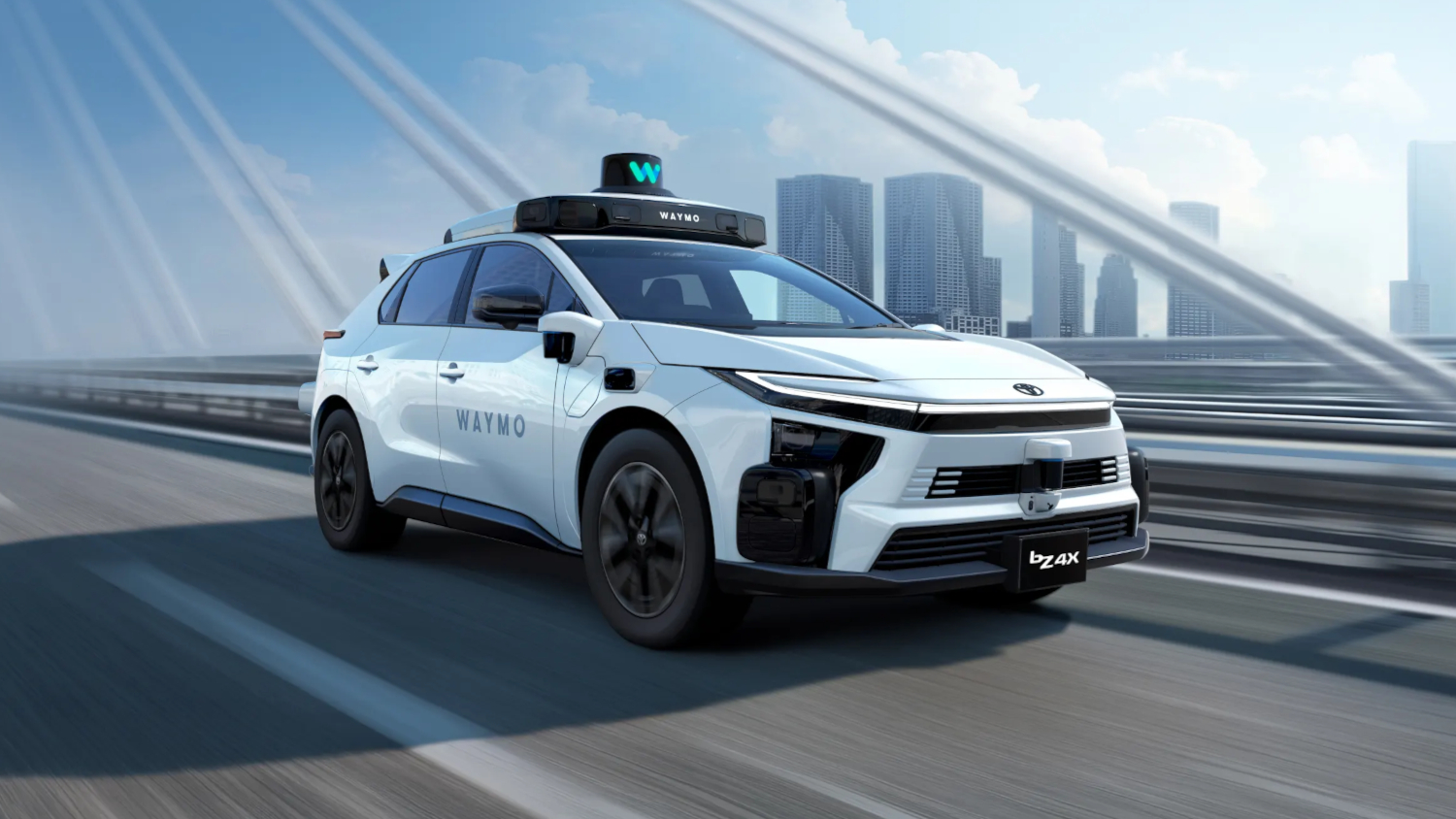
Most robotaxis start life as ordinary cars and get converted in a separate facility — think of it like buying a shirt and having a tailor sew in body armor afterward. Toyota and Waymo are skipping that step. The two companies announced in October 2026 that a purpose-built autonomous version of Toyota’s bZ4X electric crossover will roll off the Takaoka assembly line in Toyota City, Japan, with Waymo’s self-driving hardware already integrated at the point of production. Testing and validation begin in Japan in 2027. After that, the UK. Beyond that, details are thin.
What Makes This Robotaxi Different From a Standard bZ4X
The cabin is redesigned for passengers who have nobody up front to help them in or out.
Level 4 autonomy means the system handles all driving within defined operating conditions — no human driver required. The autonomous bZ4X carries sensors across the roof, front and rear bumpers, front fenders, tailgate, and rear spoiler. Inside, the cabin is modified specifically for driverless operation: automatic doors, a power liftgate, ambient lighting, and increased rear legroom make boarding and exiting practical without any assistance from a driver. Toyota confirms these as functional accessibility features, not simply comfort additions.
What’s confirmed so far:
- Toyota assembles the vehicles at its Takaoka plant in Aichi Prefecture, integrating Waymo’s autonomous hardware during production — not in a separate post-production process
- Initial testing and validation are planned for Japan in 2027; UK deployment follows in subsequent years, with no specific city names, fleet sizes, or commercial launch dates confirmed
- Standard bZ4X models offer up to 74.7 kWh battery capacity; range figures vary by market and testing standard — specifications for the robotaxi configuration have not been confirmed
- Production volumes, financial terms, and any U.S. deployment plans have not been disclosed
- Toyota’s software subsidiary, Woven by Toyota, plans to use operational data from the fleet to research autonomous driving features for privately owned Toyota vehicles
Why Toyota and Waymo Both Need This to Work
The partnership is a calculated trade: Waymo gains a mass-production partner with decades of manufacturing discipline, while Toyota wins a seat at the autonomous ride-hailing table without building a self-driving stack from scratch.
That division of labor matters. Developing a full autonomous-driving system has quietly humbled companies with far deeper software roots than Toyota. Waymo supplies the technology; Toyota supplies the factory floor and the manufacturing expertise to put it inside a vehicle reliably, repeatedly, and at scale. According to Toyota’s announcement, the collaboration is intended to contribute to safer streets and expanded freedom of movement.
What distinguishes this arrangement from earlier Waymo programs is where the hardware goes in. Waymo’s current fleet — which includes Jaguar I-PACE vehicles operating in U.S. cities — has relied on autonomous technology integrated through separate facilities rather than on the original vehicle assembly line. Building sensors and computing hardware into the bZ4X during production at Takaoka is a meaningfully different approach, one that both companies describe as a foundation for high-volume, domestically manufactured autonomous vehicles. Whether that ambition translates into scale remains to be seen.
Japan testing in 2027 is the next concrete milestone. Whether the bZ4X eventually rolls into San Francisco — where Waymo already operates — or into other U.S. markets remains an open question the companies have not addressed. The factory-integrated approach is new. The announced timeline is real. Fleet size, operating cities, commercial launch dates, and financial terms are still undisclosed.