

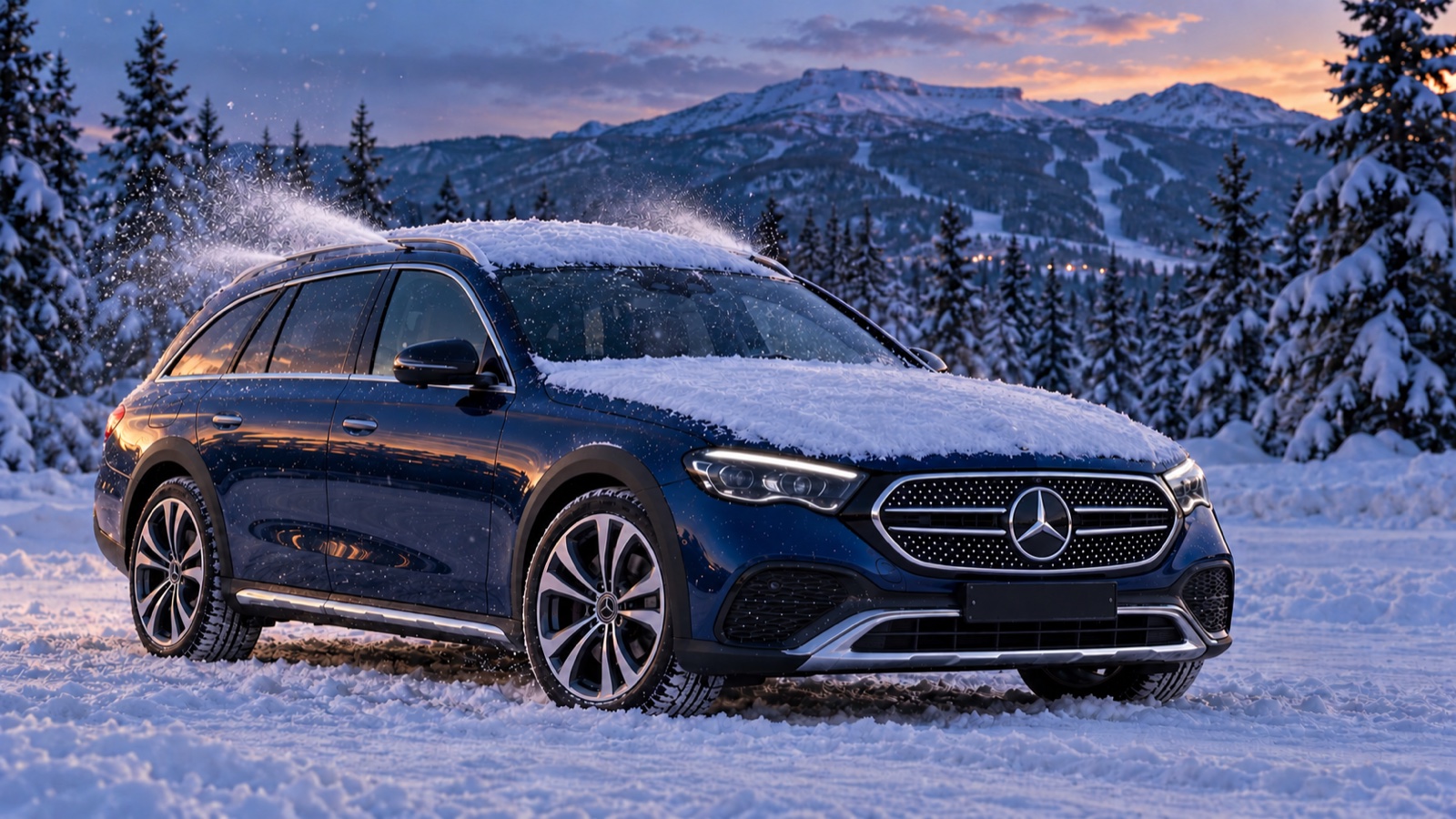
A Mercedes-Benz patent filed in Germany describes compressed-air nozzles integrated into a roof element to clear snow before a door is opened — no production model has been confirmed.
You know the moment. You open the car door after an overnight snowfall, and a small avalanche drops directly down your collar. Mercedes-Benz, apparently, knows it too. The automaker filed a patent filing — reportedly discovered by Car Moses and published October 29, 2026 — describing compressed-air nozzles built into a roof-area element that may blast snow away from door openings before you step inside. This is a patent filing, not a production announcement. The gap between those two things is where many automotive ideas quietly disappear.
Here’s What the Patent Actually Describes
The concept targets a genuinely familiar problem, though key engineering details remain unspecified in the reported filing.
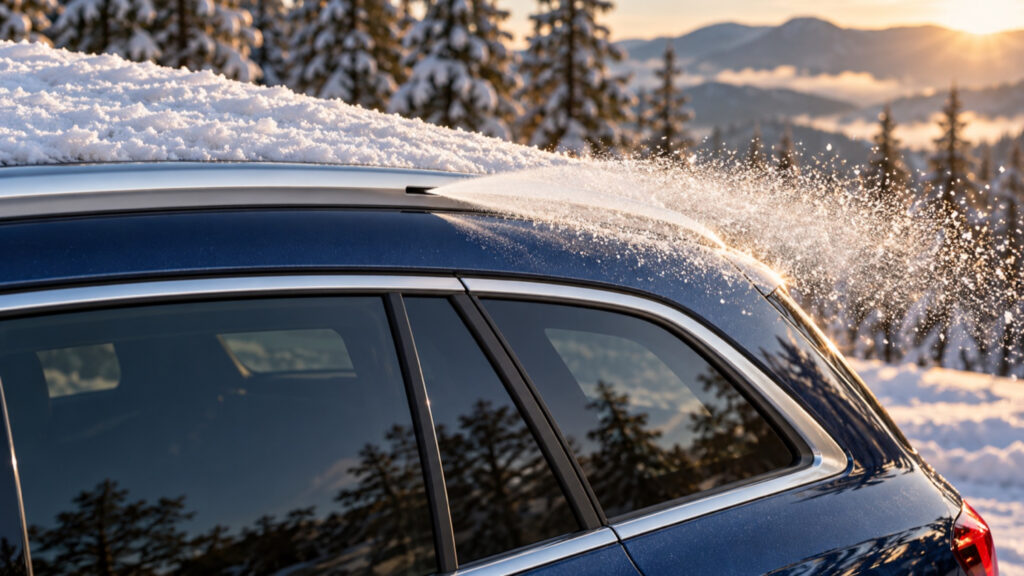
Nozzles positioned near where a roof rail would sit reportedly direct compressed air across accumulated snow above and around door openings. The activation mechanism could be as simple as a button — the air fires, snow clears before the door swings open. A possible secondary benefit includes reducing meltwater exposure near cabin electronics, though no independent testing has demonstrated that result. What the patent does not specify: air pressure, flow rate, compressor type, or whether the air would be heated. Those details matter enormously for real-world performance.
- Nozzles integrate into a roof-area element, positioned near the door opening zone
- Compressed air activates on demand — reportedly via a button or similar control
- May reduce moisture intrusion around cabin electronic components, though this remains undemonstrated
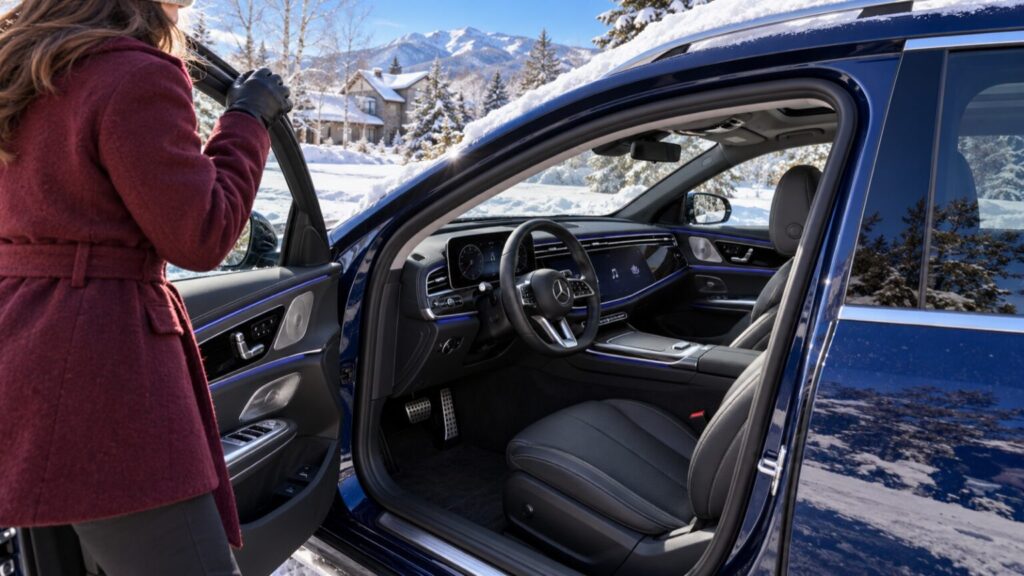
- Patent illustration reportedly resembles a Mercedes wagon; the E-Class All-Terrain is a plausible candidate given its existing air suspension, though a dedicated compressor could also supply the system — no production model is confirmed
- A patent protects an idea, not a production commitment
Smart Engineering, Narrow Problem
This system solves one specific winter frustration while leaving the rest of your driveway ritual firmly intact.
Here’s the honest math: this system reportedly addresses the roof and door-area snow. Hood, trunk, windshield, mirrors, lights — still entirely your responsibility. New Jersey law requires drivers to make reasonable efforts to remove accumulated snow and ice from exposed surfaces, including the hood, trunk, windshield, windows, and roof, before operating on a street or highway. Violations carry fines of $25 to $75; if dislodged snow or ice causes property damage or injury, a noncommercial vehicle faces $200 to $1,000. Even a perfectly functioning version of this system would not satisfy that requirement.
The engineering is real. The driveway ritual isn’t going anywhere.
This fits a wider luxury-automaker pattern — solving small but genuinely irritating ownership moments, the automotive equivalent of a hotel that pre-sets the room temperature before you arrive. The reported E-Class All-Terrain Winter Package already includes a heated steering wheel and heated windshield washers. If this concept were ever commercialized, it could plausibly slot into a similar package. Whether it will remains unconfirmed.
Worth Watching, Not Worth Waiting For
Mercedes still has significant engineering questions to answer before this idea moves beyond a patent filing.
Mercedes still needs to prove this concept handles wet, heavy, or crusted snow — not just cooperative powder. Performance data across real snow conditions does not yet exist. Until a production announcement arrives, the concept remains an intriguing idea with real limits. Keep the ice scraper in the trunk — and browse worth waiting for vehicles that are actually confirmed for production.