

The water has always been the last frontier for personal transportation. Shipyards and research labs are now producing vessels that fly above waves, drive on land, and run on nothing but sun and wind. These 20 watercraft are not curiosities, they are a preview of where marine mobility is headed.
20. Hydrofoil E-Jet Ski Flyway
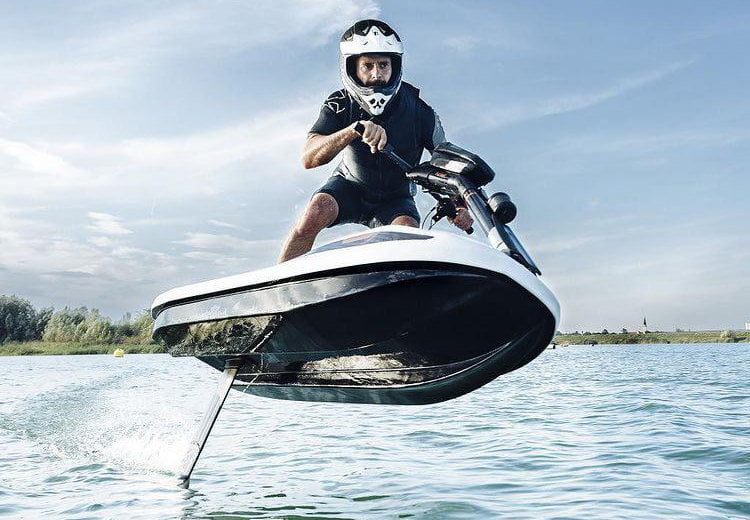
Most electric watercraft borrow jet propulsion from conventional designs. The Hydrofoil E-Jet Ski Flyway, built by David Vukovich, uses propeller drive technology instead, which changes how the craft handles on the water. A monitoring system tracks speed and battery usage in real time, and integrated Bluetooth speakers are standard. The modular design breaks down for easy transport, so you are not limited to riding near home.
19. Jet Capsule GT-F

Sixty knots, 20 passengers, 10 meters of Italian design. The Jet Capsule GT-F is a luxury vessel that runs on diesel, gasoline, or electric propulsion depending on what the mission requires. The customizable interior works for private use or professional charter operations. It is the kind of boat that makes a harbor entrance feel like a statement.
18. JetCycle Max

Human-powered hydrofoiling sounds exhausting until you see how the JetCycle Max makes it work. This single-seat vessel weighs just 35 kg and uses dual foils for efficient takeoff and sustained flight above the water. The pedal system adjusts to different rider weights, so performance stays consistent regardless of who is on board. For calm water days when you want the workout to feel like something worth doing, it delivers.
17. 8S Prototype Hydrofoil Eboat

Carbon fiber construction and retractable hydrofoils give the 8S Prototype a platform that cruises at up to 38 knots with a 40-nautical-mile range. An automatic control system maintains stability throughout the journey without requiring constant input from the operator. It runs clean and covers serious distance, which is a combination most electric watercraft still cannot deliver. This one makes sustainability feel less like a compromise.
16. Valo Hyperfoil Prototype

Zero to 45 mph in 8 seconds on the water. The Valo Hyperfoil Prototype merges multiple water sports disciplines into a single platform that holds stability through an advanced control system at speed. Build quality matches the $59,000 price tag, which positions this squarely in performance watercraft territory. For riders who want something that earns the sticker price every time it hits the water, the Valo delivers.
15. WaveFlyer Volare

Not every water vehicle needs to be loud, fast, or aggressive. The WaveFlyer Volaré is a two-seater hydrofoil built around safety features and intuitive controls that give riders confidence from the first session. The premium configuration runs up to 1.5 hours per charge, which covers both a daily commute and a leisure run without choosing between them. It rises smoothly above the wake and leaves it quiet behind.
14. Onean Carver X

Electric surfing without waves is the pitch, and the Onean Carver X backs it up. Dual jet propulsion drives this stable platform at performance levels that work for riders over 85 kg, and up to 40 minutes of ride time per session keeps things interesting. The handling holds up in challenging conditions, which matters for anyone riding outside of flat water. It opens up surf-style riding to anyone with access to a body of water.
13. Lazzarini SeaJet

Sixty-nine knots with 50 passengers on board is not a number most ferry operators would believe. The Lazzarini SeaJet achieves it through hydrofoil technology combined with an aircraft-inspired interior that floods the cabin with natural light from integrated solar panels. It moves people faster than conventional water transit and does it in a space that does not feel like a bus. High-speed passenger transport has rarely looked this considered.
12. Humdinga

The Humdinga transitions from land to water in seconds and keeps performing in both environments without drama. A robust diesel engine and hydraulic suspension system handle the mechanical demands of operating across two completely different surfaces. It is built for conditions where a conventional vehicle would stop and a conventional boat would never reach. When the terrain changes mid-mission, the Humdinga just keeps going.
11. Seabob Rescue

Water rescue at depths of up to 40 meters demands a vehicle that works precisely where conditions are most dangerous. The Seabob Rescue is German-engineered for exactly that, delivering real-time monitoring data to responders while keeping the craft light enough to deploy and maneuver quickly. Most rescue equipment trades speed for capability or vice versa. The Seabob does not ask for that trade-off.
10. Jet Surfboards

Surfing has always been at the mercy of conditions. Jet Surfboards remove that dependency entirely, bringing powered surfing to any body of water regardless of what the ocean is doing that day. The boards are compact enough to transport without a truck and the controls are intuitive enough to pick up quickly. If you have always wanted to surf but live nowhere near a decent break, this is your answer.
9. Lazzarini Pearl Suites

A floating pod that runs entirely on solar power and comes with a private deck is a different kind of water vehicle, but the Lazzarini Pearl Suites earn their spot on this list. These self-sufficient pods maintain modern amenities without a shore connection, and the living spaces are designed for genuine comfort rather than the cramped quarters most boats offer. They sit on the water as much as they move through it. For anyone who wants the experience of being on the water without the noise and fuel costs of a conventional vessel, this is hard to beat.
8. Iguana Pro Interceptor

Fifty knots on water, then straight onto land without stopping. The Iguana Pro Interceptor handles both with a 1,200 kg payload capacity that makes it viable for specialized operations and rescue missions where conventional watercraft fall short. It handles surveillance, extractions, and supply runs across environments that would strand anything else. Built for the missions nobody plans for, it handles the ones that actually happen.
7. Earthling Stealth E-40

Solar and wind power running a catamaran that actually has room to live aboard is the premise of the Earthling Stealth E-40. The spacious design does not sacrifice performance to achieve its environmental efficiency, which is the balance most sustainable boats struggle to strike. It covers open water without burning fuel and offers comfortable accommodations for extended time on board. For sailors who want their footprint to match their values, the E-40 makes the strongest case on this list.
6. Lazzarini Royal Alpha One

Forty knots with minimalist interiors and premium materials throughout is the Lazzarini Royal Alpha One’s formula, and it works. The living spaces prioritize comfort without cluttering the design, and the navigation systems are state of the art without dominating the aesthetic. It is a yacht that understands restraint and uses it as a design tool. Speed and luxury rarely look this clean together.
5. Himiko Water Bus

Tokyo’s waterways have a commuter bus that looks like it arrived from a different century. The Himiko Water Bus gives passengers panoramic views of the city through expansive windows while the futuristic hull turns heads at every dock. Multiple boarding locations across Tokyo keep it practical for daily transport, not just tourism. It proves that public transit does not have to be forgettable to be functional.
4. RaceBird

All-electric racing that exceeds 50 knots and produces zero emissions is a combination that would have seemed impossible a decade ago. The RaceBird lifts its hull above the water on hydrofoils, cutting drag and pushing efficiency through extended racing sessions without a fuel stop. It is built for competition, but what it represents goes beyond any single race. Electric performance on water just found its benchmark.
3. Kormaran K7

A boat that adapts its hull configuration while moving is not something most engineers would attempt. The Kormaran K7 does exactly that, adjusting its shape across different speeds and conditions to reduce fuel consumption without sacrificing performance. Advanced materials keep the structure light enough to make the transformation work at speed. It is one of the most mechanically ambitious watercraft on this list, and the engineering behind it justifies every bit of that ambition.
2. Galaxy of Happiness
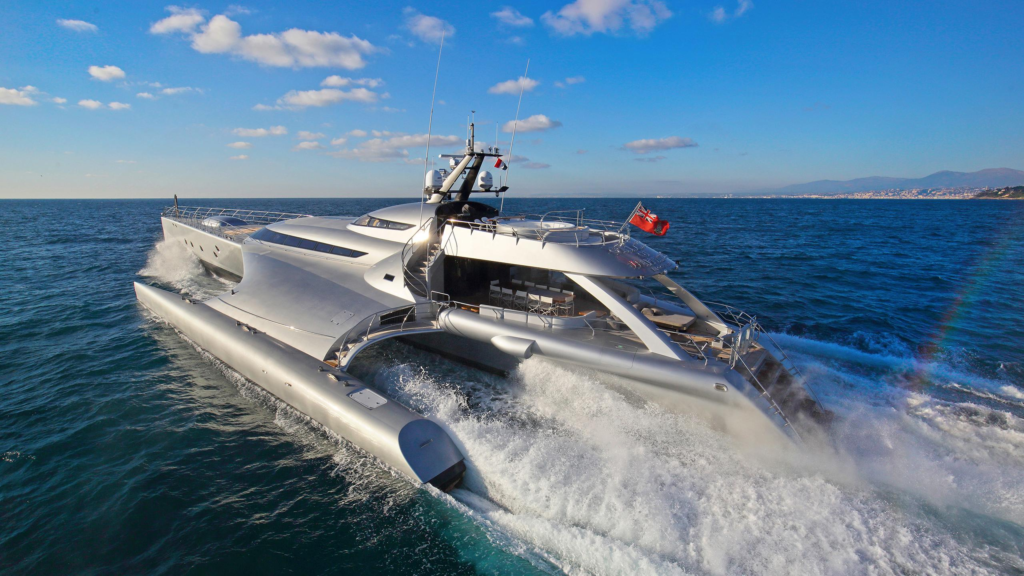
Thirty knots, hydrofoil stability, a jacuzzi, and integrated systems that minimize ecological impact is a package that should not exist in one vessel. The Galaxy of Happiness pulls it off, combining high-speed cruising capability with spacious luxury accommodations that do not treat sustainability as an afterthought. It cruises fast, lands softly on the environment, and still has room for a proper soak at the end of the day. The name is absurd, but the engineering behind it is not.
1. Wokart

Go-kart handling on water sounds like a concept that should exist, and the Wokart proves it does. A patented centralized design enables precise turns with car-like responsiveness, and the controls are accessible enough for first-time riders without boring anyone who knows what they are doing. It is compact enough to transport without a trailer and stores without taking over your garage. If you want to understand why this list ends here, watch someone throw a hard turn in a Wokart and try not to want one.