

Before telemetry screens replaced analog gauges, the 2000s unleashed a breed of supercars that prioritized raw mechanical connection over digital refinement. These machines often get overlooked, chosen for their unique engineering, blistering performance, and sheer obscurity. They aren’t merely footnotes in automotive history—they’re a masterclass in pushing limits with a visceral edge. Understanding these rare beasts reveals what truly fast meant when a driver’s hands were the only traction control.
1. Ascari A10
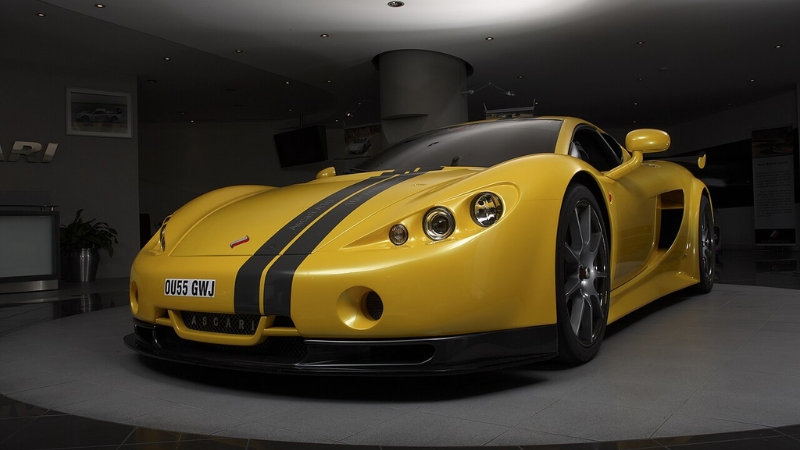
The British track weapon that briefly owned Top Gear’s leaderboard.
The Ascari A10 ripped around the Top Gear test track in an astonishing 1:17.3, briefly seizing the record as the circuit’s fastest car. This brutal performance comes courtesy of a modified 5.0 L BMW S62 V8 engine, delivering a raw 625 hp. Hit 0-60 mph in a blinding ~2.8 s, rocketing towards a top speed around 220 mph (354 km/h).
Achieving such velocity required ruthless engineering, like building the car on a lightweight carbon fiber monocoque chassis. This minimalist approach resulted in a featherlight 1,280 kg (2,822 lbs) curb weight, shedding comfort equipment such as soundproofing and air conditioning. Driving it delivers the kind of unfiltered feedback most modern supercars have filtered out, an old-school rock song without autotune. Every sensation vibrates through the chassis, proper analog experience for those who cut their teeth on early morning backroad sprints.
2. Spyker C12 Zagato

Dutch steampunk meets Italian artistry in a one-off prototype that never saw production.
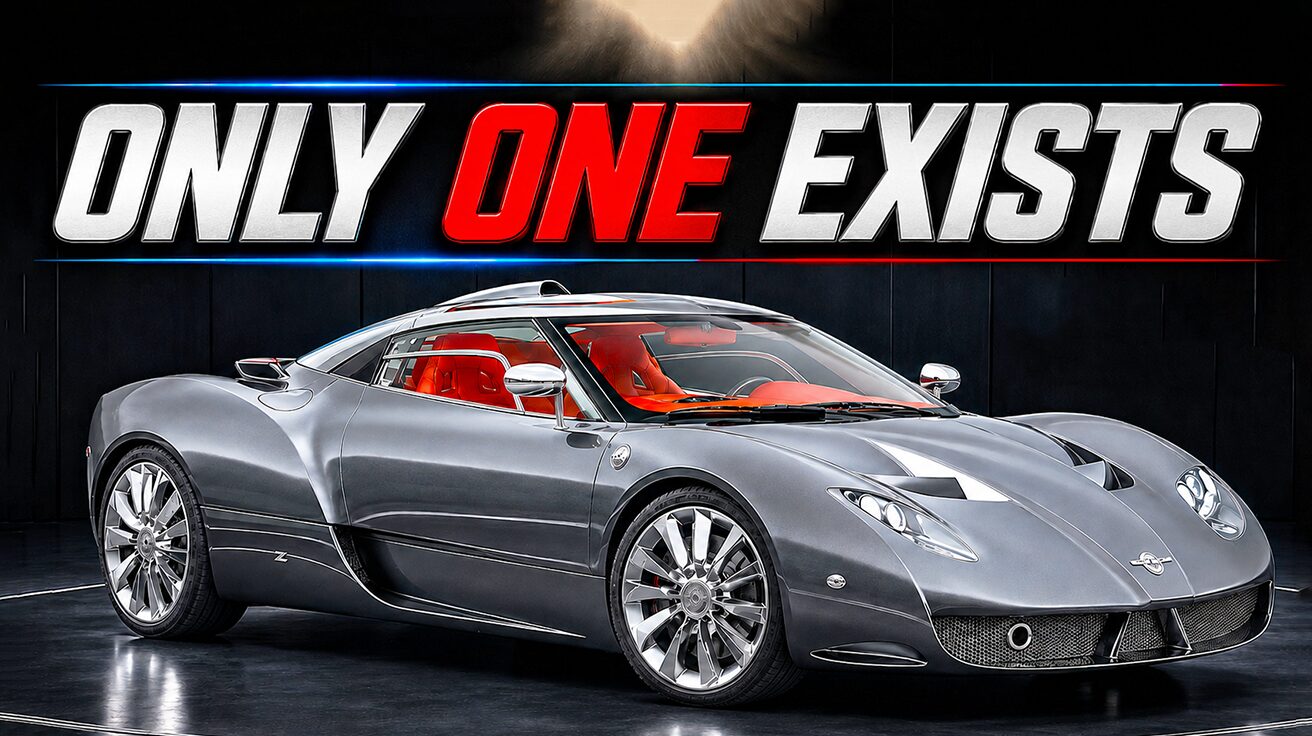
Unveiled at the 2007 Geneva Motor Show with 24 units planned, only one prototype of the Spyker C12 Zagato was ever built. This Dutch-Italian collaboration delivered dramatic aesthetics, featuring Zagato’s distinctive double-bubble roof and Spyker’s steampunk interior with exposed gear linkage. This mechanical sculpture would dominate any common exotic at a local Cars & Coffee event.
Power came from a 6.0 L Volkswagen Group W12 engine producing 493 hp, propelling the car to 60 mph in 3.8 seconds. Its top speed reached 193 mph (310 km/h). On a winding coastal drive, every input becomes a pure conversation with the road. The unrealized potential for epic road trips remains an automotive heartbreak—one breathtaking design left permanently in prototype purgatory.
3. Gumpert Apollo
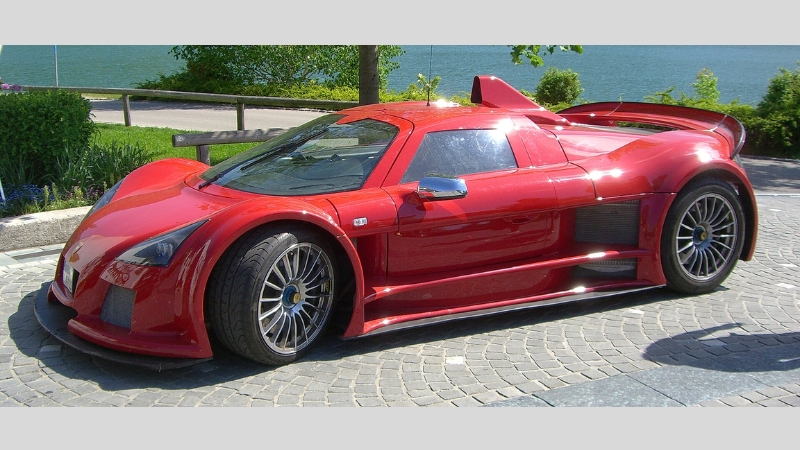
Roland Gumpert’s track-focused missile that traded boulevard manners for Nürburgring dominance.
Conceived by Roland Gumpert in 2000, the Apollo was built to conquer lap times, not boulevard cruising. This mid-engined German supercar, produced from 2005 to 2012, packed a 4.2 L twin-turbocharged Audi V8, unleashing between 641 and ~789 hp. Power hit the rear wheels through a relentless 6-speed sequential transmission, pushing it to a claimed top speed of around 223 mph (360 km/h).
Wrestling this machine through the Nürburgring’s Green Hell on a demanding track day reveals its true nature. Its extreme aerodynamics generate immense downforce, giving cornering grip that defies physics. Only around 50 units were ever built, cementing its legacy as a single-minded instrument of blistering pace, built for pure speed the way a surgical blade is designed for precision rather than versatility.
4. Noble M400

The affordable exotic that delivered Ferrari Enzo performance at Porsche 911 money.
A performance bargain, the Noble M400 delivered Ferrari Enzo-like capabilities at roughly Porsche 911 prices. Engineered in the UK and assembled in South Africa from 2004–2007, this track-focused machine featured a 3.0 L twin-turbo Ford Duratec V6. That engine generated 425 hp, propelling its 1,134 kg (2,500 lbs) frame from 0-60 mph in just 3.2 seconds.
The M400 earns respect for its pure engagement, often chosen over badge-focused supercars for its visceral connection. When hitting a perfect apex on a winding road, the feedback through the steering wheel is raw and immediate. This mechanical purity, prioritizing tarmac feel over status, made it a legend among drivers who knew the difference. A quick run to the store often became an impromptu hot lap, leaving grins that lasted hours.
5. Bristol Fighter
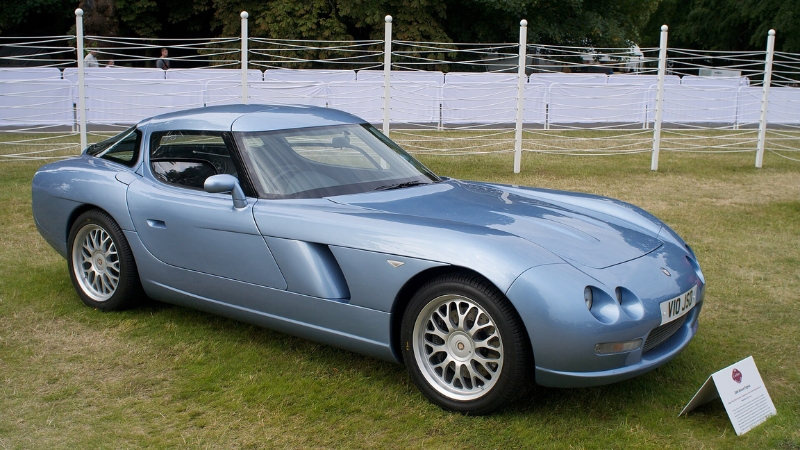
Gullwing doors, a Viper V10, and production numbers in the single digits.
Designed by former Formula 1 engineer Max Boxstrom, the Bristol Fighter emerged from 2004 to 2011 as an eccentric blend of engineering. Its aerodynamic body, featuring iconic gullwing doors, achieved a drag coefficient around 0.28. Underneath sat an 8.3 L Chrysler Viper V10 engine, a brute-force American heart in a meticulously crafted British shell, producing around 525 hp.
With a curb weight of 1,540 kg (3,395 lbs), the Fighter accelerated to 60 mph in roughly 3.9 seconds, promising a top speed over 200 mph. On an unrestricted autobahn, this rare beast could devour asphalt with unflappable composure, a quiet storm passing flashier machines. Only 9 to 14 units were ever built, making it an automotive ghost. This blend of British craftsmanship and raw American V10 power created a gentleman’s club with a bare-knuckle brawler inside.
6. TVR Sagaris

The analog English hooligan that demanded skill and rewarded commitment.
The TVR Sagaris was not built for casual Sunday drives; it was conceived for endurance and track use, stripping away digital nannies. Its 4.0 L Speed Six engine delivered 406 hp and 349 lb-ft of torque through a 5-speed manual gearbox. Produced from 2005 to 2006, this car deliberately omitted electronic driver aids like ABS, demanding full commitment from anyone brave enough to pilot it.
The aggressive, vent-covered bodywork, with its many intakes, ensured sustained track cooling—a clear statement of intent. Guiding one of the 211 units through a rain-slicked mountain pass becomes a high-stakes poker game. Every input is paramount; the road feels immediate and unfiltered, a brief, intense focus worthy of absolute concentration. This car demands skill, rewarding commitment with a raw connection modern vehicles rarely achieve.
7. Callaway C16

Corvette bones rebuilt into a 650-hp bespoke supercar with European refinement.
A standard Corvette C6 can reach 60 mph in under 4.5 seconds, but some drivers demand more precision on winding roads. Callaway provided this solution with the C16, a heavily re-engineered supercar. Available from around 2007, it utilized the Chevrolet Corvette C6 platform in coupe, cabriolet, and speedster forms.
The C16’s supercharged 6.0 L V8 (Callaway-modified LS2) unleashes 616 hp, launching from 0-60 mph in roughly 3.3 seconds. Speeds exceed 206 mph. Transmission choices include a 6-speed manual or 6-speed automatic with paddle shifters. Its bespoke Callaway-Döttinger interior, customized with leather and Alcantara, blended American muscle with European refinement—perfect for a memorable Route 66 journey where performance meets long-distance comfort.