

Federal safety investigators upgraded their probe into Ford’s BlueCruise hands-free driving system after two deadly crashes where neither driver nor the technology applied brakes. Both Mustang Mach-E vehicles struck stationary cars at over 70 mph during nighttime highway driving, exposing critical gaps in how semi-autonomous systems handle real-world emergencies.
The National Highway Traffic Safety Administration escalated its investigation to an engineering analysis—one step before a potential recall—covering 129,222 Mach-E vehicles from 2021-2024. NHTSA documents reveal a troubling pattern: BlueCruise struggles to detect stationary objects at highway speeds in low-light conditions, exactly when drivers need the technology most.
Investigation Reveals System Design Limitations
The fatal incidents paint a stark picture of autonomous driving’s current boundaries. In February 2024, a Mach-E hit a stationary Honda CR-V on San Antonio’s I-10. One month later in Pennsylvania, another BlueCruise-equipped vehicle struck a Hyundai Elantra in a construction zone, pushing it into a Prius and killing two people.
NHTSA reviewed 32 crashes and over 2,000 incident reports, finding that Ford’s adaptive cruise control consistently fails to recognize slow or stopped vehicles. The agency noted “unexpected non-deceleration” as a recurring theme across BlueCruise-equipped models.
The investigation revealed Ford programmed BlueCruise to ignore stationary objects above 62 mph to prevent phantom braking. This design choice prioritizes convenience over crash prevention, relying instead on separate emergency braking systems that clearly aren’t catching every scenario.
Ford Defends Technology Amid Growing Scrutiny
Ford maintains that BlueCruise delivers safer driving than manual operation, citing over 500 million miles of deployment data. The company attributes most incidents to driver inattention or system misuse, according to responses to NHTSA’s information requests about software logic and crash data.
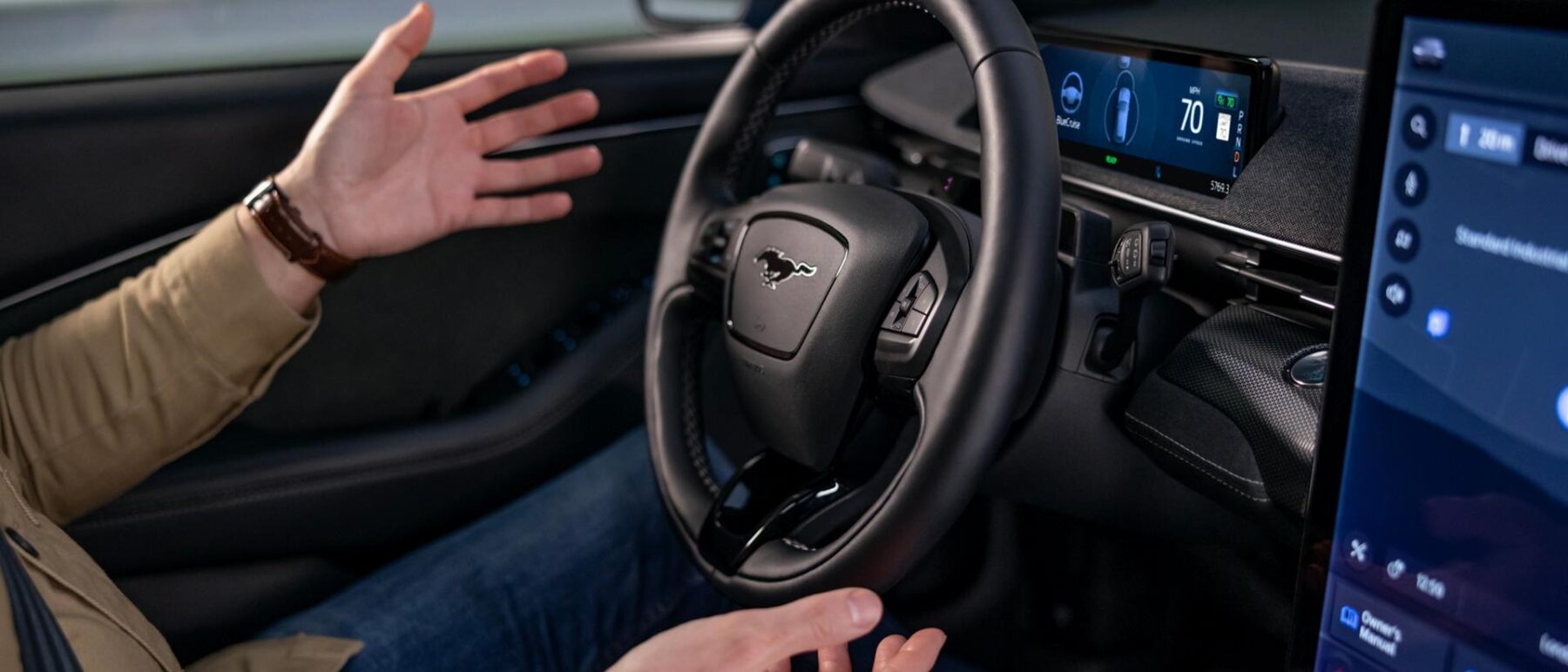
Yet the federal investigation exposes the complexity of semi-autonomous driving promises. BlueCruise operates on 97% of North American highways and monitors driver attention through eye-tracking cameras. But when the system encounters its programmed limitations—like ignoring stationary objects at highway speeds—drivers may not have enough time to react.
The timing couldn’t be worse for Ford’s autonomous ambitions. As competitors like Tesla face similar scrutiny over their driver-assistance features, the industry grapples with consumer expectations versus technological reality.
If you own a BlueCruise-equipped Ford, the investigation doesn’t require immediate action, but it underscores the critical importance of staying alert behind the wheel, even when technology promises to handle the driving.