

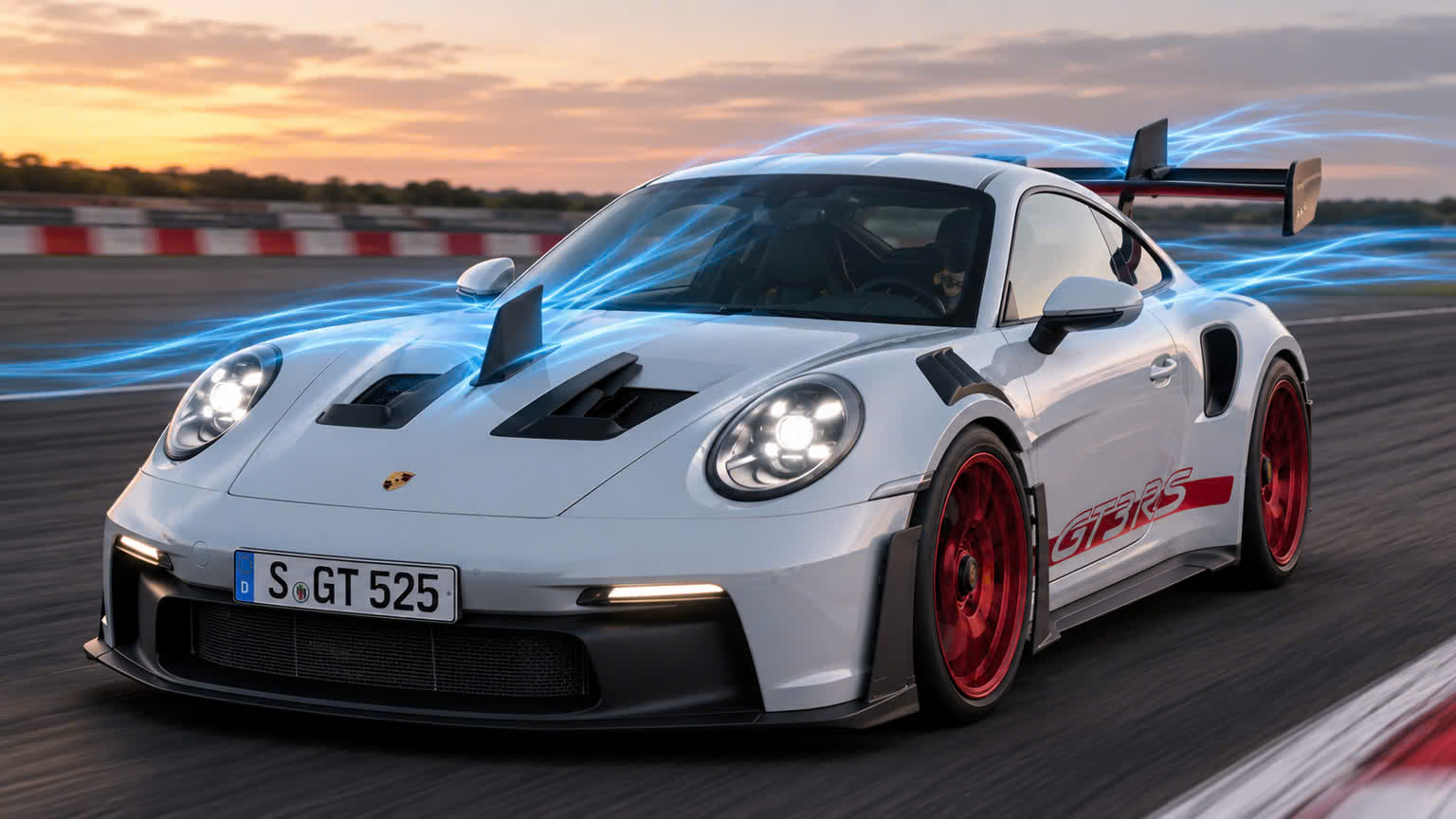
Downforce has a ceiling. The 992 GT3 RS illustrates it vividly — reportedly generating 901 pounds pushing the tires into tarmac at 124 mph and nearly 1,896 pounds at 177 mph, according to Porsche’s press materials — and yet Porsche has apparently decided that simply pressing harder on the pavement yields diminishing returns. So the company reportedly filed a secret 918 patent for something borrowed from aviation: movable vertical fins intended to generate lateral aerodynamic force through corners rather than additional downward load. This is a patent, not a production announcement. But it describes a genuinely different way of thinking about aerodynamic cornering.
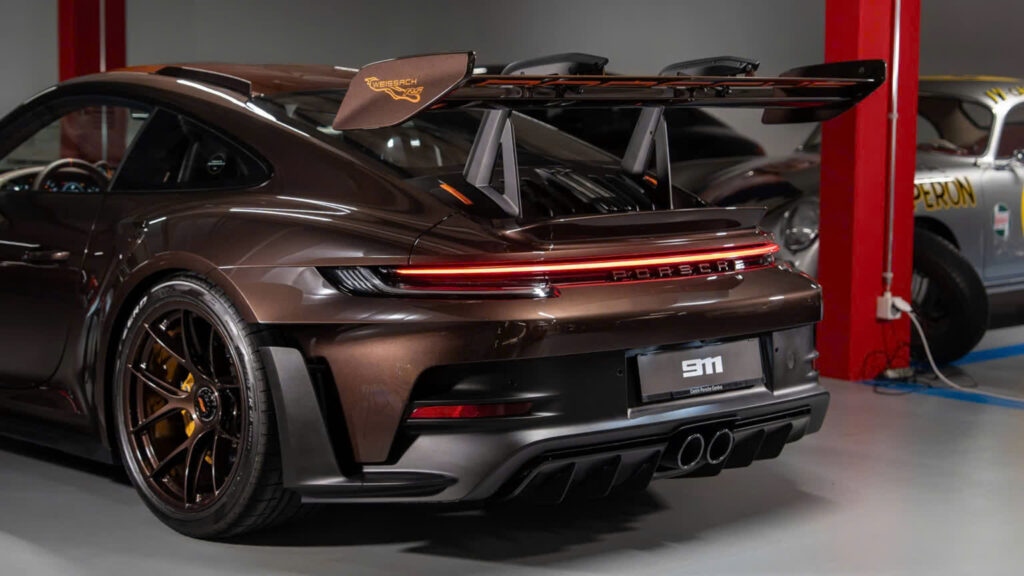
What the Patent Actually Describes
The distinction between rudders and wings is what makes this concept worth taking seriously.
The proposed surfaces mount vertically near the front and rear axles and rotate independently into the airflow. Where a conventional wing or splitter generates vertical load — pressing tires harder against the road — these fins would generate lateral force: a direct sideways push on the car’s body. Think aircraft rudder, not elevator. According to the patent filing, the system could reduce understeer at the front axle, stabilize the rear, or potentially counteract body roll, depending on how each fin is angled. The effect is speed-dependent: at low speeds, the fins produce little useful aerodynamic force. At track speeds, even modest surfaces can generate significant loads.
Key details from the filing:
- Fins rotate independently front and rear, reportedly allowing rotational (yaw) control at each axle
- The patent also reportedly describes possible under-vehicle rudder surfaces for additional lateral effect
- Pagani’s Huayra and the Zenvo TSR-S have used active aero to redistribute downforce balance — this concept targets direct lateral force instead, a meaningfully different goal
- No production model is named; a track-focused 911 or racing application would be logical, but that remains speculation
According to the patent rationale, tire grip capacity is finite — and beyond a certain point, adding more vertical load offers progressively less cornering benefit. Direct lateral aerodynamic assistance, the filing reportedly argues, is a different tool entirely.
What Still Has to Be Solved
If the control logic is wrong, lateral force doesn’t just slow the car — it can spin it out.
Sideways aerodynamic loads can create yaw moments. Manage them incorrectly and the car risks becoming unstable in crosswinds or unsettled mid-corner. A production system would need fast sensors coordinating the fins with steering angle, speed, and lateral acceleration in real time. Porsche’s electronically controlled active aero on the GT3 RS provides a credible engineering foundation for that kind of coordination — but the patent does not confirm testing, regulatory approval, or a production timeline. A patent documents a claimed invention. The engineering gap between that claim and a verified Nürburgring lap time remains, for now, unconfirmed.