

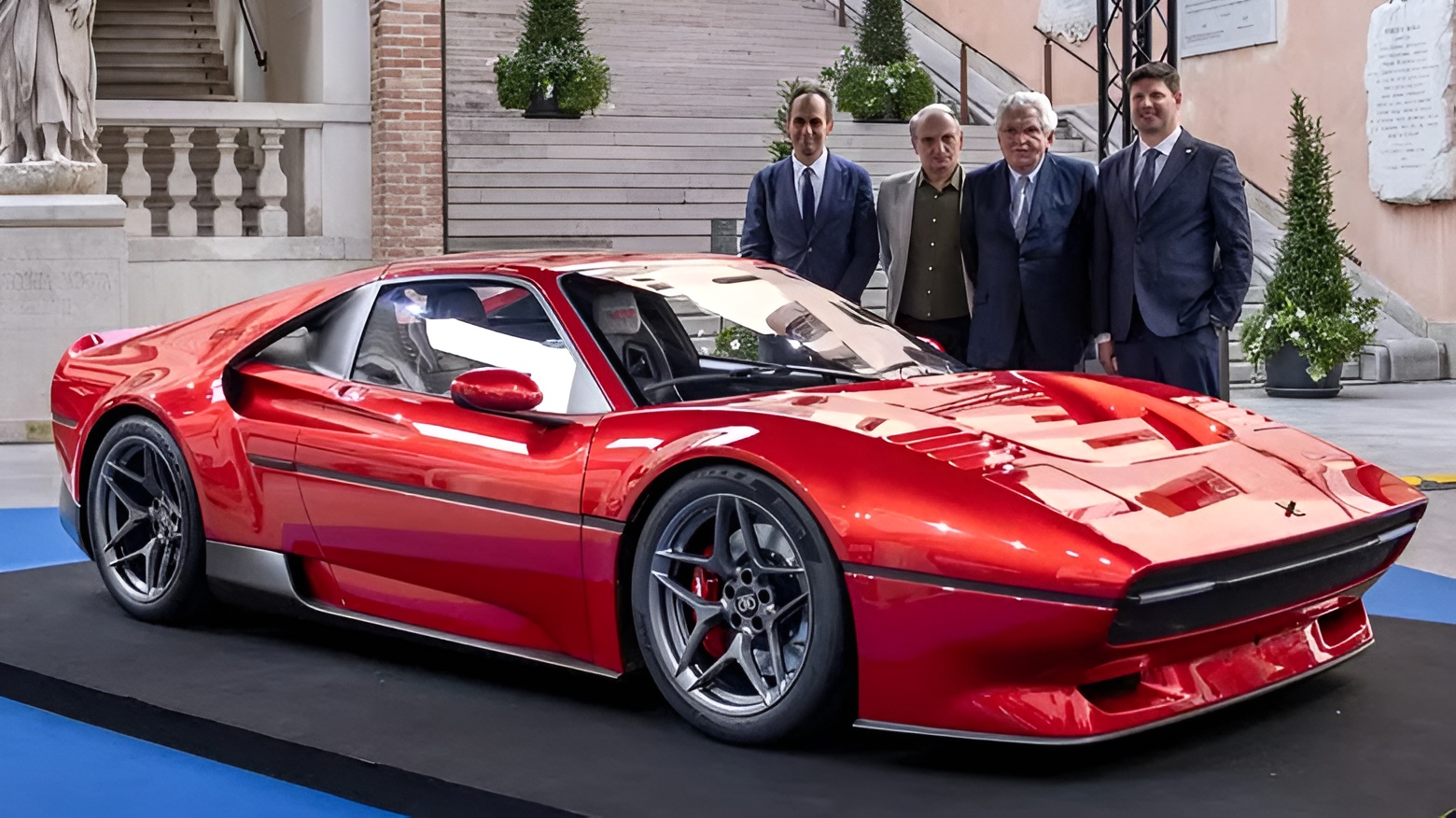
While major manufacturers keep stacking hybrid motors and active aerodynamics onto cars that grow heavier with every generation, a small workshop in Padua just unveiled a 950 kg sports car with a naturally aspirated V8 and a five-speed manual. The Michelotto Gruppo 4 Tributo isn’t chasing output figures or lap-time records. It’s making a different argument entirely.
The Tributo is not a restomod. Built around a bespoke tubular chassis with lightweight composite bodywork, it preserves the Ferrari 308’s compact proportions and mid-engine character without rebuilding an original car. AC Motorsport‘s Francesco Calzavara — a former Michelotto employee who founded his own brand roughly two years before the project’s unveiling — developed the Tributo alongside the Padua-based firm whose name it carries. That direct bloodline shapes everything about the car.
The Rally Legacy That Earned This Name
Michelotto’s competition history with the Ferrari 308 GTB gives this tribute its credibility — and its name.
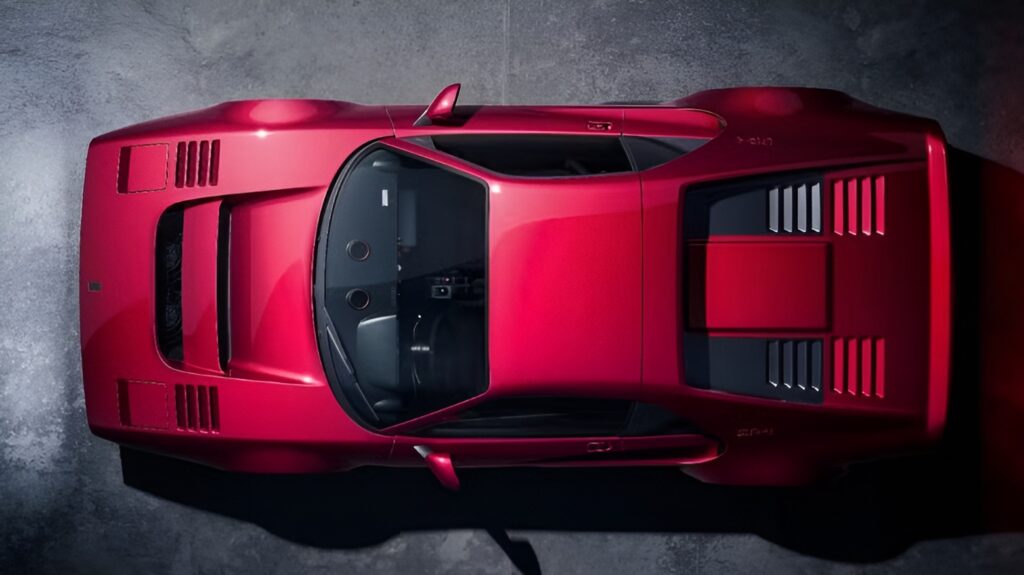
Michelotto’s relationship with the 308 GTB started in the 1980s Supercars era, when Ferrari supplied bare chassis and Michelotto transformed them into Group 4 rally machines. The first cars competed in 1978. By 1982, a Michelotto-prepared 308 GTB had won the Italian Rally Championship and finished second at the Tour de Corse — Ferrari’s first and only top-level WRC podium, according to Ferrari’s own account. The Tributo draws directly from that record.
What’s Under the Skin
The specifications reflect a deliberate philosophy: less weight, more connection.
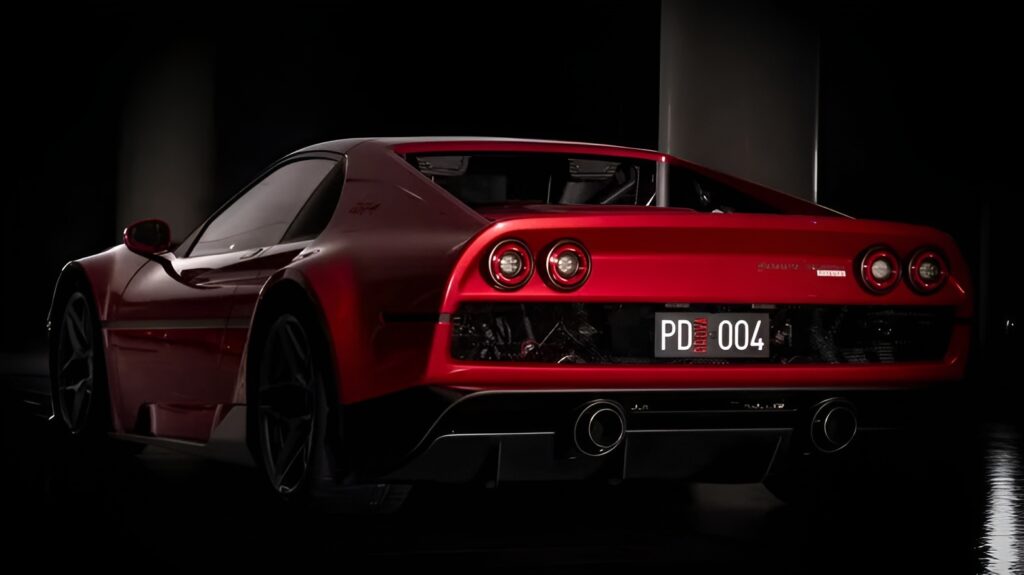
- 3.4-liter naturally aspirated 90-degree V8; 380 hp at 8,250 rpm; approximately 363 Nm of torque
- Five-speed manual transmission with racing dog-engagement; rear-wheel drive
- Reported weight: 950 kg (approximately 2,094 lb); power-to-weight roughly 400 hp per metric ton
- Bespoke tubular chassis; lightweight composite body panels
- Pop-up headlights, flared fenders, clamshell engine cover, exposed carbon-fiber diffuser — all referencing the original Group 4 competition cars
380 hp Doesn’t Sound Like Much Until the Math Hits
At 950 kg, the Tributo’s modest power figure becomes a genuine performance argument.
That reported weight of 950 kilograms does more work than any horsepower figure could. At roughly 400 hp per metric ton, the Tributo competes on terms that heavier, turbocharged exotics can’t easily match. A naturally aspirated engine spinning to 8,250 rpm delivers a quality of response that turbocharging typically softens — the sensation that throttle input and forward motion share no intermediary. Whether that translates to outright pace against a boosted rival depends on conditions no road test has yet confirmed, but the engineering logic is sound.
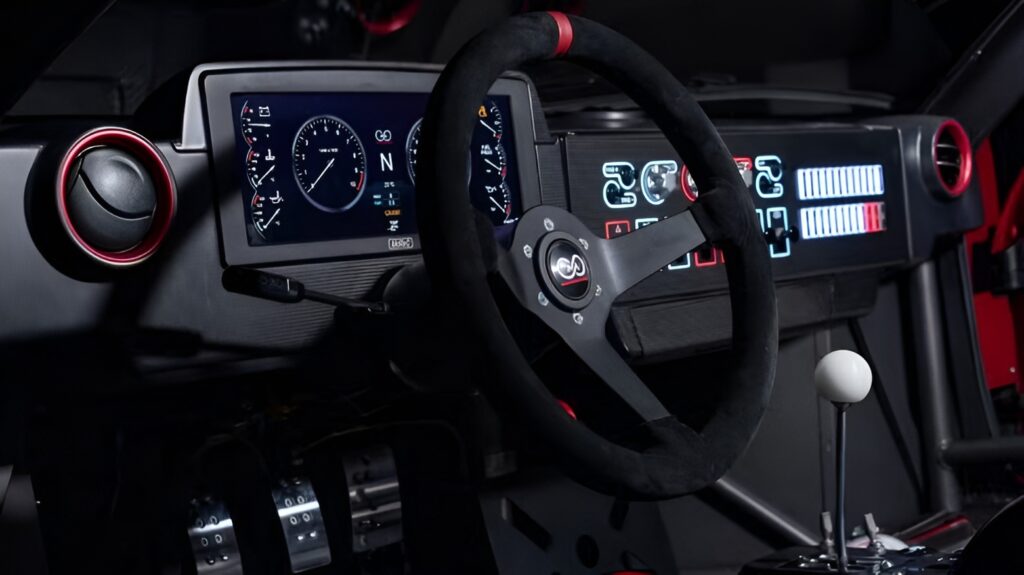
The cabin reinforces that same discipline. A flat carbon-fiber dashboard, physical switches, a metal gated shifter, and racing seats define the interior. Nothing in there suggests luxury was a priority. It reads as a driver’s compartment first and last.
The Questions That Still Need Answering
Production details remain unconfirmed, and the Tributo’s commercial future is genuinely open.
No confirmed price, production number, or customer delivery timeline was announced at the reveal. That’s worth stating plainly. This is a prototype from an independent workshop, and the craft behind it is real — the commercial path forward is not yet established. Readers weighing the appeal of exotic cars like this should consider what ownership realities typically follow a prototype reveal.
What the Tributo represents is harder to set aside: proof that a small Italian firm can build something rooted more deeply in Ferrari’s competitive history than most modern exotics dare to be. That tension doesn’t resolve neatly. It just sits there, spinning to 8,250 rpm, waiting for someone to prove it wrong.