

Seven.
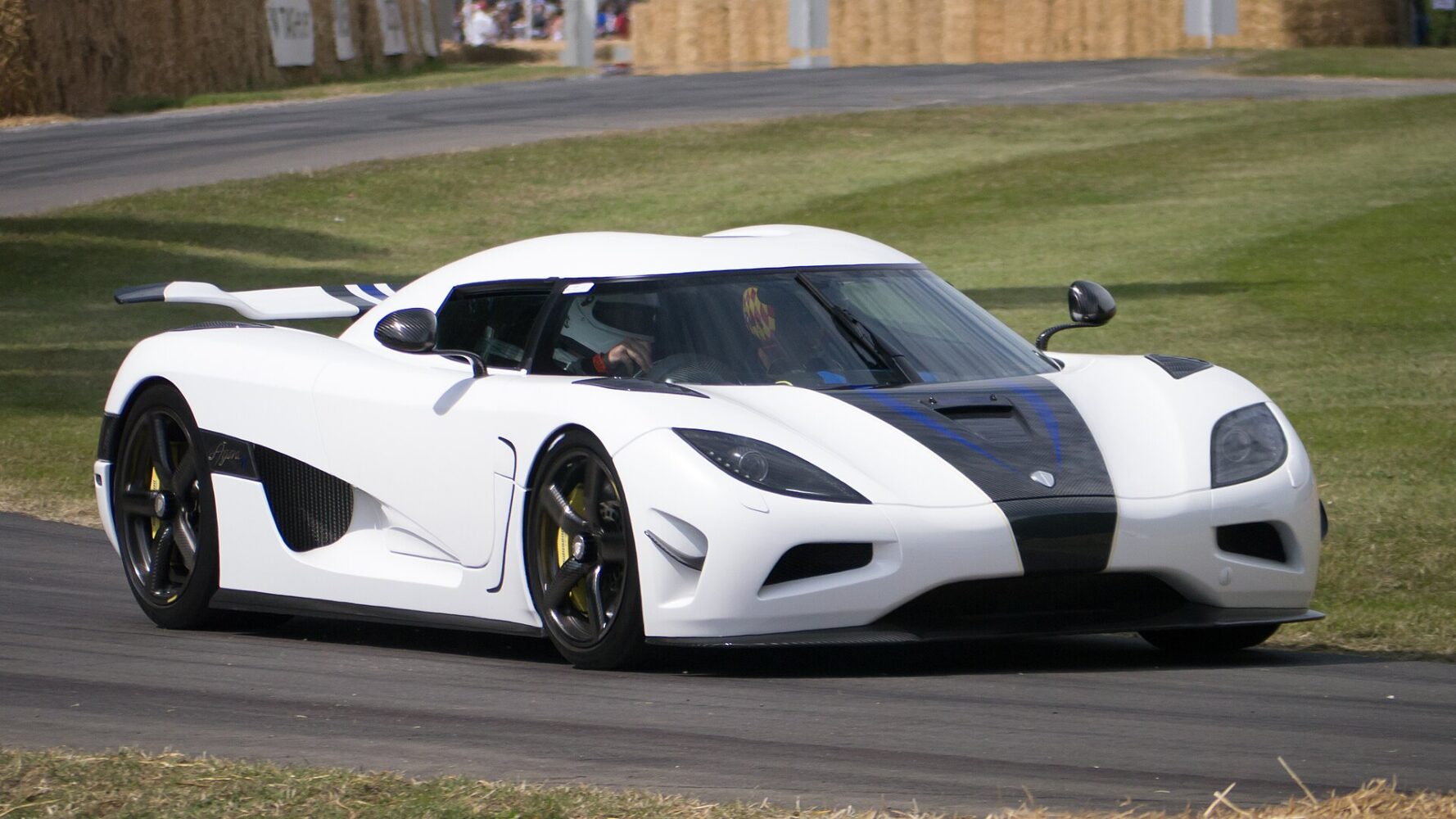
That's the total number of original Koenigsegg Ageras ever built before the company moved on to the S, R, and RS variants.
A 2011 example just hammered at RM Sotheby's Paris auction for €1,917,500 (roughly $1.99 million).
Rarity has its privileges.
Swedish Hypercar Royalty
This particular Agera isn't just rare – it's distinctive even among its six siblings.
The car wears an exposed matte carbon fiber body with satin finish, reportedly the first Koenigsegg to sport such treatment.
Originally built for a German client, this hypercar has accumulated 20,367 km (12,655 miles) – suggesting it wasn't just locked away as an investment piece.
It's participated in Koenigsegg's exclusive "Ghost Squadron" events, where owners gather to exercise their Swedish missiles properly.
Numbers That Rearrange Your Organs
The Agera's specifications remain jaw-dropping even by today's standards:
- 5.0-liter twin-turbo V8 delivering a face-melting 947 horsepower and 811 lb-ft of torque
- 7-speed dual-clutch transmission handling the nuclear power delivery
- 0-62 mph in 2.8 seconds with a top speed of 249 mph
- Formula 1-inspired two-tier rear wing providing actual downforce, not just visual drama
- Turbine-style wheels engineered for cooling, not just Instagram likes
The interior received a refresh in 2020, swapping the original white for black leather and Alcantara with red stitching. Swedish flag embroidery and brushed aluminum details complete the cockpit.
Appreciating Asset
When launched in 2010, a base Agera commanded approximately $1.5 million.
This example's nearly $2 million hammer price represents a modest appreciation over 14 years – not spectacular investment growth, but it hasn't lost value either.
The auction came with VAT complications, restricting sales primarily to export and trade buyers. Private collectors needed direct coordination with RM Sotheby's.
For the winning bidder, they've secured automotive royalty from Ängelholm – one of the rarest production Koenigseggs from the era when Christian von Koenigsegg was still proving Swedish hypercars could compete with the established Italian aristocracy.
They succeeded. Gloriously.