

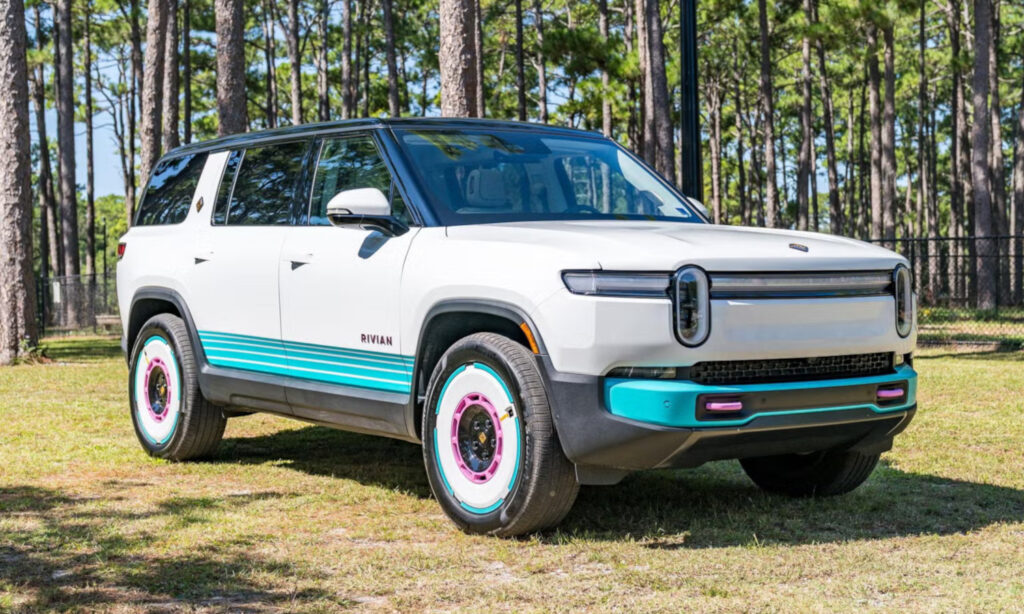
Most family vehicles don’t need a teen lockout. A Rivian R1T — in its highest-performance configuration capable of producing up to 1,025 horsepower — absolutely does. According to reporting by The Drive, Rivian is developing Teen Mode and Valet Mode for its R1T, R1S, and R2 lineup, with an early 2027 rollout currently targeted — among the vehicles worth waiting for in the coming model years. The push was prompted in part by feedback from parents. Chief Software Officer Wassym Bensaid told The Drive that community feedback helped drive the feature, which will reportedly use Rivian’s digital-key framework and a new user-profile architecture.
How Teen Mode Actually Works
Restrictions are designed to follow the driver, not the vehicle — making it significantly harder for a teenager to simply swap keys and bypass the limits.
The system is intended to tie restrictions to a specific driver identity — a phone key, key card, or key fob — rather than applying limits vehicle-wide. It works on a logic similar to streaming service profiles: switching to the unrestricted owner account would require an owner-selected password. Here’s what Rivian has reportedly planned, with the caveat that precise details remain subject to change before launch:
- Limit available power output (specific cap unconfirmed)
- Reportedly block drivers from disabling stability control
- Reportedly disable selected off-road modes, including Drift and Rally
- Tie restrictions to the teen’s assigned key, not every key in the household
- Require owner authentication to modify settings
Bensaid said the feature will rely on Rivian’s digital-key integration and user-profile architecture, prompted in part by direct feedback from the parent community.
Smart Software, Real Limits
The Insurance Institute for Highway Safety advises against placing teenagers in high-horsepower vehicles — and no software update changes that underlying guidance.
The IIHS is direct on this point: high-horsepower vehicles can encourage speeding and risk-taking in inexperienced drivers. Large SUVs and pickups are also harder for teenagers to handle and create greater risks for pedestrians and other road users. Teen Mode addresses some of that risk, but no software patch corrects poor judgment, distraction, or the sheer inexperience of a new driver behind thousands of pounds of high-performance truck. Research on highest driver death rates confirms that vehicle class and power output are meaningful variables in teen crash outcomes.
Teen Mode is best understood as a risk-management layer — genuinely useful, but not a substitute for driver training, active supervision, or an honest conversation about whether a high-performance EV is the right vehicle for a new driver in the first place.
Valet Mode and the Bigger Shift
Rivian’s separate Valet Mode may also protect personal data like saved destinations and calendar information, though the full specification is still unconfirmed.
Valet Mode is a distinct feature. It reportedly limits access to the front trunk and gloveboxes and may protect personal information including saved destinations, call history, and calendar data — though the complete launch specification has not been confirmed. Both modes reflect a broader industry direction: treating the vehicle as a software-managed platform with identity-based permissions, configured through an app rather than a dealership visit. The challenges Tesla Owners Face with similar software-defined systems offer a useful reference point as Rivian builds out this architecture.
The most consequential decision a Rivian family makes isn’t which restrictions to toggle. It’s whether to hand a teenager the key at all — digital or otherwise.